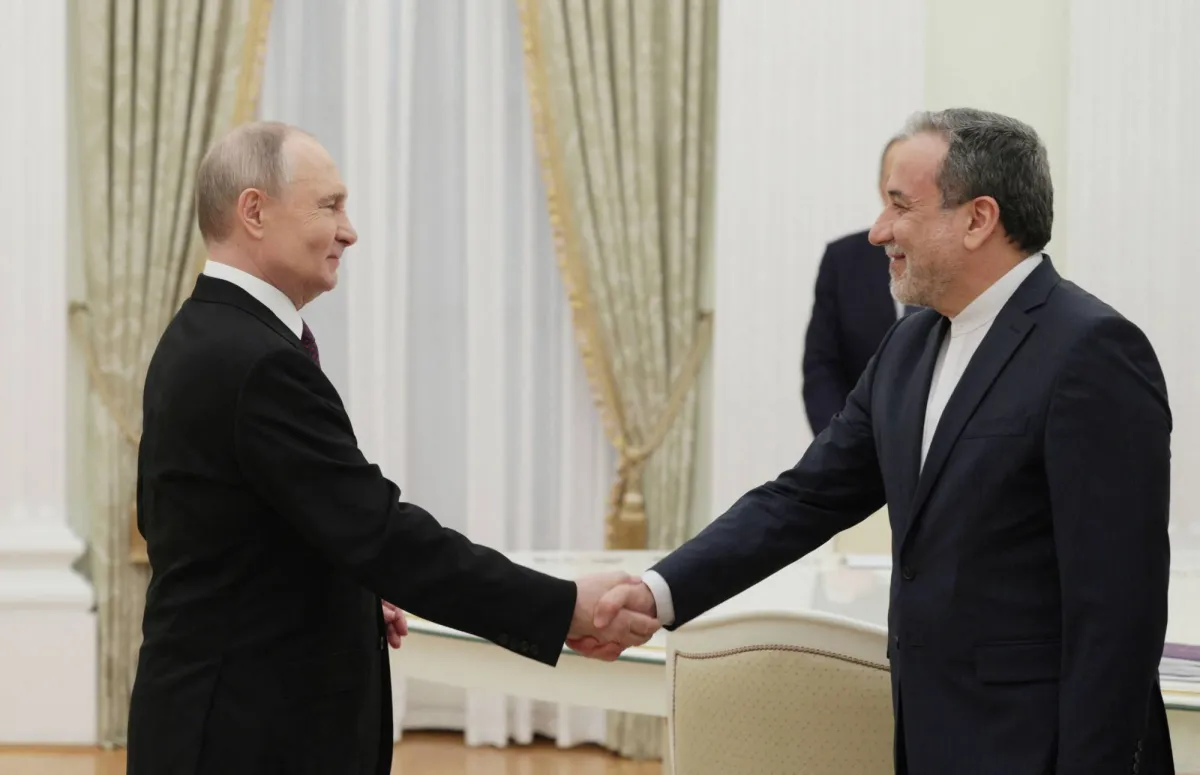
The Kremlin confirmed that Russian President Vladimir Putin will meet Iranian Foreign Minister Abbas Araghchi on Monday in St. Petersburg, as Iranian-American talks face challenges. This visit comes amid Iran's efforts to strengthen its relations with Russia, with Araghchi departing Islamabad for Russia after a diplomatic tour that included Muscat.
Araghchi, who recently returned from Pakistan where he was leading mediation efforts between Tehran and Washington, aims to present updates regarding negotiations with the United States. Iranian Ambassador to Russia Kazem Jalali wrote on the platform 'X' that the meeting with Putin is part of a 'diplomatic jihad' to defend Iran's interests amid external threats.
Details of the Meeting
Araghchi's visit to Russia comes at a sensitive time, as Iranian-American talks continue to stall. Jalali noted that Iran and Russia form a 'unified front' against globally dominant powers. The meeting between Putin and Araghchi will include consultations on the latest developments in negotiations and ceasefire, as well as developments surrounding the Iranian nuclear file.
This meeting is considered part of Iran's efforts to strengthen relations with its allies amid increasing international pressures. Russia is a strategic partner for Tehran, with both countries cooperating in various fields, including energy and security.
Background & Context
Historically, Iranian-Russian relations have seen fluctuations, but they have become more robust in recent years, especially after the imposition of American sanctions on Iran. Tehran seeks to enhance its relations with Moscow as part of its strategy to counter Western pressures.
On the other hand, Russia views supporting Iran in nuclear talks as strengthening its position on the international stage, as it seeks to assert its role as an influential power in the Middle East. The relations between the two countries reflect the balance of power in the region, particularly amid ongoing tensions between Iran and the United States.
Impact & Consequences
The outcomes of this meeting may influence the course of Iranian-American talks, as both parties seek to find compromises. If Iran can secure strong Russian support, it may bolster its position in negotiations and complicate the situation for the United States.
Moreover, the strengthening of relations between Iran and Russia could lead to increased cooperation in other areas, such as regional security and counter-terrorism, which may affect dynamics in the Middle East.
Regional Significance
The Iranian-Russian relations have significant implications for the Arab region, as they could lead to a shift in the balance of power. Arab countries that are concerned about Iranian influence may find themselves compelled to reassess their strategies.
Additionally, the growing cooperation between Iran and Russia may enhance their positions against Western-Arab alliances, potentially leading to new tensions in the region.
In conclusion, the meeting between Putin and Araghchi represents an important step in the context of Iranian-Russian relations, reflecting the challenges Tehran faces amid international pressures. Arab countries must closely monitor these developments, as they may impact regional stability in the future.