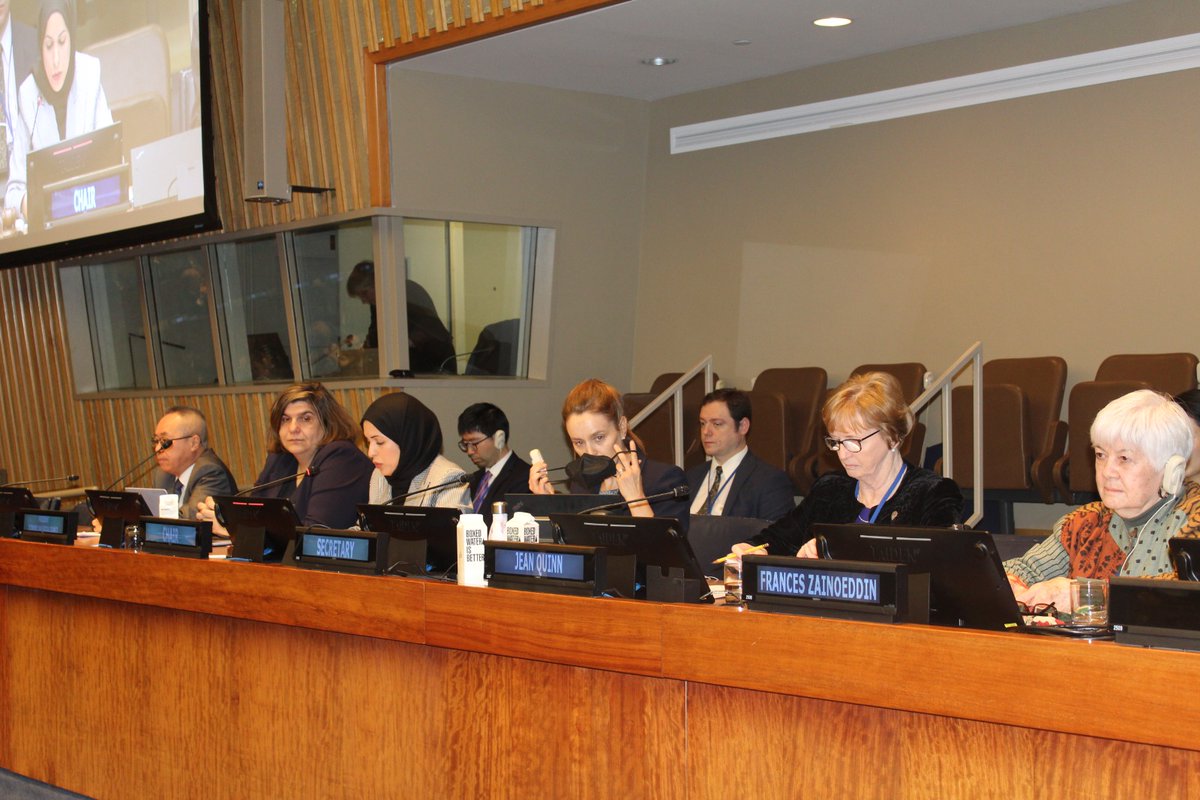
Qatar has confirmed that it will not be drawn into the escalating regional tensions in the Israeli-American war against Iran, condemning attacks targeting countries not involved in the conflict. This was stated by Qatar's representative to the United Nations, Hind bint Abdul Rahman Al-Muftah, during her remarks in Geneva.
Al-Muftah stated, "Attacks on a country that is not a party to the conflict, which has not allowed the use of its territory for hostile actions, constitute a violation of international law and undermine international peace and security." She added, "We have distanced ourselves from this war from the beginning and refused to be part of the escalation. However, the Iranians continue to target us and other neighboring countries."
Details of the Statement
Qatar's statements come at a sensitive time when the region is witnessing an escalation in military tensions, with increasing reciprocal attacks between Iran and its allies on one side, and the United States and Israel on the other. Qatar, considered one of the few Gulf states striving to maintain good relations with Tehran, has taken a clear stance by refusing to get involved in these conflicts.
This Qatari position aligns with its foreign policy, which focuses on dialogue and diplomacy, aiming to avoid any escalation that could negatively impact the region's stability. Qatar has repeatedly emphasized the importance of respecting the sovereignty of nations and refraining from interference in their internal affairs.
Background & Context
Historically, Qatar has played a pivotal role in mediating between conflicting parties in the region, including the Syrian conflict and relations with Hamas. This policy has contributed to enhancing its status as a reliable mediator in regional issues. However, with the rise of tensions in recent years, Qatar has become more cautious in its positions, especially given the pressures it faces from some of its neighbors.
On the other hand, the Israeli-American war against Iran is not new; the region has witnessed several rounds of military escalation over the years, including attacks on Iranian nuclear facilities and military operations against Iran-backed militias in Iraq and Syria. However, the current escalation appears more dangerous, accompanied by direct threats from both sides.
Impact & Consequences
Qatar's statements could enhance its position as a supporter of peace and stability in the region, potentially attracting more countries to adopt similar stances. This position may also strengthen relations between Qatar and Western countries seeking to reduce tensions in the area.
At the same time, Qatar may face increasing pressure from some Gulf states that might consider its stance weak or misaligned with regional trends. Therefore, Qatar needs to carefully balance its foreign policy to avoid any negative repercussions on its regional and international relations.
Regional Significance
Qatar's stance on the Iranian-Israeli conflict has direct implications for Arab countries, as it could bolster calls for dialogue and negotiation among the conflicting parties. This position may encourage other Arab nations to adopt similar approaches, contributing to a reduction in regional tensions.
In conclusion, Qatar's recent position demonstrates its commitment to peace and stability in the region and enhances its role as a mediator in regional issues. As tensions continue, the question remains about how these policies will affect the future of regional and international relations.