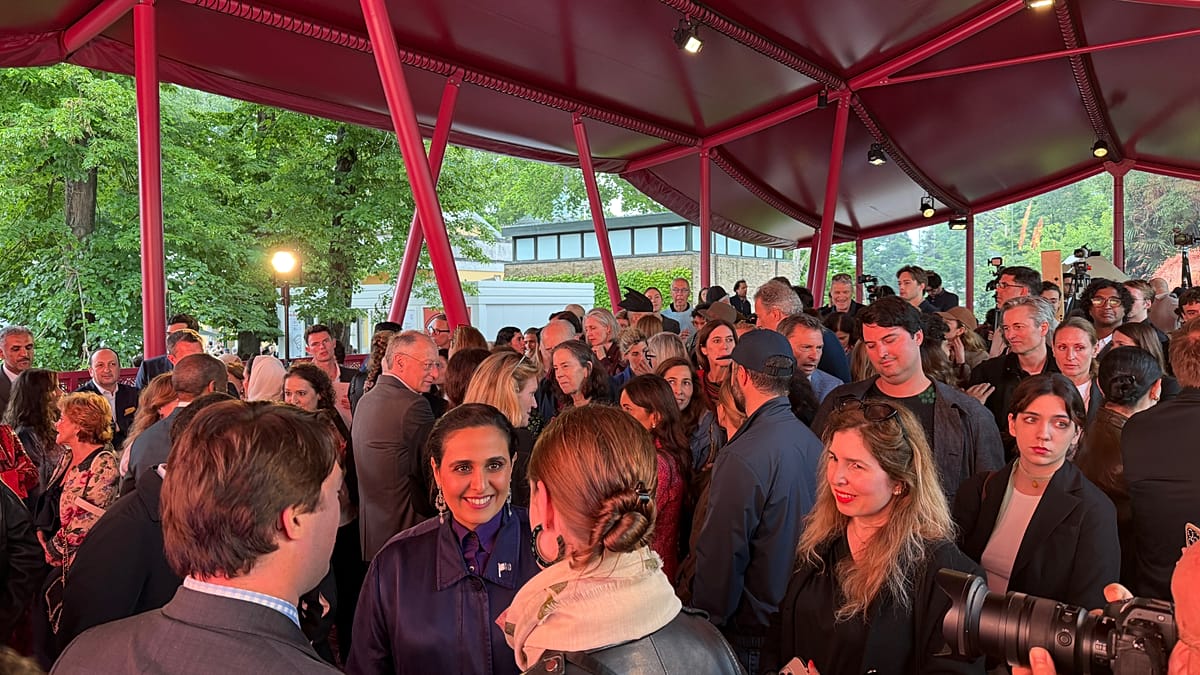
Qatar marks a significant cultural achievement with its inaugural participation in the Venice Biennale, recognized as one of the most prestigious international art exhibitions. This event takes place at the future permanent pavilion site in the Venice Gardens, which is the first new national pavilion added there in thirty years.
The project is led by artist Rirkrit Tiravanija, titled "Untitled 2026: A gathering of remarkable people", transforming the space into a living environment that transcends the traditional exhibition concept. Visitors navigate through live music, film screenings, and shared meals, with performances and discussions taking place throughout the day.
Details of the Pavilion
Sheikha Reem Al Thani, the Executive Vice President of Qatar Museums, emphasizes the importance of the country's multiculturalism, stating: "We are a multicultural nation, and we support that by working with everyone." Instead of presenting a singular national narrative, the pavilion brings together artists, musicians, and chefs from across the Arab world and its diaspora, reflecting a broader idea of cultural exchange.
At the center of the space, there is a large tent structure designed by Tiravanija, where art is actively displayed and created in real-time. Tiravanija highlighted the significance of having a place that brings people together amidst global crises, where they can listen to diverse voices, experience various aromas, and taste different foods.
Background & Context
The Venice Biennale was established in 1895 and is considered a global platform for artists and creatives from around the world. Qatar's participation in this event reflects a remarkable evolution in the Qatari cultural landscape, which has witnessed significant growth in recent years. This pavilion serves as a precursor to the Qatar Robaya Festival, which will be launched later this year.
This participation coincides with major challenges facing the region, as many Arab countries grapple with conflicts and displacement. The Qatari pavilion demonstrates how culture can serve as a bridge for communication and understanding between peoples.
Impact & Consequences
The Qatari pavilion at the Venice Biennale is seen as a response to the historical moment the region is experiencing. Sheikha Mayssa bint Hamad bin Khalifa Al Thani stated: "We meet at a difficult hour, where words like displacement, destruction, and instability are used daily." This pavilion illustrates how culture can enhance humanity and rebuild connections that conflicts attempt to dismantle.
Organizers express their desire to make the pavilion a space for participation rather than mere observation. Sheikha Reem remarked: "This pavilion revolves around the idea of gathering, listening, talking, and sharing meals together." Visitors are considered part of the artwork, enhancing the experience of cultural interaction.
Regional Significance
The significance of Qatar's participation in the Venice Biennale lies in its ability to showcase culture as a means of communication and understanding amid current challenges. This initiative highlights the role of art and culture in bridging divides and fostering dialogue in a region often marked by strife.
In conclusion, Qatar's involvement in the Venice Biennale not only represents a milestone in its cultural journey but also serves as a testament to the power of art in uniting diverse communities and promoting peace through shared experiences.