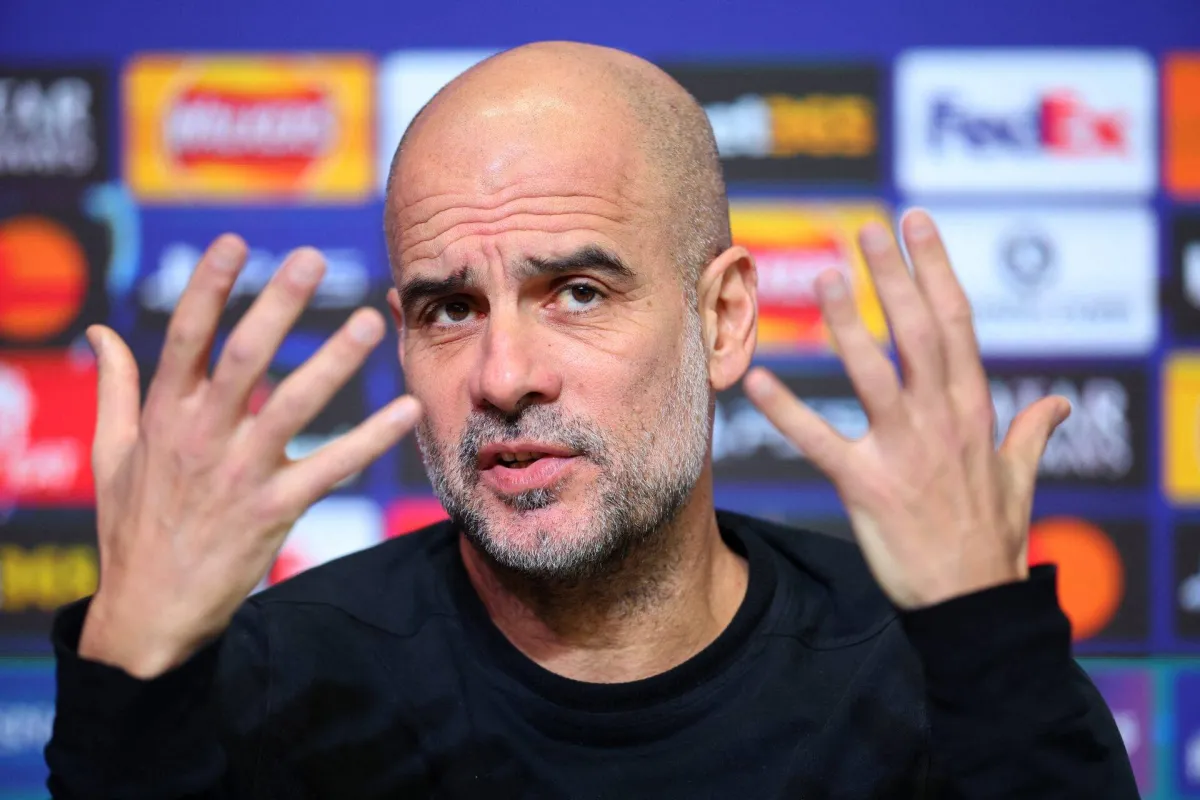
Doubts are rising about Gennaro Gattuso's future as the coach of the Italian national team, especially with the possibility of Gabriele Gravina, the president of the Italian Football Federation, resigning. As discussions about rebuilding the "Azzurri" team resurface, attention is turning to big and experienced names, with Roberto Mancini and Antonio Conte leading the race to succeed the current coach. However, behind the scenes, a surprising heavyweight name is also emerging: Pep Guardiola, who may leave Manchester City, according to the Italian newspaper "La Gazzetta dello Sport".
The starting point seems familiar: another failure, and a renewed search for a coach to get Italy back on track. Gattuso, who is currently in Marbella with his family, is nearing departure as his contract ends next June. With Gravina's potential resignation, his continued presence on the bench becomes nearly impossible. He had agreed with Gianluigi Buffon to stay until the end of June, but if he feels unsupported, he may decide to leave earlier, as he has done in previous instances, choosing to take control of his future with bold decisions.
Details of the Situation
Regardless of who the next coach is, the starting point will be the current squad chosen by Gattuso. While the new coach may change the tactical system and rearrange priorities within the team, it is not a given that names like Barella or Bastoni will always remain essential. However, it is also unreasonable to start completely from scratch.
The primary task will be mental before it is technical. Fear has been the biggest enemy, as clearly demonstrated in the match against Bosnia, which, despite being a good team, is not among the world's elite. Nevertheless, Italy resorted to defense until penalties, while the "real" version of the team could have secured the match.
Context and Background
The same story repeats itself: in crucial matches, the team falls into the trap of tension, reacting instead of taking the initiative... from the difficult draw against Ukraine for qualification to "Euro 2024", to the draw with Croatia, then the loss to Switzerland in the Round of 16, culminating in the match against Bosnia, where the team played within its defensive areas despite being a man down.
The new coach is required to instill a different mentality and coordinate with clubs, the federation, and the "league" to change weekly working methods and raise the pace of play; otherwise, failure may extend to the "2028" and "2030" World Cups.
Impact and Consequences
The race currently appears to be a duel between Mancini and Conte. Mancini's return may seem surprising given how his previous stint ended, which reached the point of threatening legal action before the crisis was contained. However, with Gravina's potential departure, the past may not be an obstacle.
Mancini's advantage is that, despite coaching in Qatar, he can sever ties at any time. But the question remains: which version of Mancini will return? The coach who led Italy to the "Euro 2020" title with innovative style, or the version that seemed less enthusiastic in his last period? In 2018, he rebuilt the team from scratch and introduced tactical ideas like "playmakers"; today, he will be required to innovate new solutions.
Regional Significance
Close to Mancini stands Antonio Conte, who left a strong impression at "Euro 2016" despite having one of the weakest Italian teams and was close to achieving a significant feat. However, his current problem is clear: his ties to Napoli.
The relationship with club president Aurelio De Laurentiis is not ideal, and while it may not be difficult to sever ties at the end of the season, the contract is still in place. Conte will need to terminate it early, possibly leaving Napoli by the end of May, to start working immediately with the national team during the friendlies in June. Italy cannot afford to wait for a "summer" coach to begin work in September with the "Nations League"; that would be too late.
The list of candidates is not extensive. It is either hiring a big-name coach or retaining Gattuso, who has formed a cohesive group and possesses experience. Massimiliano Allegri is considered an ideal option by some, but Milan is unlikely to let him go. Additionally, local options are limited after Luciano Spalletti's tenure and Gian Piero Gasperini's move to Roma.
The external option, although not frequently tried in Italy's history, except for a very old experience in the 1960s, is still on the table. However, the idea of turning to a foreign coach does not have unanimous support.
Yet, one name stands out strongly: Pep Guardiola. The Spanish coach may leave Manchester City, is not under financial pressure, and may be ready for a new challenge with the support of major sponsors. Is this a possible scenario? Perhaps... but for now, it remains closer to a dream.