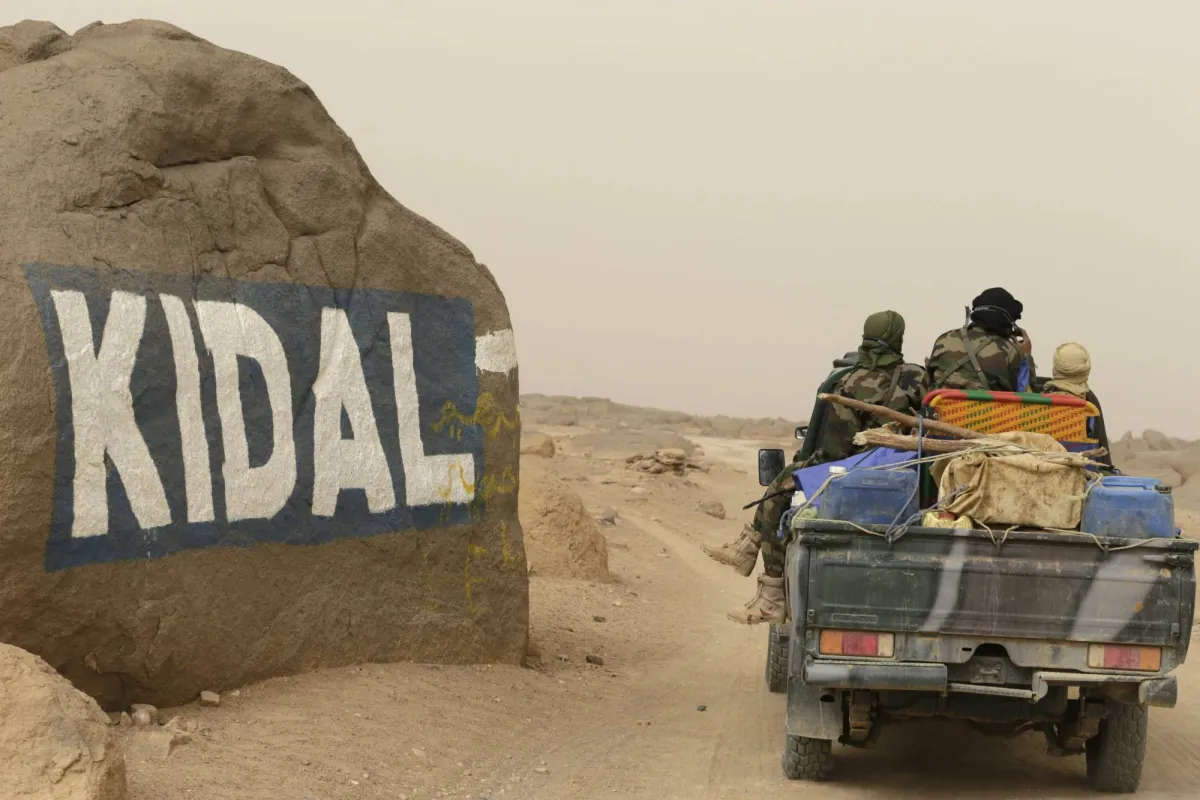
On Sunday, Tuareg rebels regained full control of the city of Kidal, three years after being ousted by the Malian army supported by Russia. Activists circulated videos showing the withdrawal of Russian forces from the city, where the Malian flag was taken down and replaced with the flag of the Azawad region.
Kidal, with a population of approximately 55,000, has been a focal point of ongoing conflict between the Bamako authorities and the Tuareg rebels for decades. Control of Kidal symbolizes influence and power in northern Mali, making it a pivotal point in the ongoing struggle.
Details of the Event
Since Mali's independence from France in 1960, Kidal has oscillated between the central authorities in Bamako and the influence of armed Tuareg movements. The Tuareg declared their rebellion immediately after independence, but faced violent repression from then-Malian President Modibo Keita, backed by the Soviet Union.
Despite this, Kidal remains of great historical significance for the Tuareg, serving as their spiritual and political center. Many leaders of the rebel movements hail from Kidal, including Iyad Ag Ghaly, leader of the Group for the Support of Islam and Muslims, which has carried out attacks in the capital, Bamako.
Background & Context
Kidal is considered a natural fortress, located in the heart of the Adrar des Ifoghas mountain range, which gives it strategic importance. This rugged terrain has made it a rear base for fighters and a hideout for armed groups away from surveillance. Additionally, the presence of a military airport enhances its military value.
Between 2012 and 2023, Kidal served as a stronghold for the Coordination of Azawad Movements, and despite the presence of United Nations peacekeeping forces, the Malian army was not allowed to enter, hindering the implementation of the reconciliation agreement signed in Algiers in 2015.
Impact & Consequences
The recapture of Kidal by the Tuareg rebels reflects a significant shift in the conflict in northern Mali, as the city is a symbol of influence. This victory is seen as a blow to the authority of the Malian government, which views Kidal as a stumbling block to the implementation of the reconciliation agreement.
The killing of Malian Defense Minister Sadio Camara in a coordinated attack on the capital Bamako complicates the security situation in the country. Camara was one of the prominent leaders of the ruling military council and played a key role in enhancing Russian influence in Mali.
Regional Significance
The situation in Mali directly affects stability in the Sahel region, where neighboring countries face similar security challenges. The increasing influence of armed groups in northern Mali may encourage a rise in violence in neighboring states.
Under these circumstances, a coordinated international response is required to address the growing threat of violent extremism and terrorism in the region, especially with the increasing activity of groups linked to Al-Qaeda.