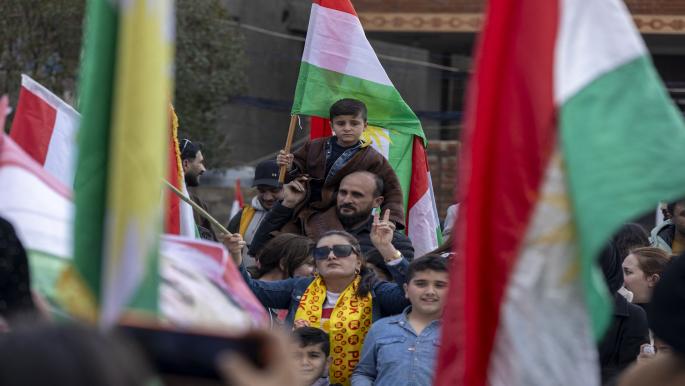
The Kurdish issue in Syria highlights their integral role in the national fabric without the need for special privileges. The discussion centers on how to integrate them into the modern state, where Kurds seek recognition as active members of Syrian society.
Historically, Kurds in Syria have suffered from marginalization and exclusion, leading to a strong sense of national identity among them. However, Kurdish demands are not about obtaining special advantages, but rather about recognizing their rights as Syrian citizens.
Details of the Issue
Discussions about Kurdish rights in Syria are increasing, especially in light of the changing political circumstances in the region. Kurds, who make up a significant portion of the population in northern Syria, are striving to achieve a balance between their cultural identity and their integration into the Syrian state. This dynamic requires open dialogue with all concerned parties.
Kurdish demands include recognition of the Kurdish language and culture, as well as their political rights. However, these demands should not be understood as a pursuit of separation, but as a step towards enhancing national unity.
Background & Context
Historically, Kurds in Syria have been subjected to discrimination, with their cultural and political rights ignored for decades. After the Syrian revolution in 2011, Kurds began to organize themselves more effectively, leading to the emergence of self-administration in some areas. This development raised concerns for the Syrian government and some regional powers.
In recent years, the region has witnessed significant political shifts, complicating the situation further. Kurds are seeking to achieve political gains through dialogue with the Syrian government while trying to maintain their cultural identity.
Impact & Consequences
The Kurdish issue in Syria is considered a sensitive matter that affects stability in the region. Any progress in Kurdish rights could contribute to enhancing national unity, while failure to do so may exacerbate tensions.
The relationship between Kurds and the Syrian state is directly influenced by political transformations in the region. Additionally, any agreement between the two parties could have wide-ranging effects on relations with neighboring countries, such as Turkey and Iraq.
Regional Significance
The Kurdish issue in Syria serves as an example of the challenges faced by Arab countries in dealing with cultural diversity. Recognizing minority rights can contribute to enhancing stability in the region, while ignoring these rights may lead to escalating conflicts.
At the regional level, proposed solutions to the Kurdish issue could influence how other Arab countries address minority issues, potentially contributing to the formation of new policies in the region.
In conclusion, the Kurdish issue in Syria is not merely a matter of rights; it is part of a broader discussion about national identity and citizenship. It requires open and inclusive dialogue to achieve a balance between cultural and political rights, contributing to the building of a modern state that accommodates everyone.