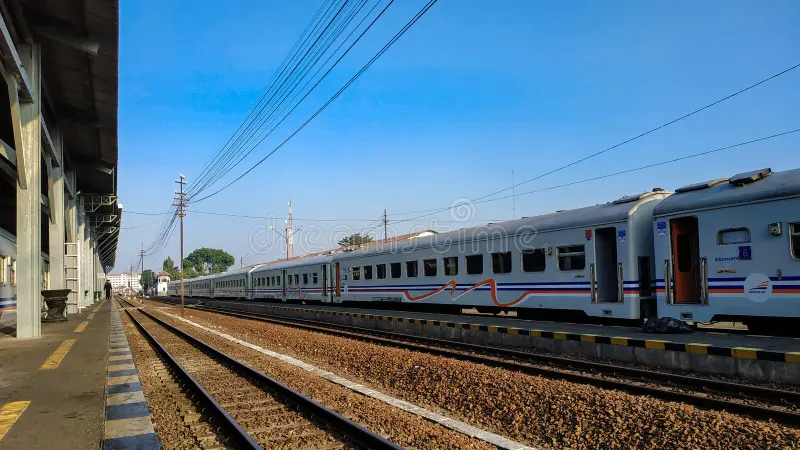
The Indonesian railway company (PT Kereta Api Indonesia) in the Jakarta area recorded the arrival of 370,559 passengers during the return period after Eid al-Fitr, according to data released on Sunday, March 29, 2026. This number was logged at 9 AM Indonesian time, which is eight days after Eid al-Fitr.
During the period from March 23 to March 29, 2026, the average daily number of passengers exceeded 50,000, with the busiest day being March 25, which saw 53,406 passengers, followed closely by March 28 with 53,368 passengers. The company also anticipated that these high numbers would continue in the coming days, expecting 49,000 passengers on March 30 and 44,000 passengers on March 31.
Event Details
Fransisco Wibowo, the public relations director of the Indonesian railway company, stated that the company is working to ensure the readiness of its services in all operational aspects, from train schedules to services provided at the stations. He emphasized that the company is committed to delivering the best services during the return period, focusing on passenger safety and comfort.
As part of its service improvement efforts, the company has enhanced staff presence at the stations, provided information services, and organized passenger flow to ensure order and calm. Passengers were also advised to be mindful of their luggage and to ensure that no belongings were left inside the trains or at the stations.
Background & Context
The return period after Eid al-Fitr is one of the busiest times in Indonesia, as many citizens travel to their hometowns to celebrate the holiday with their families. With the growing population in major cities like Jakarta, public transportation, especially trains, has become the preferred choice for many travelers.
Historically, Indonesia has seen significant improvements in its transportation infrastructure, with substantial investments made in developing the railway network. This development has contributed to an increased reliance on trains as a safe and comfortable mode of transportation.
Impact & Consequences
These figures indicate the success of the Indonesian railway company in managing passenger traffic during peak periods, reflecting the company's ability to handle congestion and improve the passenger experience. This success also highlights the importance of public transport in alleviating traffic congestion in major cities.
These trends are expected to continue in the coming years, as the Indonesian government seeks to enhance investment in public transportation infrastructure, which will contribute to improving the quality of life for citizens.
Regional Significance
While the news focuses on Indonesia, important lessons can be drawn for the Arab region, where many cities face traffic congestion issues. Investing in improving public transport services could be an effective solution to alleviate these problems, enhancing quality of life and increasing mobility efficiency.
In conclusion, this event underscores the importance of public transport in citizens' lives and reflects the efforts made to improve services and meet passenger needs.