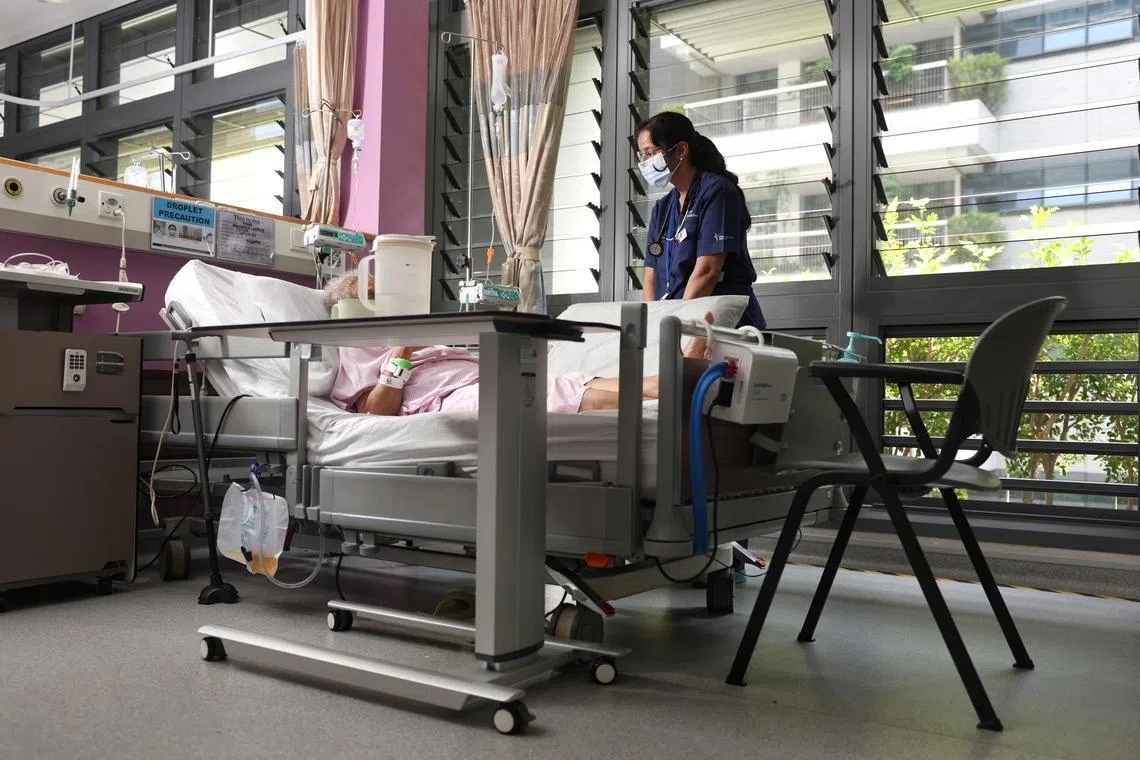
A new study has shown that the average length of stay in the elderly ward at KTPH Hospital in Singapore has significantly decreased, dropping from 7.3 days to 5.4 days. This improvement reflects the efforts made to provide better and more efficient healthcare for elderly patients, facilitating their return home in a shorter time.
These findings come at a time when there is an increasing need to enhance healthcare services for the elderly, especially with the growing number of seniors in society. This age group is among the most susceptible to chronic diseases, necessitating special and continuous care. The researchers indicated that this reduction in length of stay reflects the success of the therapeutic and rehabilitation programs implemented at the hospital.
Details of the Initiative
The new programs implemented in the elderly ward include improvements in treatment and rehabilitation methods, focusing on providing comprehensive care that encompasses physical, psychological, and social aspects. Additionally, the medical staff has been trained on how to better address the needs of elderly patients, contributing to the improved quality of care provided.
Moreover, new technologies have been utilized in healthcare, such as remote monitoring of patients' health conditions, allowing doctors to intervene quickly when necessary. These innovations have helped reduce the time patients spend in the hospital, enhancing their chances of faster recovery.
Background & Context
Healthcare for the elderly is a significant issue in many countries, as the proportion of seniors is increasing markedly. According to reports from the World Health Organization, the number of people aged over 65 years is expected to double by 2050. This poses major challenges for healthcare systems, necessitating the development of effective strategies to meet the needs of this demographic.
In this context, successful experiences like that of KTPH Hospital serve as a model to emulate. Many countries are seeking to implement similar models to improve healthcare services for the elderly, highlighting the importance of innovation in this field.
Impact & Consequences
The benefits of reducing hospital stay durations extend beyond merely improving patient experiences. The shorter the time patients spend in the hospital, the greater the capacity to accommodate more cases, leading to enhanced overall efficiency of the healthcare system. Additionally, reducing the length of stay can contribute to lowering healthcare costs, benefiting both patients and healthcare systems alike.
Furthermore, improving elderly care can lead to enhanced quality of life for this demographic, fostering a sense of independence and comfort. This has positive implications for society as a whole, as it contributes to strengthening family and social ties.
Regional Significance
In the Arab world, countries face similar challenges in elderly care. With the increasing number of seniors, it is essential for healthcare systems to adopt effective strategies to enhance care. Arab nations can benefit from successful experiences like that of KTPH Hospital, where similar models can be applied to develop healthcare services for the elderly.
Improving elderly care is not solely a governmental responsibility; it also requires the involvement of civil society and the private sector. Through collaboration among all parties, positive outcomes can be achieved that benefit society as a whole.