The White House administration cut off oil supplies to Cuba and threatened a "friendly takeover" of the island governed by a communist regime amidst military operations in Venezuela and Iran. President Donald Trump stated: "Whether I free it, take it, I think I can do anything I want with it. They're a very weakened nation right now." It seems that the fuel shortage is bringing Cuba's economy to the brink of collapse.
But I hark back to a not-so-distant time when it briefly seemed that the two countries might normalize relations after decades of tension. I first landed in Havana in March 2012 to cover Pope Benedict XVI’s visit. The airport was small, and I had to repeatedly clarify that we were journalists and that our permits were pre-approved; having a Spanish-speaking team was helpful during those processes.
Some neighborhoods of the city felt familiar from faded buildings and pastel colors, along with vintage American cars running on patchwork repairs. Since the 1959 revolution and Fidel Castro's rise to power, Cuba had aligned with the Soviet Union and had seized American properties and companies in response to the growing embargo. In 1962, President John F. Kennedy imposed a full embargo, leading to shortages of food, fuel, and consumer goods.
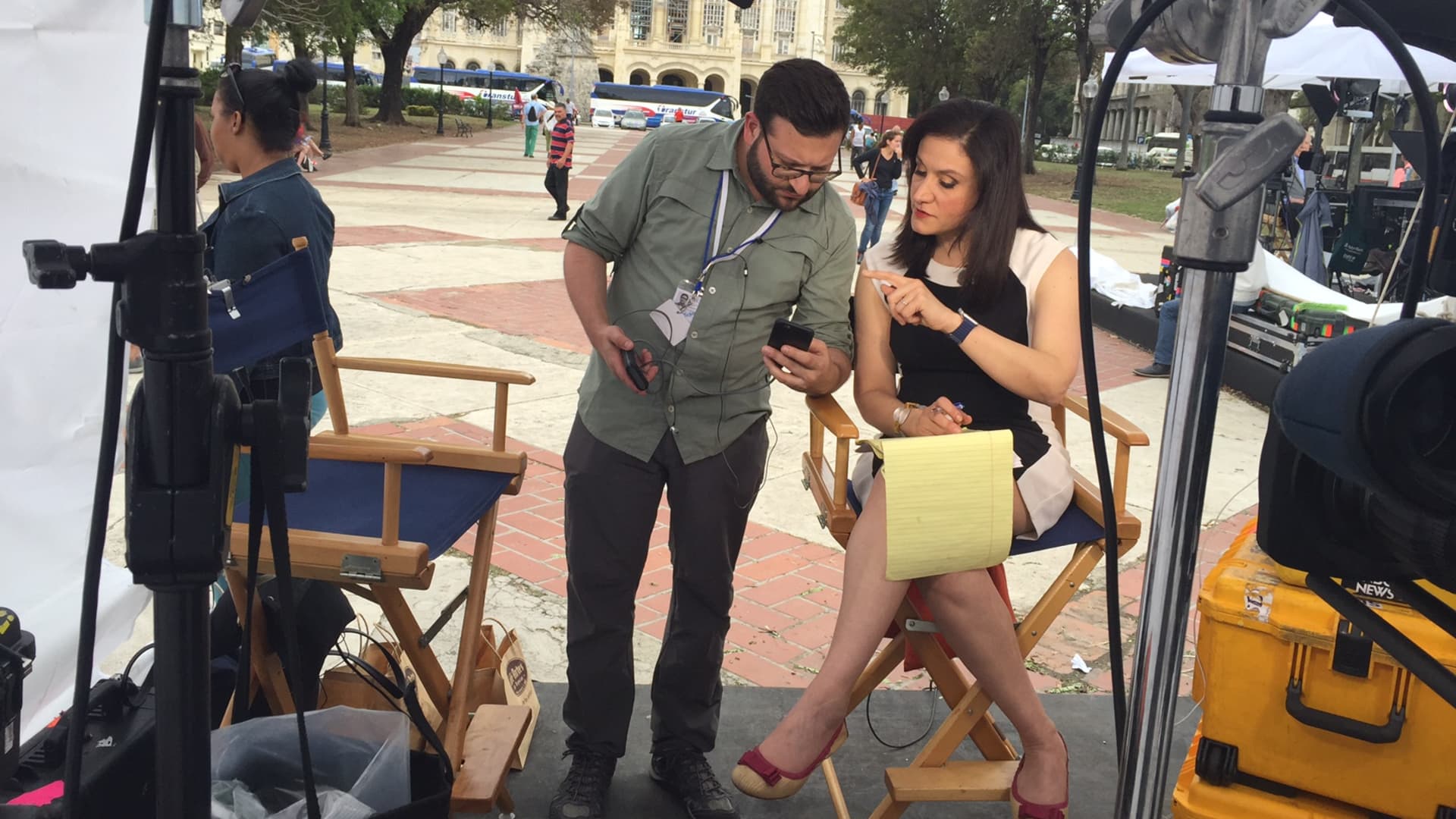
However, my presence there gave me a sense that things were beginning to change. Between 2012 and 2016, I undertook ten field trips for CNBC with international correspondent Michelle Caruso-Cabrera. Each appearance seemed to coincide with a significant event that could represent a turning point, but ultimately that momentum gradually dissipated.
During my first visit, Havana was preparing for the Pope's arrival: fresh paint along the Malecón drying in spots along the expected route for the papal procession. In a country shaped for years by a socialist model, the presence of the religious leader felt more than a ceremonial event; it appeared to signal a possibility of opening up.
Things moved relatively quickly thereafter. Within less than a year, we were invited as part of a small group of journalists to get a close look at what were dubbed “reforms,” and we met the governor of the central bank and small business owners trying to navigate a changing system that was not advancing all at once. We left the formal itinerary and visited Hershey, a town built by Milton Hershey to secure sugar for his industry in the early 20th century, reminding of Cuba's American past: a Coca-Cola factory turned state property, a Western Union building that became a telecommunications central, and a Woolworth store transformed into a local discount shop.
In July 2015, President Barack Obama announced the resumption of diplomatic relations. We quickly traveled from New York to Miami and then on a private jet to Havana. There was a feeling of excitement on the ground, but caution was evident; people hoped cautiously as past experience taught them that optimism could dissipate quickly. A month later, the U.S. embassy reopened for the first time in over fifty years, and Havana saw the American flag hoisted from a crumbling building across the street, an event that felt like a particular turning point for the youth who saw more opportunities, access, and choices.
Obama's visit the following March reinforced this feeling: travel restrictions on Americans were eased, and limited trade exchanges began. The embargo remained tied to U.S. law but lessened somewhat. The island hosted a concert by the Rolling Stones and an American Major League Baseball game, the first in many years.
Even so, caution prevailed; many Cubans refrained from excessive optimism for fear of losing it as before. Not everyone believed that opening relations would reward the communist government without imposing substantial reforms.
Change continued slowly: in 2016, a Carnival cruise ship under the Fathom brand docked in Havana, the first American cruise ship to visit the island since 1978. In November, JetBlue began direct flights from New York. For a moment, it seemed that barriers were gradually crumbling.
Journalistic coverage was not easy: permits could be revoked with little notice, phones rarely worked, and Wi-Fi services were scarce. Restaurant menus were long but often it was said that the only available dish was rice and beans. I saw stylish storefronts of buildings only to find them empty and dilapidated inside.
Nevertheless, there were small signs of transformation: family-run restaurants opened in homes, and apartments listed on platforms like Airbnb. The changes weren’t dramatic, but they existed on the ground.
My last visit was in November 2016 to cover Fidel Castro’s funeral after his death. Although Castro had stepped down in favor of his brother Raúl years earlier, his passing marked a historic moment. Havana was quiet this time: music stopped and alcoholic beverages disappeared, and an official mourning period began, with long lines of people waiting to sign condolence books.
From the outside, the scene seemed a clear ending, but internally, it wasn’t that simple. It was evident that the momentum built in previous years was beginning to wane, and questions repeated themselves: What will happen now? What about reforms? And what of the relationship with the United States?
Over the following years, much of that momentum slowed down, and in some cases, reversed: U.S. embassy personnel withdrew, new travel restrictions were imposed in November 2017, and the flow of American visitors decreased. The opening that once seemed possible appeared to retreat before deeper tensions.
History does not always bring clear beginnings and endings, and in Cuba, history sometimes seems to loop back on itself. What follows between these two neighbors remains an unwritten page.