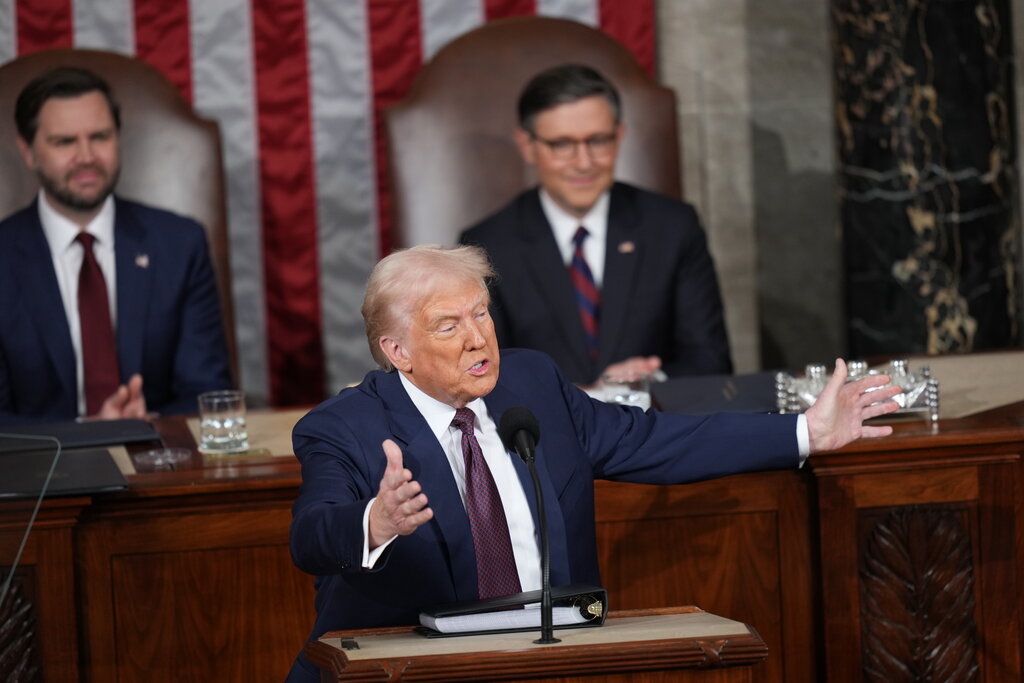
Political conflicts between Donald Trump and his opponents extend beyond weapons, utilizing words as a powerful tool for reshaping truths. This raises questions about the credibility of information in the current political landscape.
Recent events illustrate how each side seeks to employ language to its advantage, contributing to the creation of an alternate reality that contrasts with actual facts. This phenomenon is part of modern political struggles, where words are used to steer public opinion and achieve political gains.
Event Details
Amid the electoral campaigns, Trump's use of language stands out, as he relies on his unique style of communication with his supporters. He promotes a discourse characterized by boldness and clarity, which elicits strong engagement from his base. Conversely, his opponents strive to dismantle this narrative and expose what they perceive as falsehoods in his statements.
There are numerous examples of this verbal conflict, with each side employing powerful and impactful phrases to highlight the weaknesses of the other. This verbal competition is not limited to the American arena but extends to the international stage, where the policies of other countries are influenced by this type of discourse.
Background & Context
Historically, words have always been part of political conflicts, but in the information age, these words have become more influential than ever. With the rise of social media, every individual can have a voice, complicating the political landscape.
Research shows that political discourse can significantly impact public opinion, making it essential to understand how words are used in this context. This usage contributes to shaping opinions and attitudes, reflecting on election outcomes and public policies.
Impact & Consequences
The repercussions of this verbal conflict extend beyond domestic politics, potentially affecting international relations. When words are used strategically, it can escalate tensions between nations, negatively impacting security and stability.
Moreover, using lies as a political tool can lead to a loss of trust in political and media institutions. When information becomes unreliable, citizens find themselves in a state of confusion, increasing polarization and division within society.
Regional Significance
In the Arab region, these dynamics can have significant effects. As contrasting political discourses rise, it becomes crucial to understand how these words impact Arab societies. Verbal conflicts can exacerbate political and social crises, heightening tensions among different groups.
Furthermore, using words as a tool for conflict can affect relationships between Arab countries and Western nations, reflecting on foreign policies and regional cooperation. Under these circumstances, it becomes important to promote constructive dialogue and effective communication among all parties involved.
In conclusion, this analysis reveals that the war of words is a fundamental part of contemporary political conflicts. It is essential to be aware of the impact of these words on the political and social reality and to strive to foster a culture of dialogue and understanding.