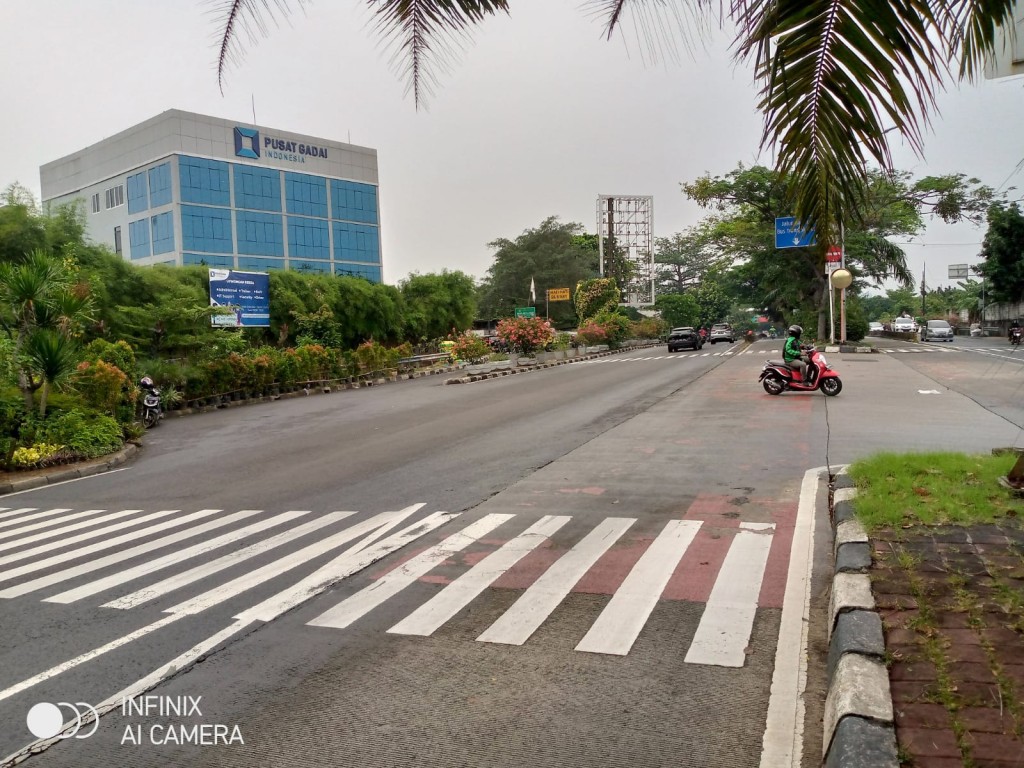
In a move aimed at enhancing compliance with local laws, authorities in the Kebon Jeruk area of West Jakarta removed several advertising signs that had not paid their taxes. The operation took place on Wednesday, where the head of the local police unit, Belita, confirmed that these measures are part of the government's efforts to ensure the payment of taxes owed on advertisements.
Belita explained that this campaign was not limited to the removal of advertising signs but also included the dismantling of some stalls belonging to street vendors who were selling on the sidewalks. These steps were taken to ensure public order and provide safe spaces for pedestrians.
Details of the Operation
During the campaign, several advertising signs that had not settled their tax obligations were removed, along with the confiscation of several carts belonging to street vendors. Inspections were also carried out on vehicles parked illegally, with air being let out of the tires of 97 motorcycles as a deterrent against violations.
The operation took place on several main streets in the area, including Jalan Labanang Pula, Jalan Panjang, and Jalan Kidoia Seltan. These actions raised concerns among some vehicle owners who found themselves in an awkward position, as some attempted to move their vehicles before actions were taken against them.
Background & Context
This campaign is part of the Indonesian government's efforts to enhance compliance with local laws and improve the tax system. Over the years, the government has faced significant challenges in collecting taxes from businesses and individuals, negatively impacting public revenues.
Historically, Indonesia has struggled with regulating street advertisements, with many companies ignoring their tax obligations. Therefore, this campaign comes as part of a broader strategy to enhance transparency and accountability in the public sector.
Impact & Consequences
The government expects this campaign to raise awareness about the importance of paying taxes, which could contribute to improving public revenues. Additionally, these measures may encourage other businesses to comply with local laws and avoid violations.
On the other hand, the government may face criticism from some citizens who believe that these actions could negatively impact small businesses, particularly those reliant on street vendors. Thus, it is important for the government to balance law enforcement with protecting citizens' interests.
Regional Significance
This campaign serves as an example of how governments address tax and advertising issues, a topic of interest for many Arab countries facing similar challenges. In light of difficult economic conditions, there may be an urgent need to enhance revenues through strict law enforcement.
In conclusion, this campaign could inspire Arab countries on how to enhance compliance with local laws and improve the tax system, contributing to sustainable development.