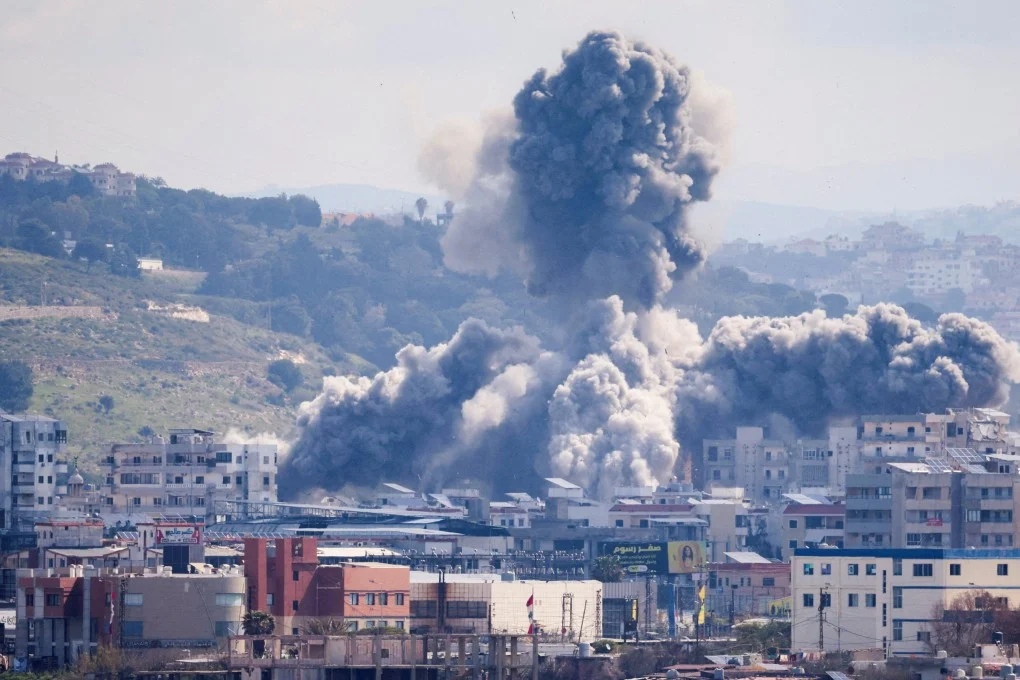
Israeli military pressure has intensified in southern Lebanon, where Israeli forces launched a series of airstrikes, prompting Prime Minister Benjamin Netanyahu to call for evacuations in certain areas of the capital, Beirut. This escalation comes just hours after the announcement of a two-week ceasefire agreement between the United States and Iran, leading to questions about how this truce will affect the ongoing conflict with Hezbollah.
In his statements, Netanyahu emphasized that the ceasefire reached between the US and Iran does not include military operations against Hezbollah, indicating that Israel may continue to target the armed group in Lebanon. This escalation has raised growing concerns in the region, as the war that began over six weeks ago continues to cause significant human casualties and severe economic damage.
Details of the Event
Reports indicate that Israeli strikes targeted Hezbollah positions in southern Lebanon, with warnings issued to local residents to evacuate. This escalation occurs at a sensitive time, as the international community seeks to calm tensions in the region after the war has led to thousands of deaths and a worsening humanitarian crisis.
The ceasefire brokered by Pakistan represents an attempt to de-escalate the conflict; however, Netanyahu's statements suggest that Israel will not back down from its operations against Hezbollah, complicating the security situation in Lebanon further.
Background & Context
Historically, relations between Israel and Hezbollah have been marked by ongoing tensions, with Hezbollah being one of Israel's most prominent adversaries in the region. Since the outbreak of the Lebanese Civil War in the 1980s, Hezbollah has become a key player in the Lebanese conflict, supported by Iran. Tensions between the two sides have notably escalated in recent years, particularly following increased Israeli military activities in Syria and Lebanon.
In a broader context, these events reflect the geopolitical tensions in the Middle East, where the interests of major powers like the United States and Iran intersect, further complicating the situations in Lebanon and Syria.
Impact & Consequences
The Israeli military escalation in Lebanon could exacerbate the humanitarian situation in the region, as local populations suffer from the ongoing war's repercussions. Additionally, the continuation of military operations may lead to increased tensions between Israel and neighboring countries, threatening regional stability.
Moreover, the instability in Lebanon could impact global energy markets, as any escalation in the conflict may disrupt oil and gas supplies, negatively affecting the global economy.
Regional Significance
The ongoing events in Lebanon have a direct impact on neighboring Arab countries, as any escalation in the conflict could lead to a flow of refugees and increased economic burdens on host countries. Additionally, the situation in Lebanon may affect relations between Arab states and Iran, as some countries seek to reduce Iran's influence in the region.
In conclusion, the situation in Lebanon remains under close observation, as any new developments could significantly affect security and stability in the region.