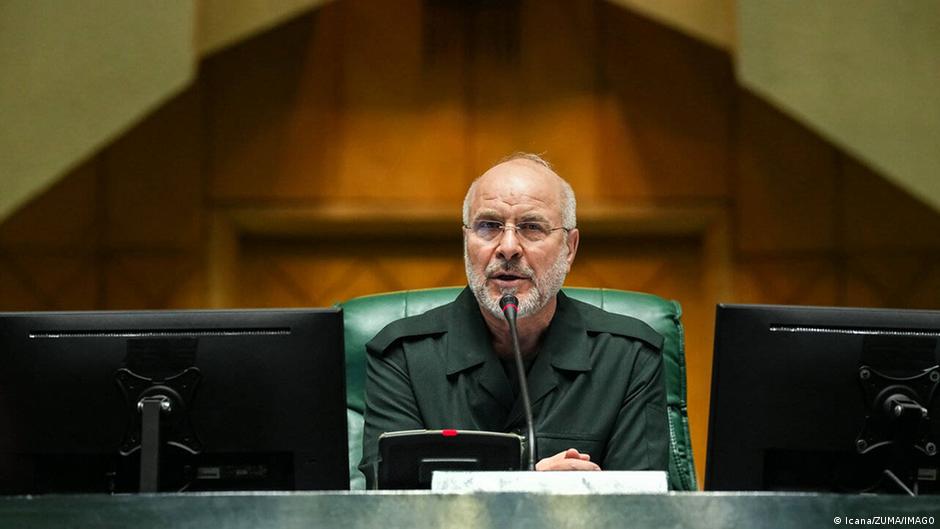
U.S. President Donald Trump announced on Monday that talks with Iran are underway, raising hopes for a potential agreement to end the ongoing conflict. However, Mohammad Baqer Qalibaf, the Speaker of the Iranian Parliament, denied the existence of any negotiations, describing the news as 'fake' and intended to manipulate financial and oil markets.
As the United States seeks to improve relations with Iran, reports have emerged that Egypt, Pakistan, and Turkey have intervened in an attempt to arrange a phone call with Qalibaf and his team. However, it appears that the leadership in Tehran is not prepared to engage in any discussions at this time, reflecting the ongoing tensions between the two countries.
Event Details
Mohammad Baqer Qalibaf is considered one of the most prominent political figures in Iran, having close ties with the armed forces. Born in 1959, he is a former pilot and a former commander in the Islamic Revolutionary Guard Corps. He holds a PhD in political geography, with his dissertation addressing the relationship between space, power, and security politics.
During the Iran-Iraq War (1980-1988), Qalibaf served as a soldier and then rose through the ranks of the Revolutionary Guard to become the commander of the air force. After the war, he led the Khatam al-Anbiya organization, the engineering wing of the Revolutionary Guard, which played a key role in the country's reconstruction post-war.
Background & Context
Qalibaf's political history is filled with challenges and ambitions. He ran for the presidency three times, losing in 2005 to Mahmoud Ahmadinejad, and then served as the mayor of Tehran from 2005 to 2017. During his tenure, he faced severe criticism over corruption allegations, as many government properties were sold below their market value, sparking widespread controversy.
Moreover, it is alleged that Qalibaf diverted large sums from the city treasury to his wife's foundation, which claims to support single mothers. However, these allegations have not been thoroughly investigated due to his close relationship with Supreme Leader Ali Khamenei.
Impact & Consequences
Speculation is growing about Qalibaf's future amid escalating tensions between Iran and the United States. Qalibaf is a pivotal figure in the Revolutionary Guard, and his ability to remain insulated from American and Israeli attacks reflects his strength and influence within the Iranian system.
Additionally, the corruption issues linked to him could impact his political image, especially given the difficult economic conditions Iran is facing. These issues represent a vulnerability that could be used against Qalibaf in the future, particularly if public protests against corruption and mismanagement continue.
Regional Significance
Events surrounding Qalibaf and the potential negotiations with Iran are particularly significant for the Arab region. Iran plays a key role in many regional conflicts, and its policies affect the security and stability of neighboring countries. Should an agreement be reached with the United States, it could lead to a shift in regional dynamics, which may have positive or negative repercussions for Arab nations.
Ultimately, the future of Iranian-American relations remains uncertain, but Qalibaf's role in these talks could have a substantial impact on the political landscape in the region.