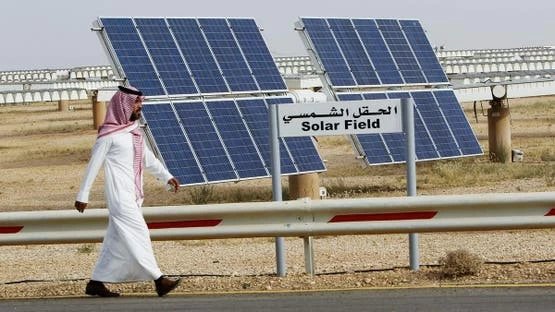
A recent report reveals significant growth in Saudi Arabia's renewable energy projects, with total capacities expected to reach approximately 64 gigawatts by 2025. This includes solar and wind energy, reflecting the strategic shift towards diversifying the energy mix.
According to the report, projects initiated in 2025 alone are expected to account for around 20.6 gigawatts, while the total capacities connected to the electrical grid by the end of the year will reach 12.3 gigawatts. These figures indicate a transition of several projects from the proposal and development phase to actual grid connection, enhancing supply readiness.
Details of the Developments
In the area of energy storage, the report noted that the total capacities of battery storage projects proposed are expected to reach 30 gigawatt-hours by the end of 2025, while capacities connected to the electrical grid will amount to 8 gigawatt-hours. This development enhances grid flexibility and supports supply reliability, mitigating the challenges of variability associated with renewable energy sources.
The report also highlighted that the Kingdom continues to set record low costs for electricity production from renewable sources. The Al-Shuaiba solar project recorded a cost of 1.04 cents per kilowatt-hour, making it the lowest globally, while the Najran project ranked second worldwide with a cost of 1.09 cents per kilowatt-hour.
Background & Context
In the wind energy sector, the Al-Dawadmi project recorded a production cost of 1.33 cents per kilowatt-hour, while the Al-Ghat project recorded 1.57 cents per kilowatt-hour. These figures reflect improvements in development efficiency and the competitiveness of natural resources, alongside advancements in procurement and contracting models in renewable energy projects.
These indicators carry significant economic and technical implications, as renewable energy projects in the Kingdom have evolved from merely expanding production capacities to becoming an integrated system that includes proposal, financing, grid connection, storage, and cost reduction, thereby enhancing energy security and improving the efficiency of the national energy mix.
Impact & Consequences
The annual vision report for 2025 confirms that the Kingdom is progressing towards building a renewable energy sector capable of combining natural abundance, price competitiveness, grid reliability, and localizing supply chains. This development enhances the Kingdom's position as a key player in the global clean energy future.
These projects are part of Vision 2030, which aims to reduce dependence on oil and promote environmental sustainability. Additionally, these projects contribute to creating new job opportunities and boosting the local economy.
Regional Significance
Saudi Arabia's renewable energy projects contribute to enhancing its status as a major supporter of clean energy in the region. They can also serve as a model for other Arab countries seeking to develop sustainable energy sources.
In conclusion, these projects represent a significant step towards achieving sustainable development goals and reflect the Kingdom's commitment to promoting the use of clean energy while balancing economic growth with environmental preservation.