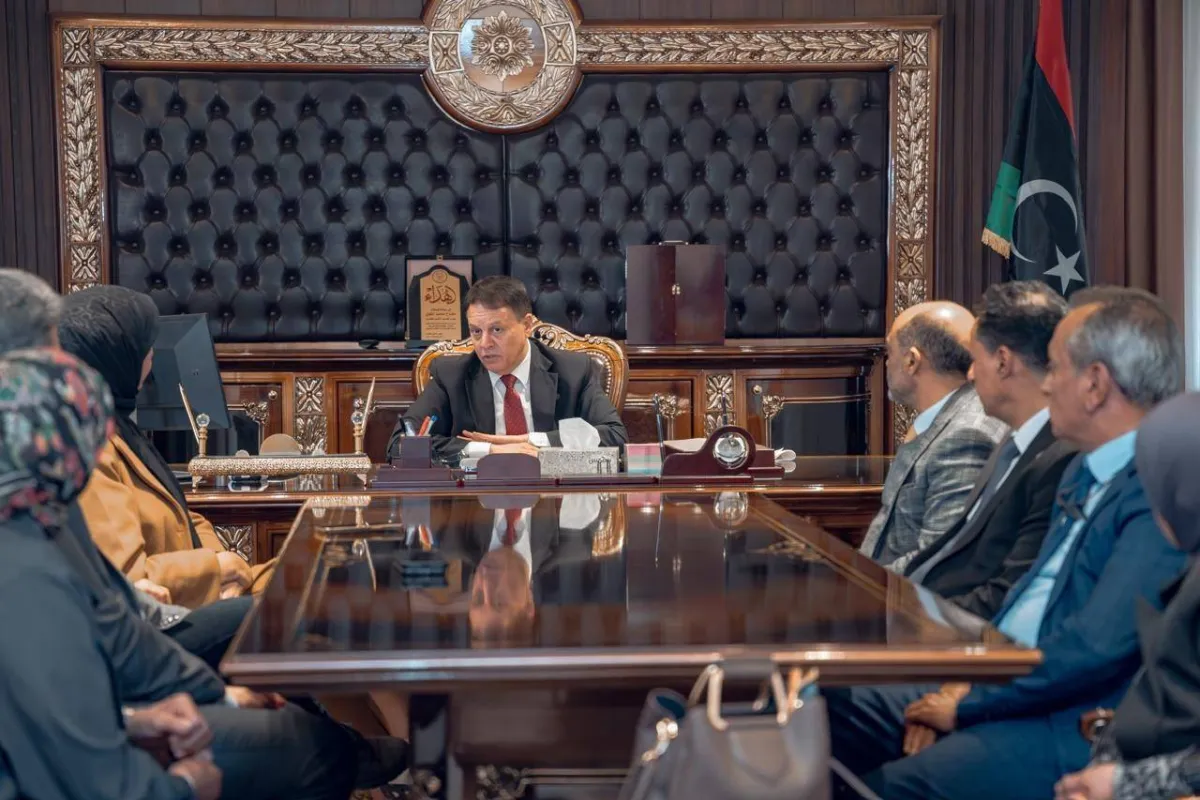
The Libyan judiciary faces a new crisis highlighting the division between the two sides of the Supreme Judicial Council, where one side has warned against decisions regarding the transfer and termination of judicial members, citing their illegality.
This crisis is manifested in the exchange of conflicting decisions and statements between the two disputing parties over the presidency of the Supreme Judicial Council in both Tripoli and Benghazi, increasing fears of a division within the judiciary, similar to what has been witnessed in other sovereign institutions in the country over the past years.
Details of the Event
The Supreme Judicial Council issued a strongly worded statement on Friday evening from Benghazi, describing the decisions related to the transfer and termination of judicial members as having reached an unprecedented level of absurdity, affirming that it is a blatant call to undermine the unity of the judicial apparatus. The council clarified that it was determined not to respond with counter-decisions, but it was compelled to issue a final warning, demanding the cessation of these decisions aimed solely at confusion and division.
These developments come in the context of a severe judicial crisis that has plagued Libya since the end of last year, reflecting the deep political divide between the east and west in a country suffering from political and military fragmentation for years. The first spark of the judicial crisis ignited last year when the House of Representatives issued several laws to restructure the Supreme Judicial Council, leading to angry reactions from authorities in the east.
Context and Background
The judicial crisis in Libya is evident amid attempts to storm the headquarters of the Supreme Judicial Council in Tripoli by entities linked to the Supreme Court, leading the council, headed by Miftah Al-Qawi, supported by the House of Representatives, to temporarily transfer some departments to Benghazi. The council condemned the storming, reflecting a state of institutional confusion in the country.
Concerns are growing over the division of the judiciary, which has remained relatively unified throughout the years of political conflict since 2014. The United Nations and judicial and union entities have warned that any division could undermine the credibility of judicial rulings and threaten the unity of the state.
Consequences and Impact
There are increasing fears that judicial division could exacerbate the political and economic crises in Libya, as instability within the judiciary could negatively affect trust in the legal system and increase corruption. Additionally, these crises could lead to heightened conflict between the warring factions in the country.
At the same time, the repercussions of a leaked report from the UN expert committee, which discussed "corruption incidents" involving former and current officials and military leaders, continue to complicate the political landscape in Libya. The President of the Presidential Council, Mohamed Al-Menfi, has instructed not to enter into any new agreements in this context.
Impact on the Arab Region
The judicial crisis in Libya serves as an indicator of the ongoing political divisions in the region, reflecting the challenges faced by Arab countries in building strong and independent judicial institutions. Moreover, the judicial division in Libya could affect regional stability, necessitating international community intervention to support national reconciliation efforts.
In conclusion, Libya remains in urgent need of restoring political and judicial unity, as the continuation of divisions could exacerbate crises and increase the suffering of the Libyan people.