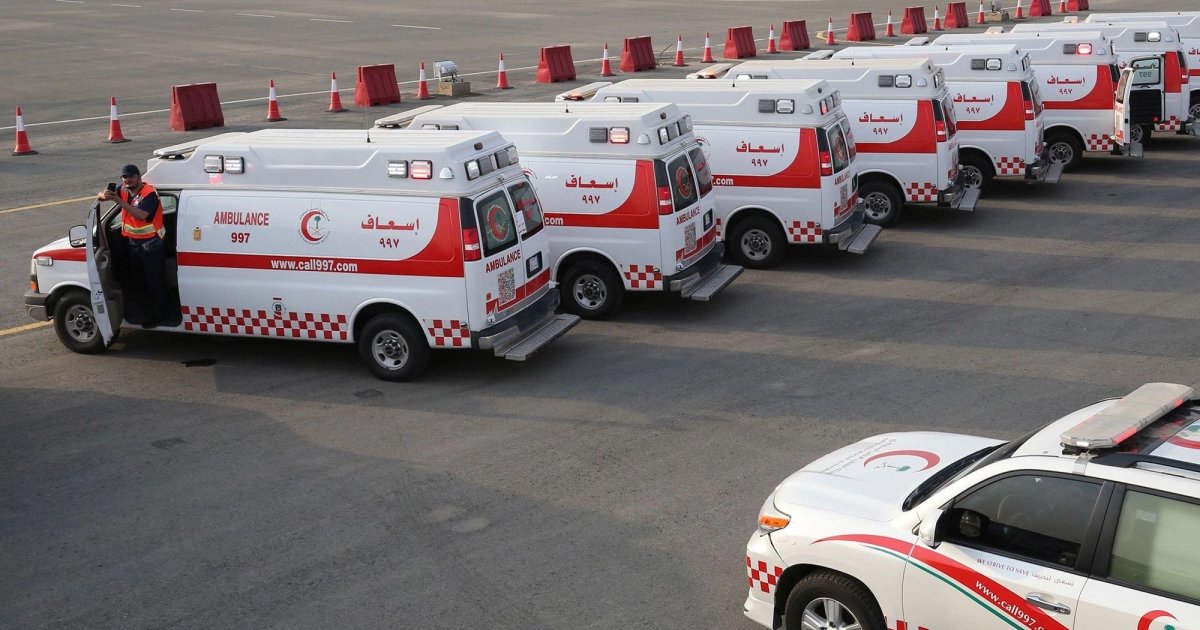
In a medical emergency, the Saudi Red Crescent teams in Jeddah managed to save the life of a Yemeni resident in his thirties who experienced a cardiac arrest. The teams responded swiftly, arriving at the scene in just 4 minutes and 52 seconds, which contributed to restoring his pulse and stabilizing his condition.
The Saudi Red Crescent received a report about an unconscious person in a shopping center, where bystanders had already begun performing cardiopulmonary resuscitation (CPR) before the emergency teams arrived. Meanwhile, the Red Crescent's command and control center responded quickly, with specialists assessing the patient's condition and guiding callers on how to properly perform CPR.
Details of the Incident
Upon arrival, the emergency teams confirmed that the patient had no pulse or breathing. They promptly executed advanced resuscitation procedures, leading to the restoration of his pulse and breathing, after which his condition stabilized. The Saudi Red Crescent emphasized the importance of combining community awareness with rapid emergency response to save lives during cardiac emergencies.
The Red Crescent also pointed out that early intervention within the first eight minutes, before emergency services arrive, significantly enhances survival chances. They encouraged community members to acquire first aid skills, noting that the "Mutahid" platform offers free training courses in CPR and basic first aid.
Background & Context
First aid is a fundamental part of healthcare, playing a vital role in saving lives during emergencies. In many countries, including Saudi Arabia, awareness of the importance of first aid is promoted through training programs and community initiatives. Studies have shown that rapid intervention can reduce mortality rates from cardiac arrests.
This incident highlights the critical nature of quick responses in cardiac emergencies, where the first few minutes can be decisive in saving a patient's life. Raising community awareness about first aid can lead to improved survival rates in emergencies. Encouraging individuals to learn first aid skills can contribute to building a safer community, where people are equipped to respond effectively in emergencies.
Impact & Consequences
This incident underscores the importance of rapid response in cardiac emergencies, where the initial minutes are crucial for saving the patient's life. Enhancing community awareness about first aid can lead to better survival rates in emergencies. Additionally, encouraging individuals to learn first aid skills can help create a safer environment, enabling people to respond effectively in crisis situations.
Moreover, the collaboration between bystanders and emergency responders in this case illustrates the potential for community involvement to make a significant difference in emergency situations. The proactive measures taken by those present at the scene exemplify how immediate action can lead to positive outcomes in life-threatening scenarios.
Regional Significance
The successful rescue of the Yemeni resident in Jeddah serves as a reminder of the critical role that emergency medical services play in urban areas. It highlights the need for continuous training and awareness programs to prepare citizens for emergencies. The Saudi Red Crescent's efforts in promoting first aid training are essential for fostering a culture of preparedness within the community.
In conclusion, this incident not only saved a life but also serves as a call to action for communities to prioritize first aid training and awareness. By equipping individuals with the necessary skills, we can enhance the overall safety and health of our communities.