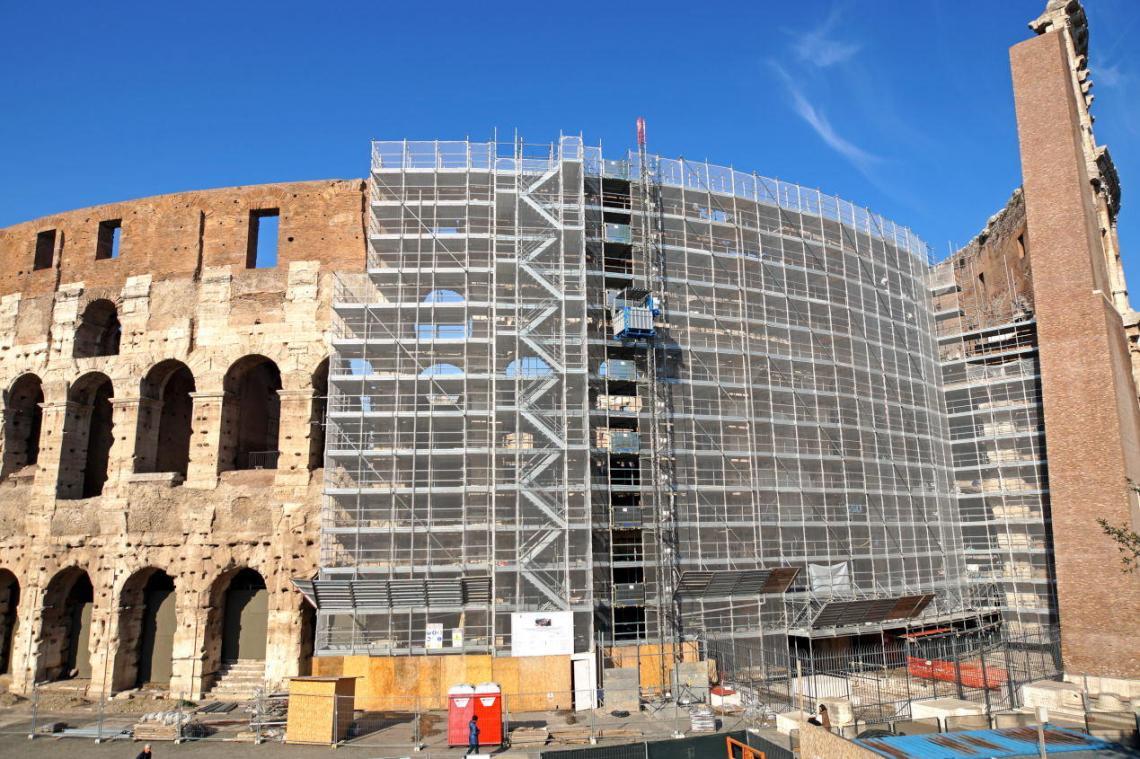
Italian authorities have announced the completion of renovation works at the Colosseum, the famous historical landmark in the capital city of Rome, where the new project has added an aesthetic touch to this monument that dates back over 2000 years. The Colosseum, regarded as a symbol of ancient Rome, is now undergoing a renewal that highlights its magnificence and enhances its tourist status.
The renovation works included cleaning the exterior facade and repairing damaged parts, contributing to restoring the Colosseum to its former glory. Modern techniques were employed to ensure the preservation of this historical site, which is considered one of the Seven Wonders of the World.
Details of the Renovation
The renovation took approximately two years, during which dirt and pollution accumulated over the years were removed. Some damaged limestone parts were replaced, which helped improve the overall appearance of the Colosseum. Eco-friendly materials were used in the renovation processes, reflecting Italy's commitment to preserving cultural and environmental heritage.
The Colosseum, built in the 1st century AD, was previously used for gladiatorial contests and public spectacles. Today, it is a major tourist destination, attracting millions of visitors annually. With the completion of the renovation, the number of visitors is expected to rise significantly, contributing to the local economy.
Background & Context
The history of the Colosseum spans over two thousand years, having been constructed during the reign of Emperor Flavius Vespasian. The Colosseum has witnessed numerous historical events, including battles and competitions that captivated audiences. Over the centuries, it has suffered extensive damage due to earthquakes and pollution, necessitating ongoing restoration efforts.
In recent years, renovation works have become part of broader efforts to preserve cultural heritage in Italy, as the government seeks to improve tourism infrastructure and enhance the visitor experience. The Colosseum stands as one of the landmarks representing Rome's rich history and reflects the architectural arts of ancient Rome.
Impact & Consequences
This renovation is considered an important step towards preserving cultural heritage, reflecting Italy's commitment to maintaining its historical landmarks. These improvements are expected to lead to an increase in tourist numbers, which will boost the local economy and create new job opportunities in the tourism sector.
Moreover, the renewal of the Colosseum underscores the importance of preserving cultural heritage in the face of contemporary challenges. Restoring historical landmarks not only enhances tourism but also plays a vital role in strengthening the cultural identity of nations.
Regional Significance
Cultural tourism is one of the most important economic sectors in many Arab countries, as these nations strive to promote their historical landmarks. Italy's experience in restoring the Colosseum can serve as a model for the Arab region, where many historical sites require maintenance and restoration.
With the growing interest in cultural tourism in the Arab world, these experiences can contribute to enhancing cooperation between Arab countries and Italy in the fields of tourism and cultural heritage.