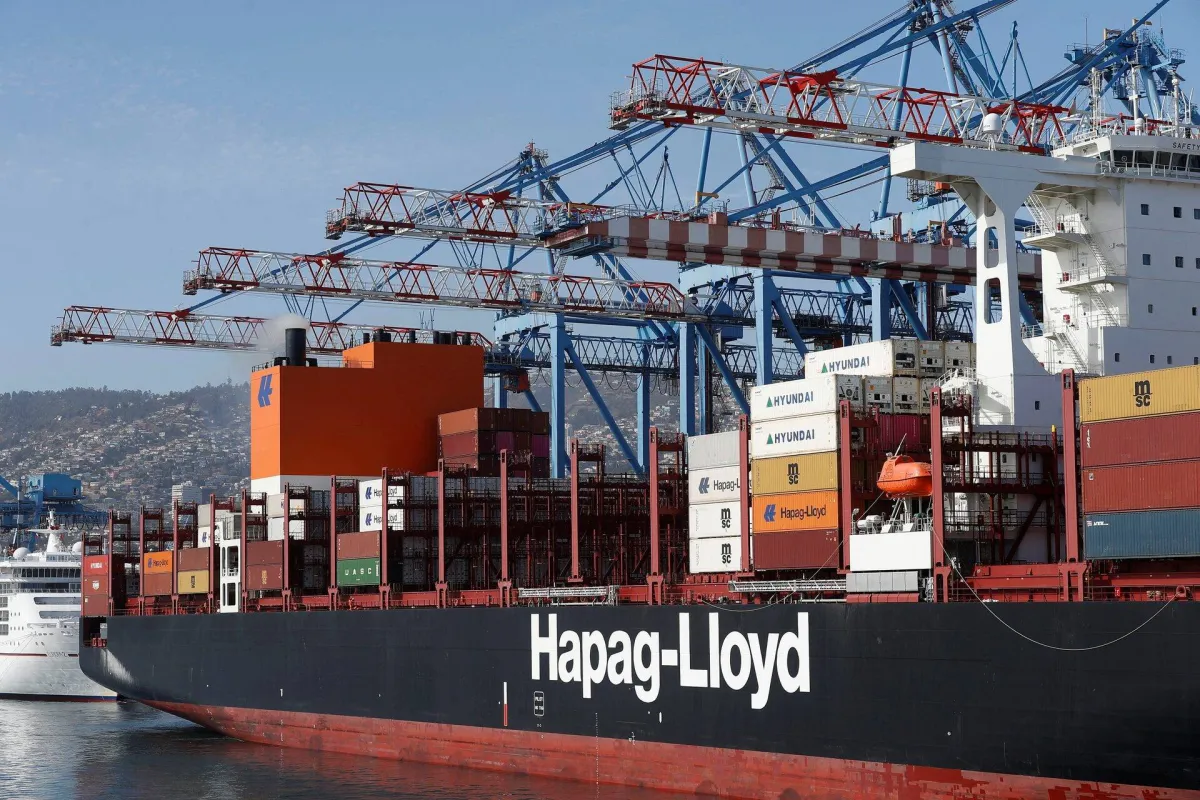
Hapag-Lloyd expressed cautious optimism on Wednesday about the possibility of resuming shipping through the Strait of Hormuz, following a two-week ceasefire agreement between the United States and Iran. However, the company confirmed that restoring normal shipping operations across its network will take at least 6 to 8 weeks.
In a conference call with clients, CEO Rolf Habben Jansen emphasized the need for additional security guarantees, noting a position similar to that stated by the Maersk Group. He explained that the conflict in the Middle East continues to significantly disrupt shipping and supply chains, describing the situation as volatile.
Details of the Event
Habben Jansen estimated the additional costs arising from the Middle East crisis to be between $50 and $60 million per week, warning that the company may have to pass some of these costs onto its customers, compared to previous estimates that ranged from $40 to $50 million. He also pointed out that around 1,000 ships remain stranded in the region, including vessels belonging to Hapag-Lloyd with a total capacity of about 25,000 standard containers.
In a related context, Greece plans to release two million barrels of oil from its strategic reserves as part of a coordinated intervention by the International Energy Agency aimed at stabilizing global prices. The decision was made during a meeting held on April 2, where the crisis management committee met with representatives from refineries and fuel trading companies.
Background & Context
These developments come at a time when the world is witnessing increasing geopolitical tensions, with crises in the Middle East directly impacting global shipping operations. These crises have led to rising oil prices and increased costs for companies, negatively affecting global markets.
At the same time, stock markets in China and Hong Kong experienced a notable rebound on Wednesday, as stock indices rose due to improved risk appetite following the ceasefire agreement. The Chinese CSI 300 index rose by 2.8 percent, while the Hong Kong Hang Seng index recorded a similar increase.
Impact & Consequences
These events underscore the importance of stabilizing shipping operations in the Strait of Hormuz, which is one of the most crucial maritime corridors in the world. Any disruption in this movement could lead to increased costs and a slowdown in economic growth in many countries.
Moreover, the continuation of tensions in the Middle East could affect oil prices, which would have a ripple effect on the global economy. If the situation remains as it is, we may witness further pressures on companies and consumers.
Regional Significance
For Arab countries, stabilizing shipping operations through the Strait of Hormuz is vital, as many nations rely on these routes to export their oil. Any disruption in this movement could have negative impacts on Arab economies, especially those heavily dependent on oil exports.
In conclusion, hope remains pinned on stabilizing conditions in the region, as any improvement in relations between the United States and Iran could contribute to enhancing shipping operations and alleviating economic pressures.