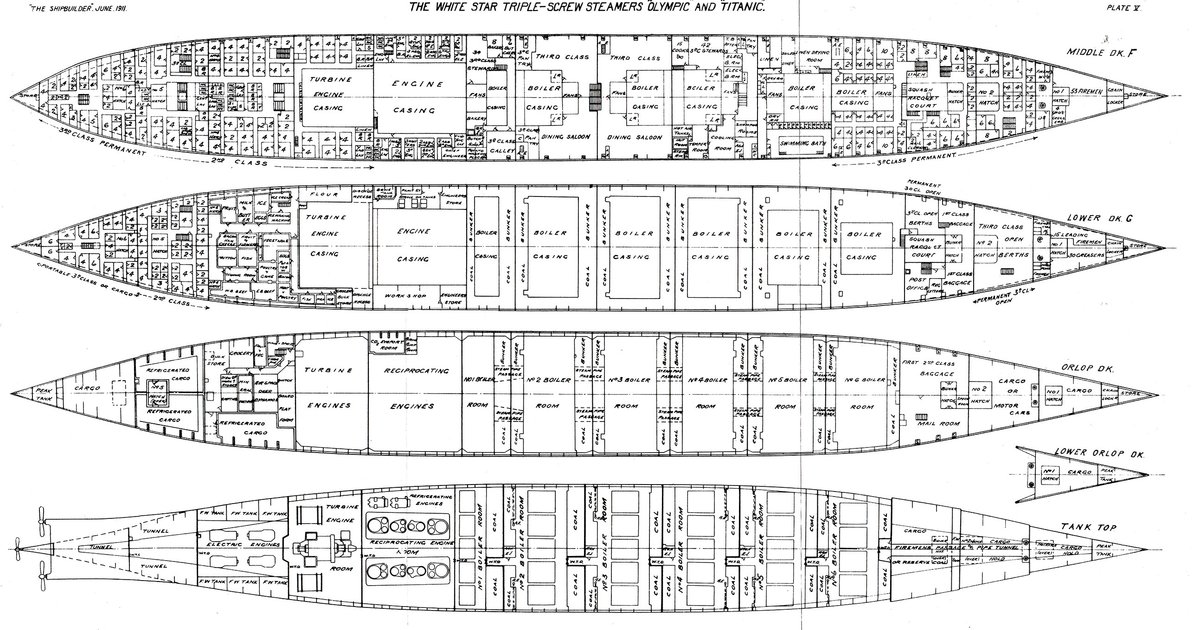
More than a century after its sinking, the technical plans and designs of the Titanic, which was considered the largest and most technologically advanced ship of its time, are now available to the public for the first time. These plans are part of the Harland and Wolff archive, stored at the Ulster Folk Museum in Northern Ireland, where visitors can access them online or through in-person visits.
The Titanic, which embarked on its maiden voyage in April 1912, was regarded as a symbol of luxury and technological advancement. It featured unprecedented amenities for its time, such as Turkish baths, a swimming pool, and a gymnasium, even in third class. However, its tragic journey ended when it struck an iceberg, leading to its sinking and the loss of over 1,500 lives.
Event Details
The plans and designs to be showcased include those of the Titanic and its sister ships, the Olympic and Brittanic, which were designed at the Harland and Wolff office in Belfast. This archive contains hundreds of thousands of documents and plans that illustrate how the ships were designed and built. The project to archive these documents was funded through an archival grants program, allowing the public to explore the history of shipbuilding in Belfast.
William Blair, the collections manager at the National Museum of Northern Ireland, stated that access to the archive was previously limited, but this project will expand access and encourage engagement with maritime history.
Background & Context
The Titanic, launched in 1912, was considered the pinnacle of innovation in maritime transport. Although the ship had enough lifeboats according to maritime standards at the time, these boats could only accommodate half the number of passengers. The ship was also equipped with a number of watertight compartments that were supposed to protect it from sinking, but after colliding with the iceberg, five of these compartments were breached, leading to its sinking.
The wreck of the Titanic was discovered on the ocean floor in 1985, located about 2.5 miles (4 km) off the coast of Newfoundland, Canada. These discoveries have contributed to increasing interest in the ship's history and its tragedies.
Impact & Consequences
The Titanic is regarded as a symbol of innovation and progress, but its sinking also highlights the risks associated with modern technology. This historical event sparked extensive discussions about maritime safety standards and the importance of proper planning in ship design. The story has also inspired numerous films and books, making it an integral part of popular culture.
The current project to open the archive to the public is considered an important step towards enhancing awareness of the history of shipbuilding in Belfast and reflects the commitment of museums to provide knowledge to the public. This can encourage further research and studies on maritime transport history.
Regional Significance
Although the Titanic is a historical event concerning the Western world, the lessons learned from its sinking can be applied anywhere, including Arab countries. With the increase in maritime transport projects in the region, understanding maritime history and the technologies used in the past is crucial for improving safety standards in the future.
In conclusion, opening the archive to the public underscores the importance of preserving and documenting maritime history, allowing future generations to understand the lessons learned from the past.