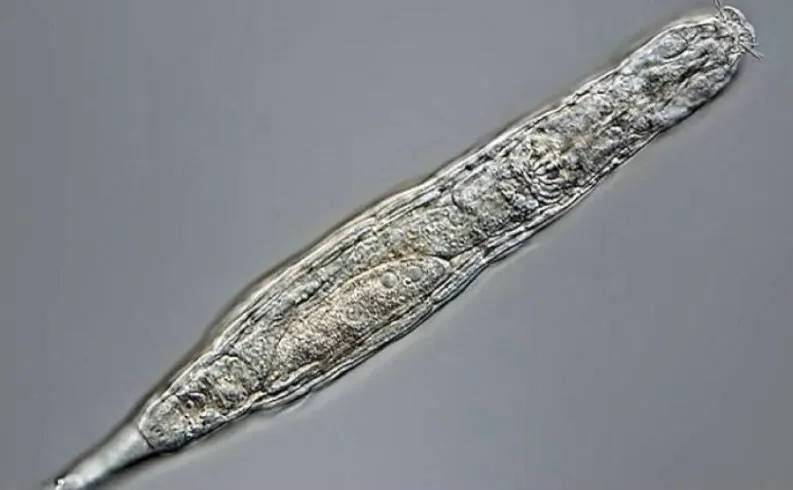
Scientists have successfully revived a microscopic organism known as the 'zombie worm' after it spent 24,000 years in hibernation in Siberian permafrost. The organism, scientifically named 'Bdelloid rotifer', demonstrated remarkable reproductive abilities upon awakening.
This organism was extracted from a depth of 3.5 meters in the Alazeya River area of northeastern Siberia, where researchers melted the permafrost that had preserved it in a frozen state since the late Pleistocene epoch, when woolly mammoths still roamed the earth. Once the appropriate conditions were restored, the organism regained its activity and began reproducing asexually.
Details of the Discovery
A team of researchers at the Russian Soil Remains Laboratory managed to date the extracted sample using radiocarbon dating, discovering that its age ranges between 23,960 and 24,485 years. The organism, which measures about half a millimeter in length, is known for its extraordinary ability to survive in harsh conditions, capable of withstanding radiation, desiccation, and extreme cold.
The survival mechanism employed by this organism is known as 'cryptobiosis', where metabolic activity drops to nearly undetectable levels, allowing it to wait until surrounding conditions improve. The lead researcher, Stas Malavin, stated that this discovery serves as strong evidence of multicellular animals' ability to survive for tens of thousands of years in a state of cryptobiosis.
Background & Context
Historically, there have been attempts to revive single-celled organisms from ice, but reviving a multicellular organism like the 'zombie worm' represents a significant scientific achievement. Before this discovery, the known maximum survival time for primitive rotifers in a state of biological dormancy ranged from 6 to 10 years, while the new finding shows a survival capability up to 2,400 times the previous duration.
With permafrost melting at an accelerated rate, ancient microbes, bacteria, and viruses are emerging, raising concerns about the potential for new diseases. Although the viruses studied so far have not been linked to human diseases, scientists are closely monitoring the situation.
Impact & Consequences
This discovery acts as a window into the past, allowing scientists to understand how living organisms adapt to harsh environmental conditions. It also opens avenues for studying how climate change affects ancient life forms, which may help develop new strategies to tackle current environmental challenges.
These findings also highlight the importance of ongoing scientific research in extreme environments, as it can reveal new secrets about life on Earth. Furthermore, this discovery underscores the significance of preserving biodiversity in the face of climate change.
Regional Significance
Although this discovery occurred in Siberia, its impact extends to the Arab region by enhancing awareness of the importance of scientific research and modern technology in understanding environmental changes. It may also inspire scientists and researchers in the Arab world to explore local environments and their biodiversity.
In light of the environmental challenges faced by many Arab countries, this discovery demonstrates how scientific research can contribute to finding innovative solutions to these challenges.