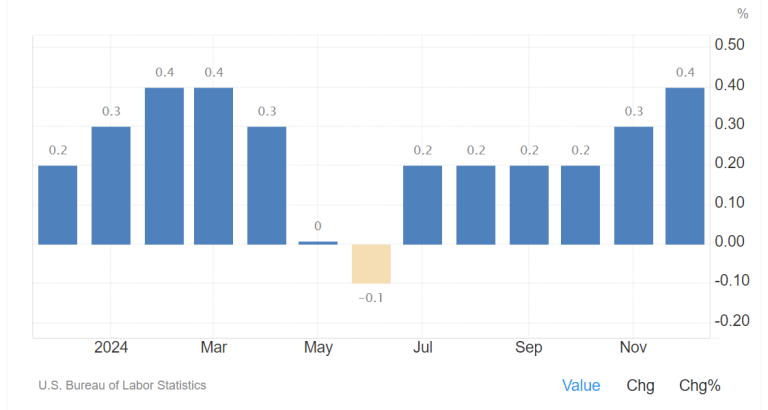
The United States is currently experiencing a significant rise in inflation rates, where the increase in prices has surpassed the growth in wages. This economic phenomenon is causing concern among citizens, who are feeling increasing financial pressure, affecting their purchasing power.
Reports indicate that this surge in prices is attributed to several factors, including disruptions in supply chains and rising energy costs. While citizens strive to improve their financial situations, they find themselves facing new challenges related to the escalating cost of living.
Details of the Situation
In recent months, the U.S. has witnessed a spike in the prices of essential goods, leading to a depletion of household purchasing power. According to data, food and energy prices have risen significantly, impacting American family budgets. This price increase is the highest in three years, raising fears that this phenomenon may persist.
Some economic analyses predict that inflation will continue to rise, meaning that citizens may face further financial pressures in the future. Under these circumstances, the U.S. government must take effective measures to address this crisis.
Background & Context
Historically, the United States has experienced periods of high inflation; however, what distinguishes the current situation is the simultaneous rise in prices alongside wage increases, complicating the scenario. In previous years, there have been efforts by the federal government and the U.S. central bank to curb inflation, but current challenges require new strategies.
Many economic sectors are affected by this inflation, including housing and transportation. Additionally, global crises, such as the COVID-19 pandemic, have exacerbated this issue, making it difficult to predict the future of the American economy.
Impact & Consequences
The rise in inflation directly affects citizens' lives, forcing many to cut back on their daily expenses. Businesses also face challenges in pricing, which could lead to job cuts or even the closure of some enterprises. This economic dynamic may result in increased unemployment rates, putting additional pressure on the government.
The U.S. government is expected to take steps to boost the economy, such as raising interest rates or providing financial incentives. However, these measures may come with social and economic costs, making it essential to monitor the situation closely.
Regional Significance
The implications of rising inflation extend beyond individual households, affecting the broader economic landscape. As inflation continues to rise, it may lead to increased tensions in various sectors, prompting discussions about economic policy and fiscal responsibility.
In conclusion, the current inflationary trends pose significant challenges that require urgent attention from policymakers to ensure economic stability and protect citizens' livelihoods.