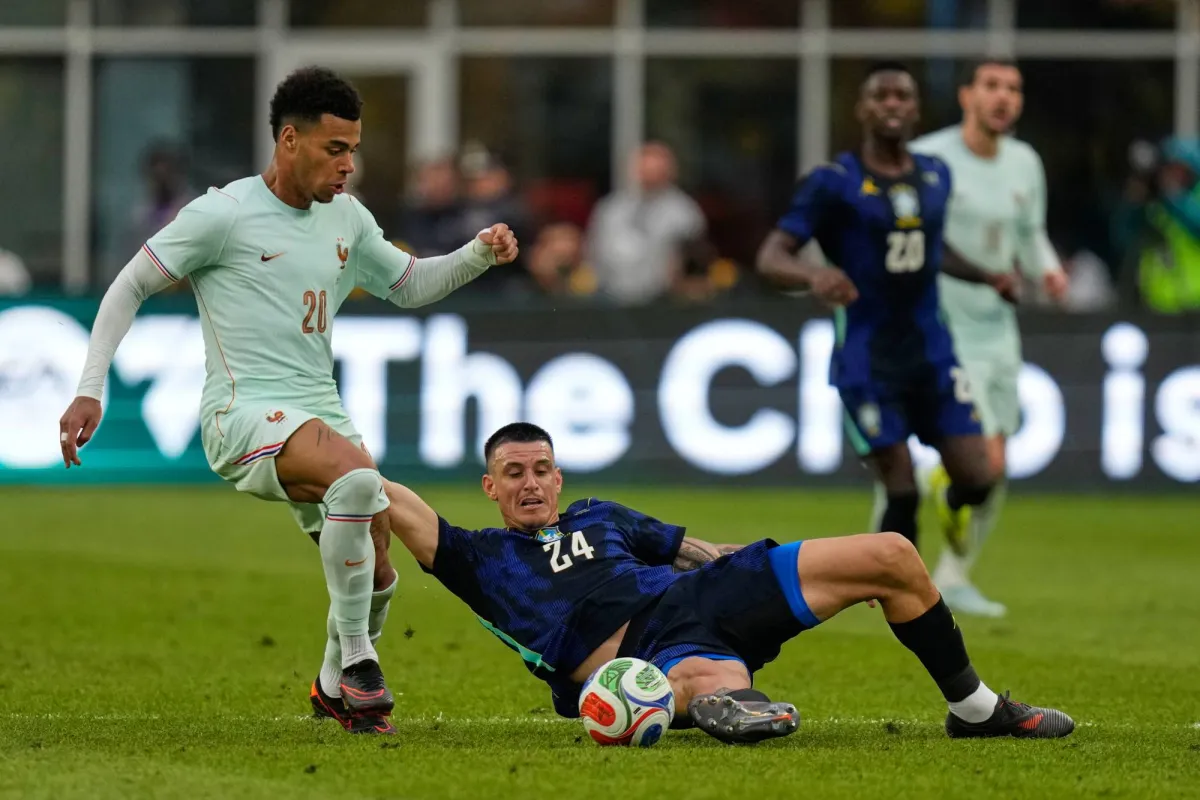
Brazilian defender Roger Ibanez, representing the Brazil national team and Al Ahli, confirmed that his move to the Saudi League has been a significant turning point in his career, noting that he has become more mature both on and off the field.
During a press conference held before the friendly match between Brazil and Serbia, Ibanez explained that his beginnings were modest in southern Brazil, before his career took a drastic turn during a trial with Fluminense. His coach decided to shift him from a defensive midfielder to a center-back, a decision that later opened doors for his professional career in Europe through Atalanta and then Roma.
Details of the Event
The Brazilian defender emphasized his readiness to play in any position that serves the team, stating, "I don’t mind playing as a full-back or even in other positions, and representing the Brazil national team is an honor that surpasses any pressure." These statements reflect the team spirit and his commitment to success on the international stage.
Regarding his experience with Al Ahli, Ibanez said, "I have grown a lot here, and I have worked on developing my mental side, and I am now required to be a leader both on and off the field, after being one of the youngest players at Roma." These words reflect the player's development and adaptation to the new challenges he faced in the Saudi League.
Context and Background
Ibanez's experience in the Saudi League is part of a larger trend in the sports world, where many clubs are seeking to attract outstanding players from around the globe. The Saudi League, which has seen massive investments in recent years, has become a preferred destination for many stars, reflecting a noticeable improvement in the level of competition.
The presence of global players in the Saudi League, such as Fabinho and Bento, showcases the significant enhancement in the quality of the game, drawing attention to this championship. Ibanez pointed out that this development is not limited to just big names, but also includes players striving to achieve their dreams of playing at the highest levels.
Implications and Effects
Ibanez rejected the prevailing notion about the declining opportunities for Saudi League players to appear internationally, asserting that the substantial development in the competition and the presence of global stars have turned eyes towards it. This trend could contribute to changing the prevailing perceptions about the quality of players in the Saudi League and enhance their chances of representing their national teams.
Ibanez also confirmed that the Saudi League has become extremely competitive, with no easy matches, given the presence of outstanding attackers who continuously challenge defenders. This situation may increase competition among players and enhance their chances of performing at high levels.
Impact on the Arab Region
Ibanez's experience in the Saudi League serves as a role model for many Arab players who aspire to achieve their professional dreams. Moreover, attracting distinguished players from various nationalities enhances the status of the Saudi League on the global sports scene.
In conclusion, Ibanez's transfer to the Saudi League is not just a step in his personal career but is part of a larger transformation occurring in the world of football, opening new horizons for players in the Arab region.