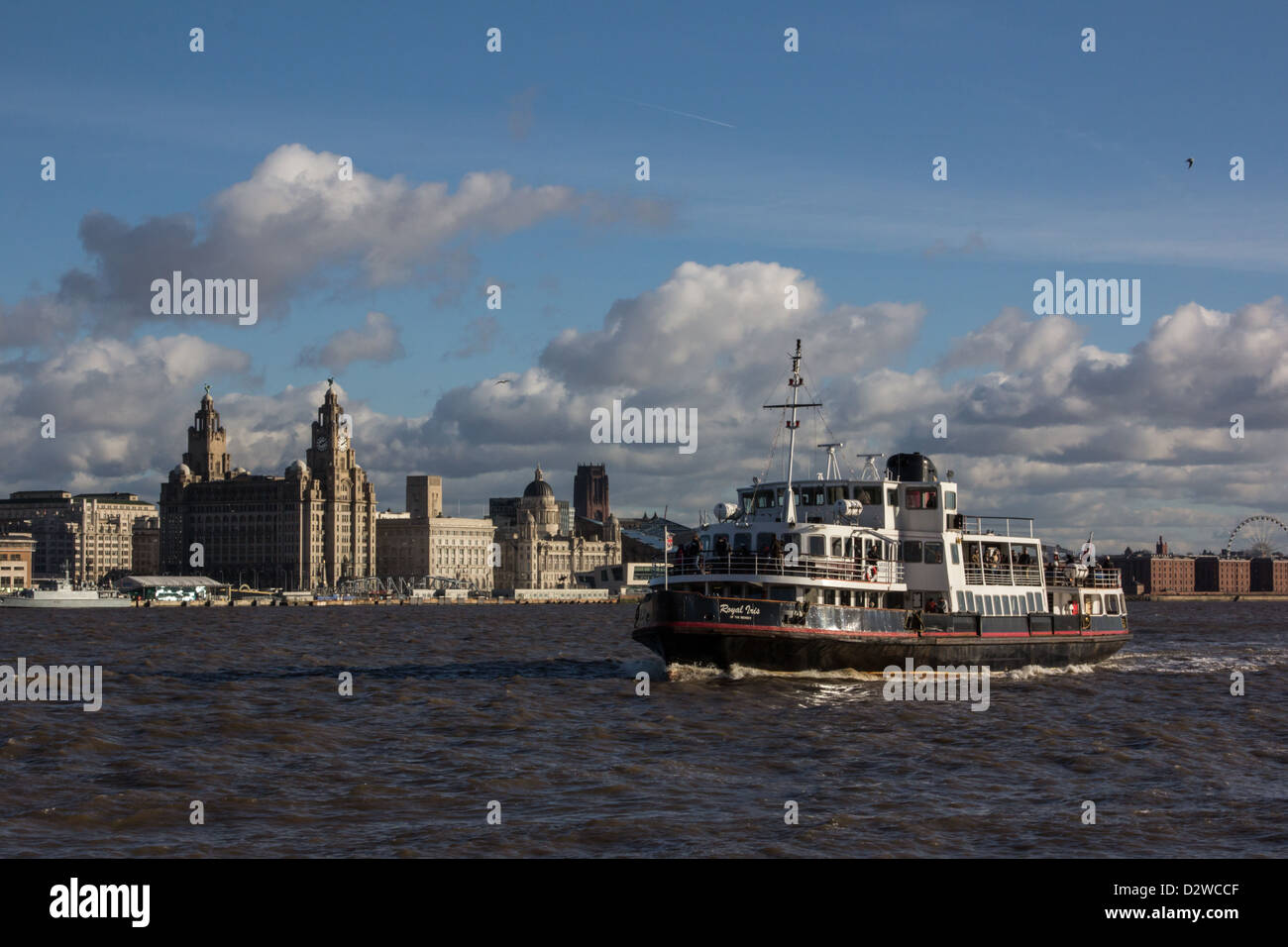
The iconic Royal Iris ferry has embarked on its final journey across the Mersey River, having served millions of passengers over 66 years. This ferry, a symbol of Liverpool, has witnessed many historical moments, including its appearance in the famous film Ferry Cross the Mersey in 1965, presented by the band Gerry and the Pacemakers.
A new ferry, the Royal Daffodil, which cost £26 million, is set to replace it later this year, while the temporary ferry Snowdrop, known for its unique design, will provide service during this transitional period.
Event Details
During the farewell ceremony, Liam Phelan from the Liverpool City Region Authority expressed appreciation for the ferry, noting that it has transported over 17 million people since 1960 between Liverpool and Wirral. He stated, "Locally, the Royal Iris is regarded as a symbol like the Mersey Tunnels and the Three Graces, and it is part of the history of the Mersey River, and today is a sad day for us."
Among the passengers witnessing the final journey were Michael Gaitens and his wife Lucy, who scattered their father's ashes in the river. Gaitens noted that his father was a sailor who loved traveling on the ferry with his children and grandchildren, considering the sight of the Three Graces upon entering the river as one of the most beautiful moments of his life.
Background & Context
The history of ferry services across the Mersey River dates back to the Domesday Book of 1086, where Benedictine monks from Birkenhead Abbey operated the first regular ferry services to Liverpool markets in the 12th century. Since then, ferry services have evolved to become an essential part of city life.
Before it was known as the Royal Iris, the ferry was called Mount Wood after its launch in 1959 and was renamed following a major refurbishment in 2001. It returned to service under its new name in 2002 after a comprehensive renovation.
Impact & Consequences
The end of the Royal Iris service is a poignant event not only for the passengers who have relied on it but also for the city as a whole. The ferry has been part of Liverpool's cultural identity, with many using it as a means of transport between the two banks. With the new ferry Royal Daffodil entering service, it is expected that this cultural spirit will continue, albeit with modern technology.
This moment embodies the importance of preserving cultural heritage, as many cities around the world face challenges in maintaining their historical landmarks amid technological advancement.
Regional Significance
Although this event occurs in the United Kingdom, it highlights the importance of cultural heritage worldwide. In the Arab world, there are many historical landmarks facing similar threats, underscoring the necessity of preserving them as part of cultural identity.
These events serve as a reminder that cultural heritage must be maintained, and communities need to find a balance between progress, technology, and preserving their history.