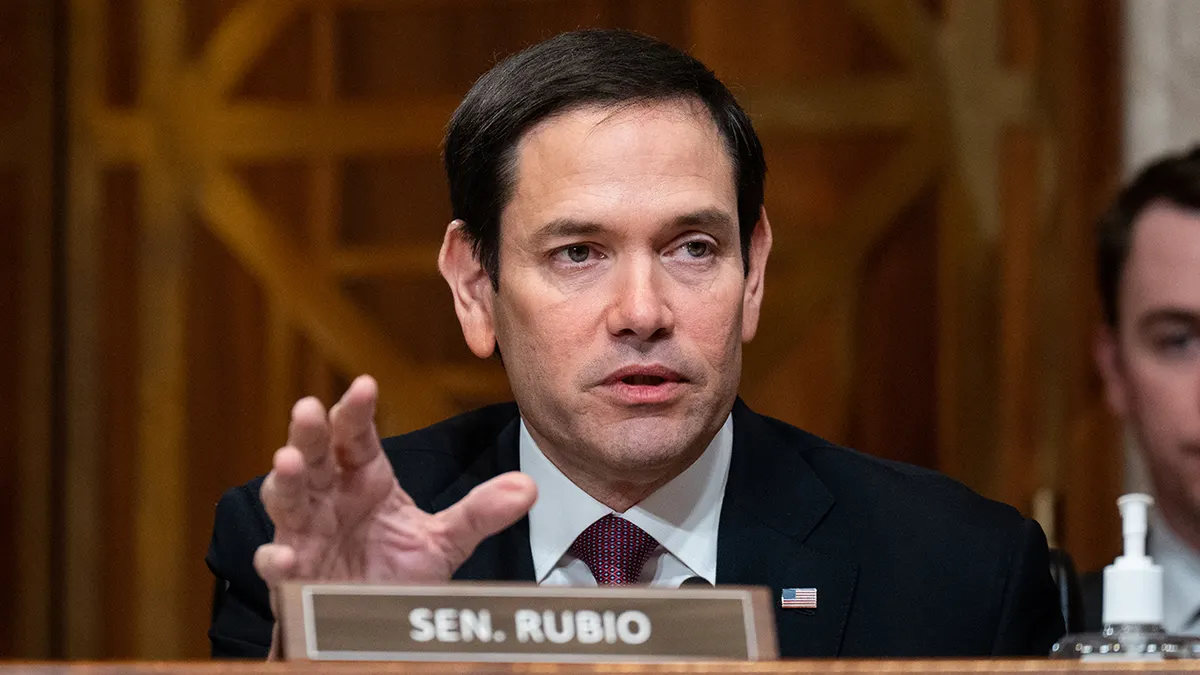
U.S. Senator Marco Rubio asserted that the public statements made by Iranian officials do not necessarily reflect what is being discussed during private talks between the two sides. These remarks come at a time of heightened tensions between the United States and Iran, as both parties seek to achieve their interests in the Middle East.
Rubio, who serves as a member of the Senate Intelligence Committee, pointed out that the Iranians adopt a dual approach in their dealings, publicly displaying hardline positions while negotiating in private with a more flexible style. This raises questions about Tehran's true intentions in international negotiations.
Details of the Event
Rubio's statements come at a sensitive time as discussions continue regarding Iran's nuclear program, which has seen multiple rounds of negotiations between Iran and major powers. The United States has expressed a desire to revive the nuclear agreement reached in 2015, from which the previous U.S. administration withdrew.
Rubio also noted that the Iranians use this strategy as a means to alleviate international pressure on them, allowing them time to develop their military and nuclear programs. This reflects the challenges faced by U.S. foreign policy in dealing with Iran.
Background & Context
Historically, relations between the United States and Iran have seen increasing tensions since the Islamic Revolution in 1979. Since then, Iran has taken hostile positions towards the United States, leading to the imposition of economic and political sanctions.
In recent years, concerns have escalated that Iran may be nearing the development of a nuclear weapon, prompting the international community to take stringent actions. The nuclear agreement reached in 2015 was an attempt to mitigate these risks, but the U.S. withdrawal in 2018 brought matters back to square one.
Impact & Consequences
Rubio's statements underscore the importance of understanding the internal dynamics of Iran and their impact on foreign policy. If Iran continues to follow a dual approach, this could exacerbate tensions in the region and increase the likelihood of new conflicts.
These remarks may also influence the stance of European countries seeking to mediate in the talks, as they might feel concerned about Iran's seriousness in negotiations. This could complicate peace efforts in the region and heighten instability.
Regional Significance
Arab countries are directly affected by the tensions between the United States and Iran, as Iran plays a pivotal role in many regional conflicts. Clearly, any escalation in relations between Washington and Tehran could lead to negative repercussions for security and stability in the region.
Furthermore, Arab nations may find themselves compelled to take difficult stances amid these tensions, complicating the political landscape in the Middle East.
In conclusion, Rubio's statements highlight the gap between public and private in Iranian politics, necessitating greater vigilance from the international community in dealing with Tehran. Under these circumstances, there remains hope that negotiations will yield positive outcomes contributing to peace and stability in the region.