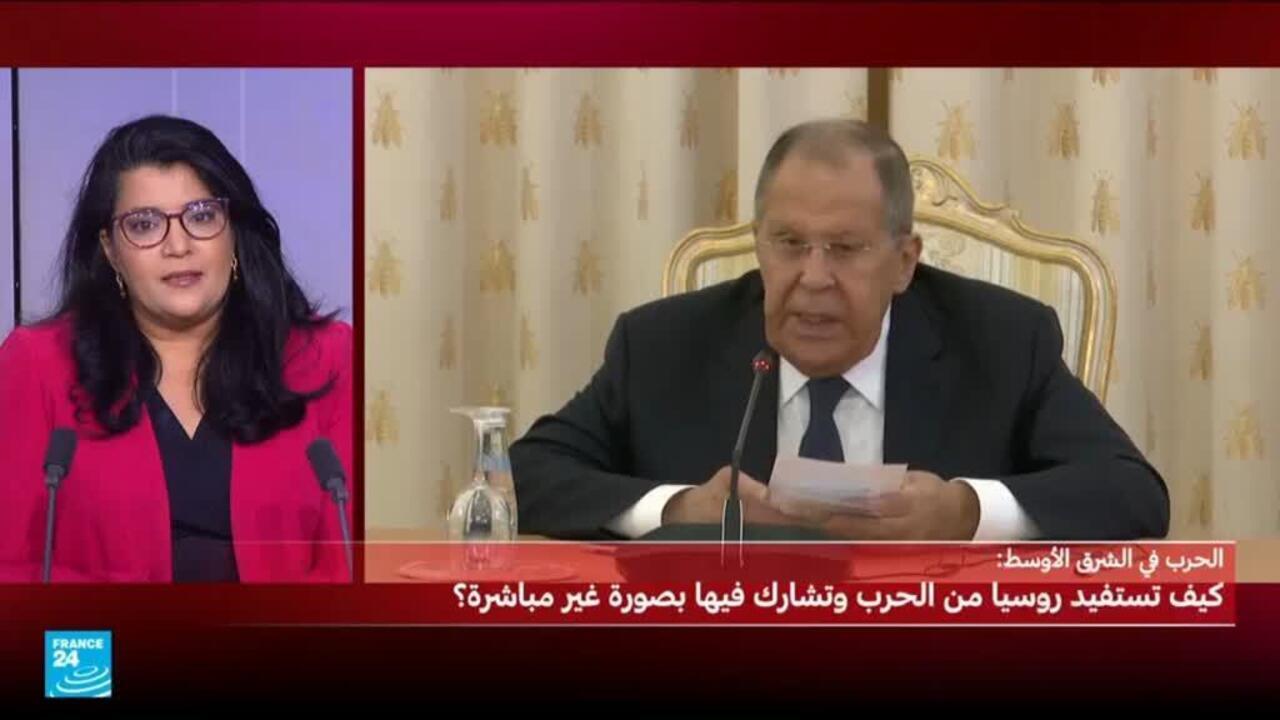
Russian Foreign Minister Sergey Lavrov has announced his country's readiness to take on a mediating role in the ongoing conflict in the Middle East, in a move aimed at stopping the escalating hostilities in the region. This announcement comes at a time when Russia is seeking to bolster its regional influence by supporting Iran with strategic and intelligence expertise, complicating relations between Moscow and Tel Aviv.
According to reports from the Washington Post, Russian support for Iran includes providing military and intelligence consultations, raising concerns in Israel, which views Iran as an existential threat. This increasing tension between Russia and Israel reflects the complex geopolitical struggles in the region, where both countries are pursuing their own interests amid ongoing chaos.
Details of the Announcement
As Russia seeks to play the role of mediator, it is capitalizing on the ongoing conflict in the Middle East to strengthen its ties with traditional allies, such as Iran and Syria. This support is not limited to military aspects but also extends to economic and political cooperation. Russia hopes to leverage these circumstances to enhance its position in international negotiations related to other crises, such as the conflict in Ukraine.
On the other hand, the escalation in the Middle East could impact the situation in Ukraine, as Russia may exploit the West's distraction with regional conflicts to intensify its military operations in Ukraine. This scenario could lead to heightened tensions in the region, negatively affecting peace efforts in both the Middle East and Eastern Europe.
Context and Background
Historically, Russia has sought to enhance its influence in the Middle East by supporting allied regimes, such as the Syrian government. With rising tensions between Iran and Israel, Russia has found an opportunity to strengthen its relations with Tehran, allowing it to expand its sphere of influence in the region. This shift in Russian policy comes at a sensitive time when major powers are reassessing their strategies amid rapid geopolitical changes.
Furthermore, Russian-Israeli relations have experienced fluctuations over the years, with Moscow playing a dual role of supporting its allies in the region while maintaining relations with Tel Aviv. However, Russian support for Iran may put these relations to a real test, complicating the regional landscape further.
Potential Consequences and Impact
The potential consequences of this conflict are manifold at both the regional and international levels. Regionally, escalation in the Middle East may lead to increased tensions between Arab states and Israel, complicating peace efforts and raising the likelihood of new conflicts. This situation could also affect stability in neighboring countries, such as Iraq and Syria, where armed groups may take advantage of the prevailing chaos.
At the international level, the continuation of the conflict in the Middle East could hinder the international community's efforts to address other crises, such as the conflict in Ukraine. Additionally, the distraction of major powers with regional conflicts may provide Russia with an opportunity to enhance its influence on the international stage, potentially leading to shifts in global power dynamics.
Impact on the Arab Region
For Arab countries, the ongoing conflict in the Middle East may exacerbate humanitarian and economic crises. The division among Arab states regarding how to deal with Iran and Israel may further complicate the political landscape. Under these circumstances, some Arab countries may find themselves compelled to reassess their security and diplomatic strategies.
In conclusion, the conflict in the Middle East appears set to remain a focal point of international interest, as major powers seek to achieve their interests amid ongoing chaos. With tensions continuing between Russia and Israel, the region may face new challenges that require an effective response from the international community.