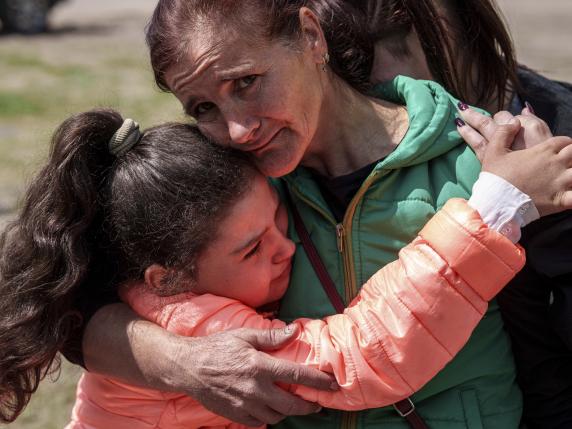
The battlefronts in eastern Ukraine are witnessing rapid developments, with Russian forces advancing towards the town of Vovchansk, considered the next target under the Kremlin's strategy to control the Kharkiv region. In this context, Ukrainian President Volodymyr Zelensky acknowledged the military situation's difficulties, emphasizing that the challenges facing his country are increasing day by day.
Vovchansk is located just a few kilometers from the Russian border and is viewed as a strategic point for Russian forces aiming to expand their control in northeastern Ukraine. The capture of this town is expected to enhance Russian military capabilities in the area, potentially shifting the battles towards larger cities like Kharkiv.
In light of these developments, the Russian government reported that Ukrainian forces have used Western-made weapons in attacks on the Russian city of Belgorod, reflecting escalating tensions in the region. Despite international calls to de-escalate, it appears that both Moscow and Kyiv are on a military escalation path that extends beyond mere territorial defense.
These events reveal the ongoing conflict between Russia and Ukraine that has persisted since 2014 when Russia annexed Crimea, igniting disputes in eastern Ukraine. Such developments have contributed to rising tensions between Russia and NATO, which has supported Ukraine with military and financial aid.
The recent developments coincide with heightened concerns about the conflict's impact on overall European security. The military escalation in Ukraine recalls past crises in European history, such as the Balkan conflict that led to the disintegration of Yugoslavia in the 1990s.
On another note, analysts expect that these conflicts may lead to strategic changes at the level of alliances, as European countries need to reassess their defense and security policies in light of this tense situation. This moment may be pivotal in re-evaluating relations between European countries and Russia.
For the Arab world, this conflict could lead to changes in global markets, particularly concerning energy prices, as Russia is a major source of gas and oil. The potential increase in energy prices could affect Arab economies that heavily rely on energy imports.
Furthermore, the dispute in Eastern Europe underscores the necessity of Arab cooperation in the fields of security and defense, especially amidst the internal and external challenges facing the region.
Overall, the events in Ukraine represent a test for global alliances and may have implications for security and stability in the Middle East and worldwide, necessitating close monitoring by all concerned parties. Questions remain open regarding how matters will develop in the coming days and weeks and whether there is a possibility for a peaceful settlement that restores security and stability to Eastern Europe.