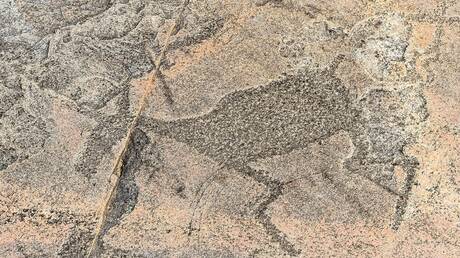
Dr. Andrei Polyakov, a professor at the Russian Academy of Sciences and director of the Institute of Material Culture History, has announced an innovative project aimed at creating 3D models of petroglyphs located in the Arctic. This initiative is part of the scientists' efforts to preserve the unique cultural heritage represented by these artworks, which date back to prehistoric times.
The petroglyphs in the Arctic are considered some of the most important evidence of ancient human life, providing glimpses into the cultures of the peoples who lived in those regions. By utilizing modern technology, scientists aim to document these petroglyphs accurately, facilitating their study and understanding by future generations.
Project Details and Objectives
The project aims to create 3D models using advanced scanning techniques, allowing researchers and interested individuals to explore these petroglyphs from multiple angles. This work will also help expand the knowledge base regarding ancient arts and lifestyles during those historical periods.
The petroglyphs encompass a diverse array of images representing animals, people, and daily scenes, reflecting the cultural and social diversity of those communities. Thus, the project not only contributes to heritage preservation but also enhances scientific understanding of human history.
Background & Context
Historically, petroglyphs have been regarded as crucial evidence of human activity in ancient times. Many of these artworks have been discovered in various parts of the world, but those found in the Arctic are distinguished by unique characteristics that reflect the specific environmental and cultural conditions of that region. These artworks are not merely art; they serve as a window into the lives of ancient peoples and their interactions with the environment.
In recent years, there has been a growing global interest in preserving cultural heritage, prompting many countries to invest more resources in similar projects. The use of modern technology in this context represents an important step towards protecting this heritage from erosion and extinction.
Impact & Consequences
This project represents a significant step towards enhancing cultural and historical awareness, potentially leading to increased interest in cultural heritage among new generations. It may also contribute to boosting cultural tourism in the region, benefiting the local economy.
Furthermore, the success of this project could encourage other countries to adopt similar techniques in preserving their cultural heritage. Documenting petroglyphs in 3D could serve as a model to be emulated in other areas of archaeology.
Regional Significance
Although this project focuses on the Arctic, it holds important implications for the Arab region. The Arab world contains numerous archaeological sites that require similar efforts for preservation. Utilizing modern technology to document cultural heritage can positively impact the understanding of the region's history and enhance cultural identity.
Additionally, cooperation between Arab countries and Russia in scientific research could lead to knowledge and experience exchange, contributing to mutual understanding between different cultures.