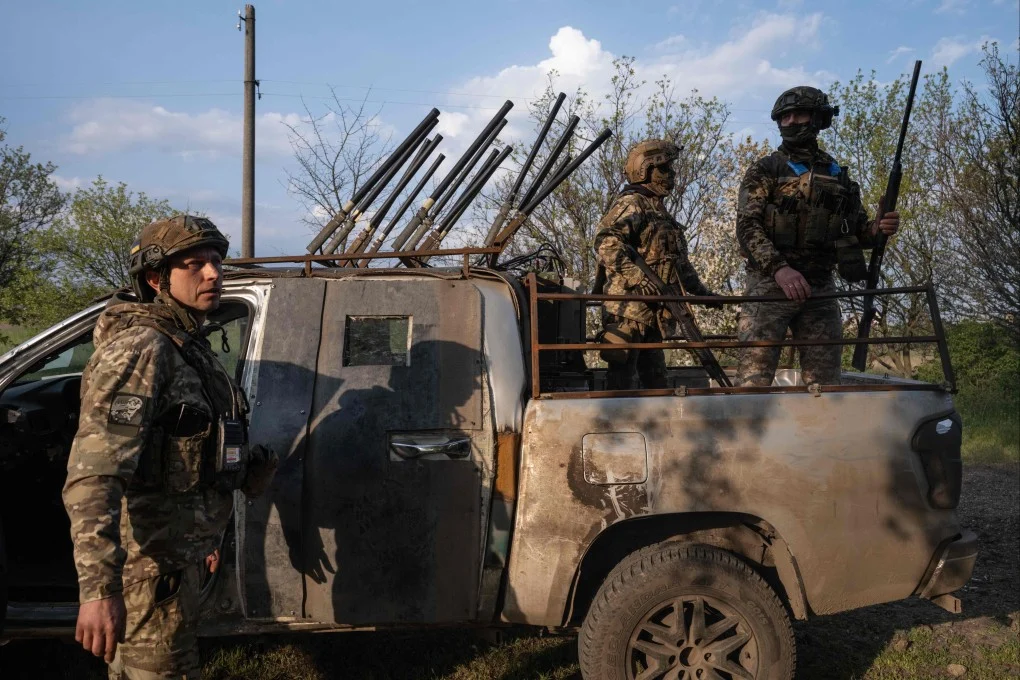
Ukrainian authorities announced that Russian attacks resulted in injuries to at least nine individuals in eastern Ukraine, marking the second day of a ceasefire that was supposed to last three days. Despite the ceasefire, the Russian army has carried out offensive operations along the front lines, raising questions about the effectiveness of this ceasefire.
In his evening address, President Volodymyr Zelensky emphasized that the Russian army is not complying with the ceasefire and is making no effort to adhere to it. He pointed out that the attacks are ongoing, which undermines any hopes for achieving lasting peace in the region.
Details of the Incident
These developments come at a sensitive time, as the ceasefire was expected to provide an opportunity for civilians in conflict-affected areas. However, the continuation of Russian attacks reflects Moscow's lack of seriousness in adhering to agreements. Zelensky noted that offensive operations are continuing, despite the absence of large-scale airstrikes during the day.
Concerns are growing over escalating violence in the region, as residents live in a state of constant anxiety. Reports have shown that many civilians remain trapped in conflict zones, complicating the humanitarian situation further.
Background & Context
Ukraine has been embroiled in an ongoing conflict since 2014, when Russia annexed the Crimea peninsula, leading to an armed conflict in the eastern part of the country. This conflict has resulted in thousands of deaths and the displacement of millions. In recent years, several diplomatic efforts have attempted to achieve peace, but these efforts have often failed.
The current ceasefire, announced with the support of the United States, was hoped to provide a period of peace; however, recent events indicate that the situation remains fragile. Russia's non-compliance with the ceasefire reflects the complexities of the ongoing conflict.
Impact & Consequences
The continuation of Russian attacks despite the ceasefire may exacerbate the humanitarian situation in Ukraine, where civilians face significant challenges in accessing essential aid. This escalation could also affect international relations, potentially leading to increased pressure on Russia from the global community.
Moreover, the failure to adhere to the ceasefire may provoke strong reactions from Western nations, which might move towards imposing new sanctions on Moscow. This could complicate international relations further and impact security in the region.
Regional Significance
The situation in Ukraine is of great importance to Arab countries, as any escalation in the conflict could affect energy prices and global markets. Additionally, the ongoing conflict may lead to an influx of refugees into neighboring countries, placing additional pressure on Arab nations.
In light of these circumstances, Arab countries should closely monitor developments in Ukraine, as any changes in the situation could impact their economic and security interests.