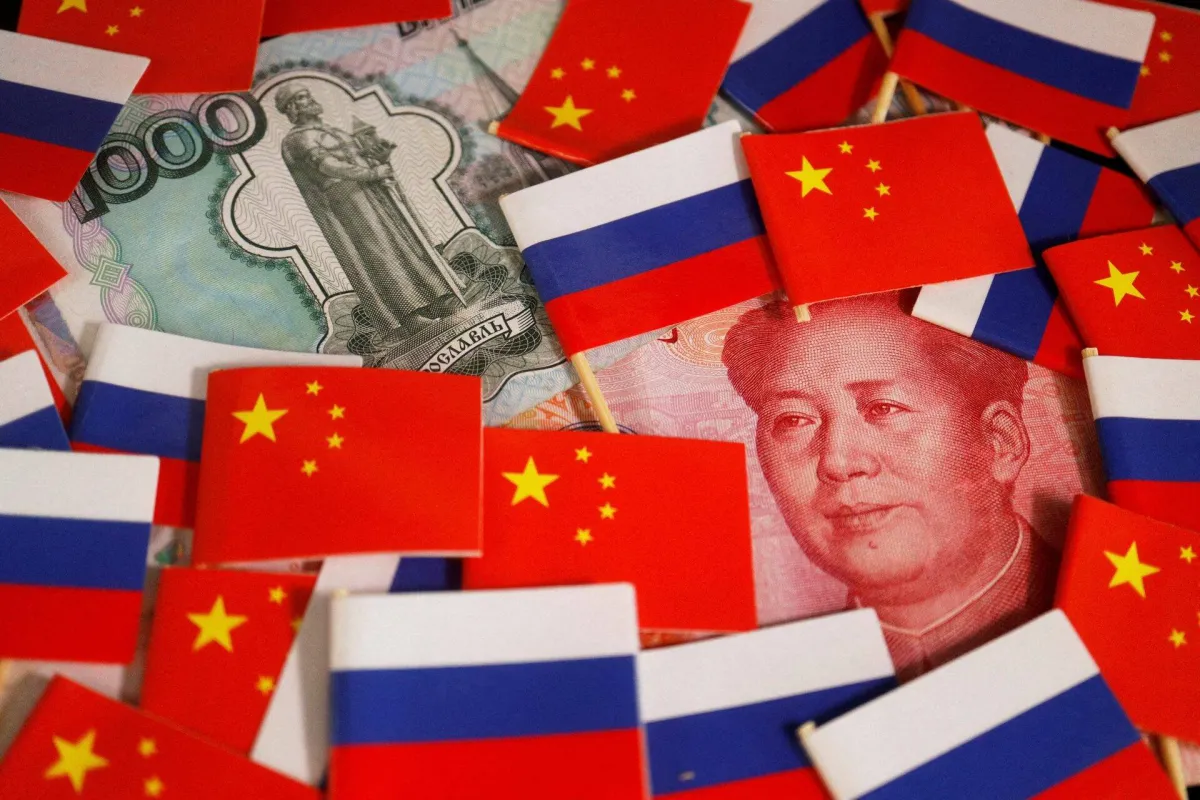
Elvira Nabiullina, the Governor of the Central Bank of Russia, urged commercial banks on Tuesday to hold reserves in yuan, a step aimed at avoiding a shortage of the Chinese currency in the foreign exchange market and curbing excessive lending.
Nabiullina explained that the interest rates on yuan swaps surged above 40 percent in March, driven by increased lending in the Chinese currency and a decline in yuan inflows, amid falling Russian export revenues due to lower oil prices at the beginning of the year, according to Reuters.
Details of the Announcement
Nabiullina stated during a banking conference in Moscow: "When customers left with yuan, many banks turned to the market to obtain it. It is a short-term market, and thus interest rates rose significantly."
The yuan has become the most traded foreign currency in Russia, following Western sanctions imposed on several Russian banks and the Moscow Exchange, which reduced transactions in dollars and euros, pushing the yuan to the forefront in the over-the-counter trading market.
Background & Context
She added: "Banks may not welcome this, but we are considering the possibility of establishing a separate regulation for foreign currency liquidity, as this is not the first time we have witnessed such a spike in volatility." She noted that the central bank would consult with commercial banks regarding this proposal before making any final decision.
Her remarks come ahead of the resumption of foreign exchange operations for the National Wealth Fund, the financial reserve, in May. With oil prices, the main source of Russia's revenues, exceeding $59 per barrel, the state is expected to purchase yuan in May.
Impact & Consequences
In this context, Dmitry Pyanov, the Executive Vice President of VTB Bank, Russia's second-largest bank, warned that these purchases could destabilize the local foreign exchange market in the short term.
This step is part of the Central Bank of Russia's strategy to tackle the economic challenges posed by Western sanctions, which have significantly affected the country's financial system. It also reflects shifts in the Russian foreign exchange market and an increasing reliance on the yuan as an alternative to traditional currencies.
Regional Significance
These developments highlight significant changes in the global financial system, where reliance on unconventional currencies is increasing amid economic and political pressures. These shifts could impact economic relations between Russia and Arab countries, particularly regarding trade and investment.
In conclusion, this move by the Central Bank of Russia represents an attempt to adapt to changing economic conditions and may have far-reaching implications for global financial markets.