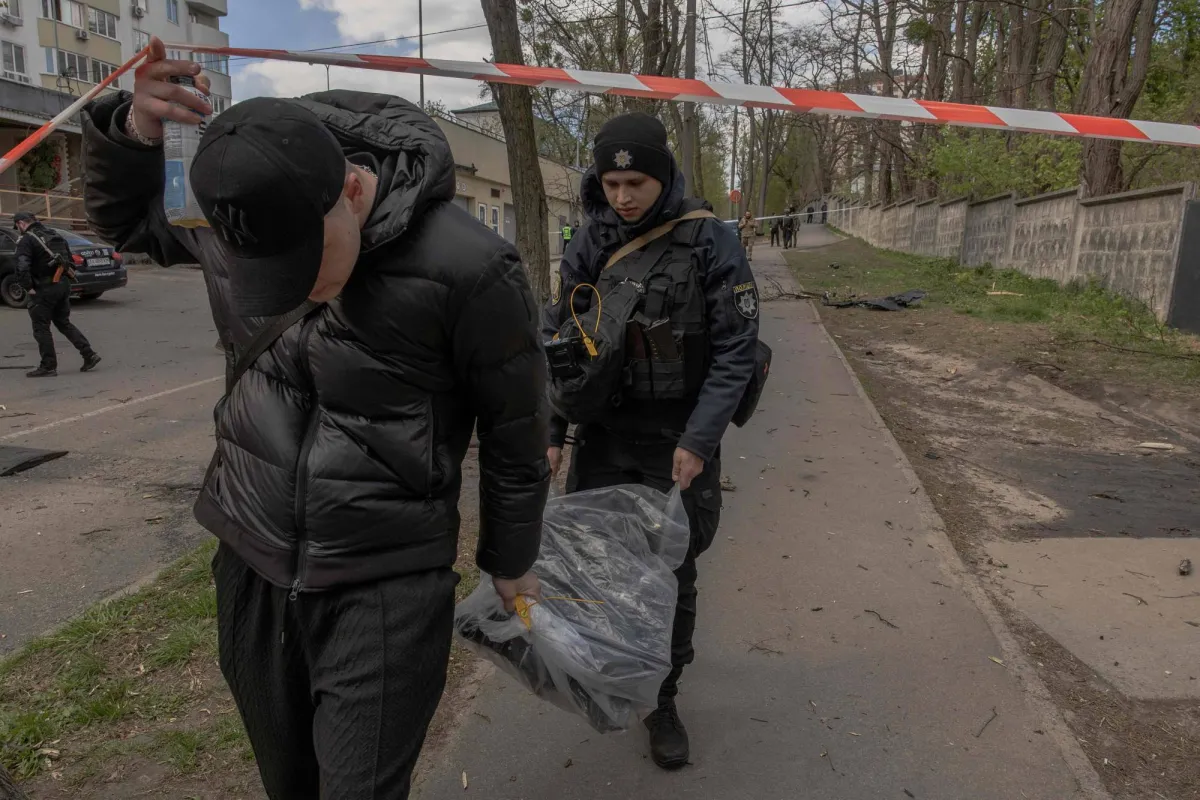
Strong explosions echoed in the sky over Kyiv on Tuesday after an air raid alert, as Ukrainian authorities detected Russian drones heading towards the capital. Kyiv's Mayor, Vitali Klitschko, confirmed that air defenses were engaged in intercepting these drones in the Obolon district, north of the city.
The daytime attack is considered a rare development, as Russia has typically conducted nighttime strikes. However, in recent months, there have been several large-scale attacks during the day. Debris from the drones fell in the Shevchenkivskyi district, causing an incident involving several cars, with one vehicle hitting a pedestrian who was subsequently hospitalized.
Details of the Incident
Klitschko reported that drone fragments also landed on a construction site and a cemetery in a neighboring area. Videos circulated on Telegram showed the moment a drone struck a residential building under construction, resulting in a massive explosion.
Since the onset of the full-scale Russian invasion of Ukraine, Russia has relied on daily bombardments of Ukraine using missiles and drones, including Iranian-made Shahed drones. In this context, Ukrainian President Volodymyr Zelensky confirmed that Ukrainian air defenses have successfully intercepted about 90% of these projectiles.
Background & Context
These attacks come at a sensitive time as Ukraine continues to target Russian positions, including energy facilities, using drones. In the hours leading up to the attack on Kyiv, the Ukrainian General Staff announced an assault on the Russian oil refinery in Tuapse, which resulted in a fire at the facility.
In response, Russian officials confirmed the attack, stating that Ukrainian drones caused a "widespread fire" within the refinery, necessitating the evacuation of nearby buildings. The Tuapse refinery is a vital facility, capable of processing around 240,000 barrels per day.
Impact & Consequences
Tensions between Russia and Ukraine are escalating, with ongoing reciprocal attacks. Ukrainian drone strikes on the Russian Belgorod region have resulted in the deaths of three individuals and injuries to others. These events reflect an intensification of the conflict, as Ukraine continues to bolster its offensive capabilities.
As fighting persists, the need for diplomatic solutions becomes increasingly apparent, yet current circumstances complicate the possibility of reaching a peace agreement. In the absence of effective negotiations, the situation in the region remains tense, raising international concerns.
Regional Significance
The events in Ukraine are impacting regional and international security, with Arab nations closely monitoring developments. The military escalation in Ukraine could lead to changes in energy policies and global markets, affecting Arab countries reliant on oil and gas exports.
Under these circumstances, Arab nations may seek to enhance their security and economic cooperation to address challenges arising from international conflicts. Additionally, the situation in Ukraine may open new avenues for collaboration between Arab states and European countries in the fields of energy and security.