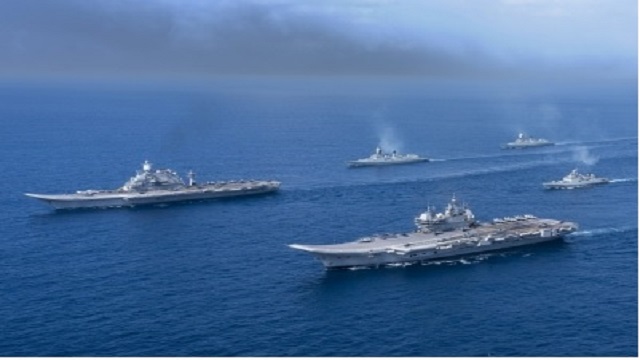
Satellite images captured on April 26 show several major American naval vessels positioned from the northern Red Sea to the Arabian Sea, reflecting the continued intense American maritime presence near sensitive shipping routes between the Red Sea and the Strait of Hormuz.
According to visual analysis conducted by the Open Source Unit of Al Jazeera, the USS Gerald R. Ford (CVN-78) was spotted in the northern Red Sea, while the USS Abraham Lincoln (CVN-72) was observed in the Arabian Sea, accompanied by the amphibious assault ship USS Tripoli (LHA-7) in the same maritime area.
Details of the Deployment
The images show the USS Gerald Ford positioned in the northern Red Sea, having moved only about 96 kilometers since its last recorded position in the area on April 20, and is currently approximately 66 kilometers from the Dafa Al-Wajh reserve on the Saudi coast.
In a striking scene, the carrier appeared to be executing a sharp turn in the waters of the Red Sea. While the images alone do not confirm the reason for the maneuver or the nature of the mission associated with it, they document the ongoing movement of the carrier and its escorts in the northern Red Sea at a time when tensions related to navigation in the Red Sea and Bab el-Mandeb continue.
In the Arabian Sea, the images revealed the USS Abraham Lincoln sailing with at least two destroyers, likely of the Arleigh Burke class, approximately 323 kilometers south of the Iranian coast.
This positioning places the carrier within a relatively close maritime range to the routes leading to the Gulf of Oman and the Strait of Hormuz, where tensions related to the American maritime blockade on ships heading to or departing from Iranian ports have escalated in recent weeks, alongside repeated Iranian and American announcements about restricting or intercepting certain vessels in the strait.
Background & Context
The USS Abraham Lincoln entered the area of responsibility of the Fifth Fleet earlier in 2026, after being redirected from the Pacific to the Middle East amid rising regional tensions.
The images also captured the American amphibious assault ship USS Tripoli operating about 117 kilometers from the Omani coasts in the Arabian Sea, accompanied by a modern American destroyer of the Arleigh Burke class.
Measurements indicate that the Tripoli is approximately 140 kilometers from the USS Abraham Lincoln, suggesting the presence of two major American vessels in close operational proximity within the Arabian Sea.
Impact & Consequences
The distribution of these naval vessels indicates that the American deployment extends over a wide maritime theater starting from the northern Red Sea and ending at the Arabian Sea, near the routes leading to the Strait of Hormuz.
This comes amid regional tensions that include ongoing threats to navigation in the Red Sea, escalating crises in the Strait of Hormuz, and American pressures on shipping related to Iran. Thus, the maps depict a broad maritime deployment reflecting Washington's desire to maintain a striking and mobile force near the most important maritime routes in the region.
Regional Significance
This American military presence reflects a clear strategy by the United States to enhance its military footprint in a region considered vital for regional and international security. Amid increasing tensions, this presence may lead to the escalation of existing crises, threatening maritime stability and exacerbating regional conflicts.
In conclusion, the question remains regarding how this deployment will affect international relations in the region, especially amid rising tensions between the United States and Iran.