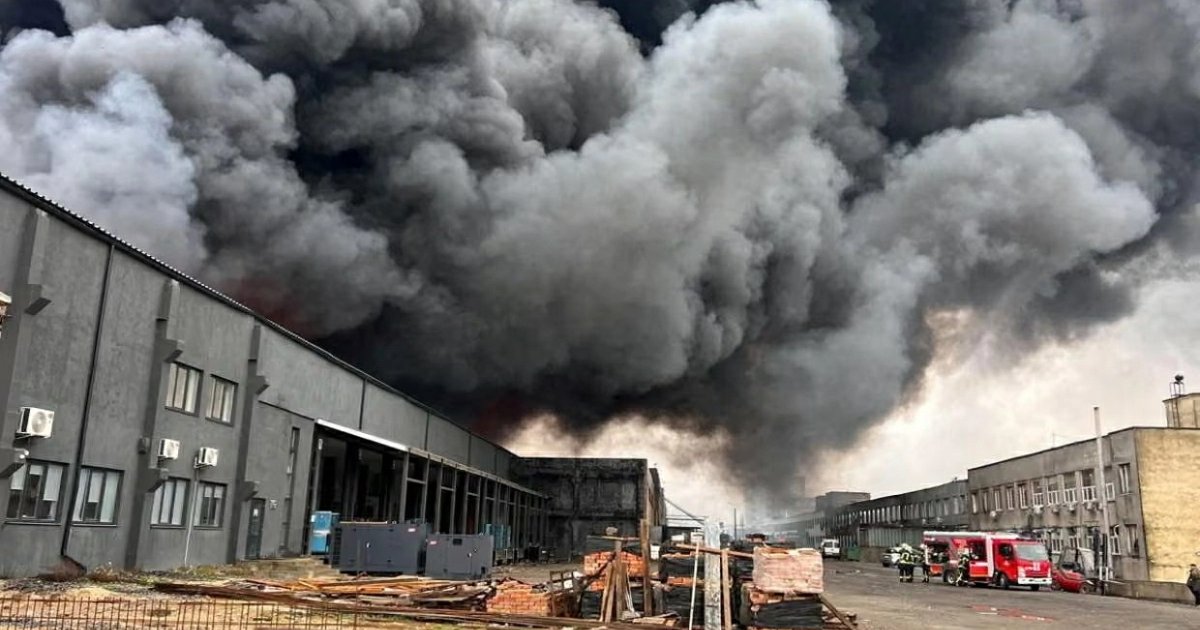
Russian forces have continued to bombard the city of Kharkiv, Ukraine's second-largest city, with drones for a full day on Thursday, resulting in at least two injuries, according to local officials. Ukrainian President Volodymyr Zelensky indicated that he spoke with American negotiators about the possibility of reaching a ceasefire during Easter, but Russian forces launched over 700 drones, mostly of the Iranian Shahed model, targeting parts of western and central Ukraine in a rare daytime attack.
Kharkiv's mayor, Igor Terekhov, posted reports on Telegram throughout the day and into the evening, noting strikes in four districts of the city. A city official reported at least 20 drone strikes. The Ukrainian public broadcaster Suspilne reported new explosions in the city after 2 a.m. (2300 GMT). Terekhov confirmed that some strikes caused fires, and two people were injured in an evening attack, including an eight-year-old girl.
Details of the Incident
Television footage from Reuters showed firefighters spraying water on a house damaged by a drone strike. Parts of the facade were severely damaged, and furniture and fixtures in the apartments were destroyed. Later, the governor of the Zaporizhia region, Ivan Fedorov, reported that a Russian attack damaged a high-rise residential building and a local business, with no injuries reported.
Across the border in the Russian region of Belgorod, Governor Vyacheslav Gladkov reported that 13 people were injured in a series of drone attacks, 11 of whom were in the village of Shchebikino, located near the border. A Russian airstrike also targeted a port in the Ukrainian region of Odesa early Thursday, igniting shipping containers but causing no injuries, according to Ukrainian officials.
Videos released by the Ukrainian emergency service in the Odesa region showed rescuers working at the Black Sea port of Chornomorsk as flames engulfed the stacked containers.
In Moscow, the city's mayor Sergei Sobyanin wrote on Telegram that air defense units shot down a Ukrainian drone heading toward the capital after midnight. Two other drones were intercepted on Thursday.
Background & Context
These attacks come at a sensitive time for Ukraine, as the Ukrainian government seeks to bolster its position in negotiations with the United States and other Western countries regarding military and economic support. Since the beginning of the conflict, Ukraine has witnessed an escalation in Russian attacks, particularly focused on the eastern and southern regions of the country. These attacks have exacerbated the humanitarian situation in many cities, including Kharkiv and Zaporizhia.
The use of drones is part of Russia's strategy in the conflict, as these aircraft represent an effective means of delivering precise strikes on military and civilian targets. The use of Iranian drones also reflects the increasing military cooperation between Russia and Iran, which raises concerns for many Western nations.
Impact & Consequences
Concerns are growing that the continued drone attacks could lead to a greater escalation in the conflict, potentially impacting peace efforts. Attacks on major cities like Kharkiv may increase pressure on the Ukrainian government to provide more military support to counter the rising threats.
Furthermore, attacks on civilian infrastructure could worsen the humanitarian situation, necessitating an urgent international response to provide humanitarian aid to those affected. These developments could also affect relations between Russia and Western countries, potentially leading to new sanctions against Russia.
Regional Significance
For the Arab region, the escalation of the conflict in Ukraine could impact energy prices and essential commodities, as Ukraine is one of the world's largest grain exporters. Any escalation in the conflict could lead to rising grain prices, affecting food security in many Arab countries.
Moreover, military cooperation between Russia and Iran may raise concerns among Arab nations, especially amid existing tensions in the region. Arab countries must closely monitor developments in the Ukraine conflict, as they may influence their security and economic strategies.