The education sector in Saudi Arabia has seen significant progress, with the number of Saudi students in the top 200 global universities doubling to approximately 28,500. This increase reflects the Kingdom's commitment to achieving the goals of Vision 2030, which aims to enhance educational quality and develop human capital.
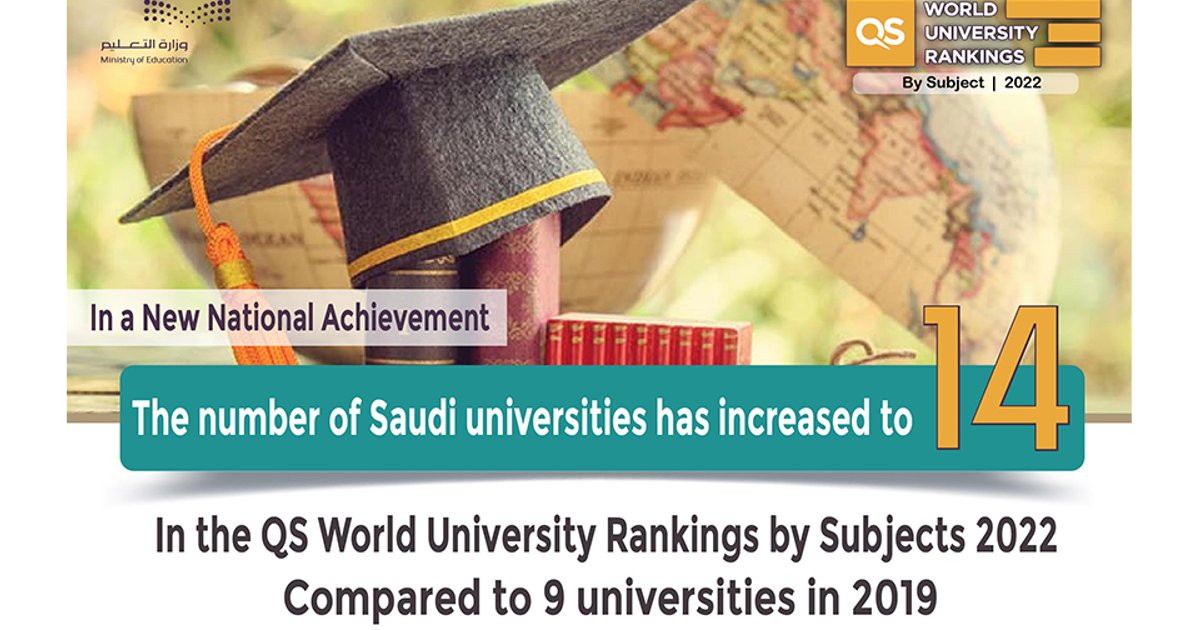
In global rankings, data shows that 22 Saudi universities have entered the QS World University Rankings for 2025. King Fahd University of Petroleum and Minerals has achieved a major milestone by entering the list of the top 100 universities globally. Additionally, 13 Saudi universities were ranked among the top 1,000 in the Shanghai Global Ranking, and 31 universities ranked among the top 1,500 in the Times Higher Education ranking.
Event Details
These positive results demonstrate the significant development in the quality of higher education in Saudi Arabia, enhancing the competitiveness of Saudi universities on a global scale. These achievements reflect the ongoing efforts by the Saudi government to improve the education system and provide an advanced educational environment.
Moreover, educational outcomes have contributed to strengthening the labor market, with over 800,000 Saudis entering the private sector job market between 2020 and 2025. These figures indicate the success of educational programs in meeting labor market needs.
Background & Context
These developments come within the framework of Saudi Vision 2030, which aims to transform the Kingdom into an empowered society that relies on education and training as key factors in development. The vision seeks to improve the quality of education and expand its reach to include all segments of society, contributing to building a generation capable of competing in the global market.
The focus on higher education reflects the importance of investing in Saudi individuals, as education is considered one of the fundamental pillars for achieving sustainable development. Substantial budgets have been allocated to develop universities and update curricula to align with contemporary needs.
Impact & Consequences
These achievements are indicators of the success of educational policies in Saudi Arabia, enhancing the ability of Saudi youth to compete in the global labor market. The increase in the number of students in global universities also contributes to strengthening international relations and the exchange of knowledge and experiences.
Furthermore, the rise in women's participation in middle management positions to over 44% reflects positive changes in Saudi society and underscores the role of women in leading various economic sectors. These changes contribute to enhancing diversity and inclusivity in the labor market.
Regional Significance
Saudi Arabia's experience in developing education serves as a model for the Arab region, potentially inspiring other countries to adopt similar educational policies. Investing in education is the optimal path to achieving sustainable development and building communities capable of facing future challenges.
In conclusion, this progress in the education sector represents a significant step towards achieving the ambitious goals of Vision 2030, reflecting the Kingdom's commitment to developing the capabilities of its youth and empowering them to compete on a global scale.