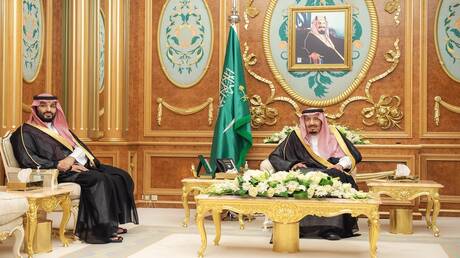
Saudi King Salman bin Abdulaziz affirmed that the Kingdom is confidently moving towards a better future, highlighting the qualitative achievements of Vision 2030 since its launch a decade ago. The King explained that these achievements reflect the Kingdom's commitment to sustainable development and enhancing its position on the international stage.
In this context, Saudi Crown Prince Mohammed bin Salman noted that Vision 2030 has contributed to transforming the Saudi economy into a diversified economy based on innovation and technology. He confirmed that the Kingdom will continue to work towards achieving the objectives outlined in this vision, ensuring the welfare of citizens and enhancing the quality of life in the country.
Event Details
The annual report for Vision 2030 was released, highlighting the achievements the Kingdom has made across various fields. The report includes data on economic growth, infrastructure development, and improvements in public services, as well as enhancing foreign investments.
The report also showed significant progress in the fields of education and health, with many projects implemented to improve the quality of education and provide comprehensive healthcare for citizens. These achievements come as part of ongoing efforts to realize the strategic objectives of the vision.
Background & Context
Vision 2030 was launched in 2016 as a comprehensive plan aimed at diversifying the Saudi economy and reducing dependence on oil. This vision emerged at a time when the Kingdom was facing significant economic challenges, prompting it to seek a radical transformation in its economic and social structure.
Vision 2030 encompasses several key pillars, including enhancing investment, developing the private sector, improving quality of life, and promoting culture and arts. This vision represents a historical turning point for the Kingdom, as it aims to build a vibrant society and a prosperous economy.
Impact & Consequences
Achieving the goals of Vision 2030 has positive implications at both local and international levels. Locally, it contributes to improving the standard of living for citizens and creating job opportunities, thereby enhancing social and economic stability.
On the international level, the Kingdom's success in implementing this vision strengthens its position as an economic power in the region and attracts more foreign investments. These achievements also reflect the Kingdom's commitment to sustainable development, which contributes to enhancing cooperation with other countries.
Regional Significance
Vision 2030 serves as a model for other Arab countries seeking to achieve development and economic diversification. Success in implementing this vision can inspire other nations to adopt similar strategies aimed at achieving sustainable development.
Moreover, cooperation between the Kingdom and other Arab countries in investment and trade can contribute to enhancing Arab economic integration, benefiting all participating nations.
In conclusion, Vision 2030 represents an important step towards achieving a better future for the Kingdom, as it seeks to ensure sustainable development and enhance its position on the international stage. With ongoing efforts to achieve the objectives of this vision, the Kingdom reaffirms its commitment to providing a dignified life for its citizens and enhancing stability in the region.