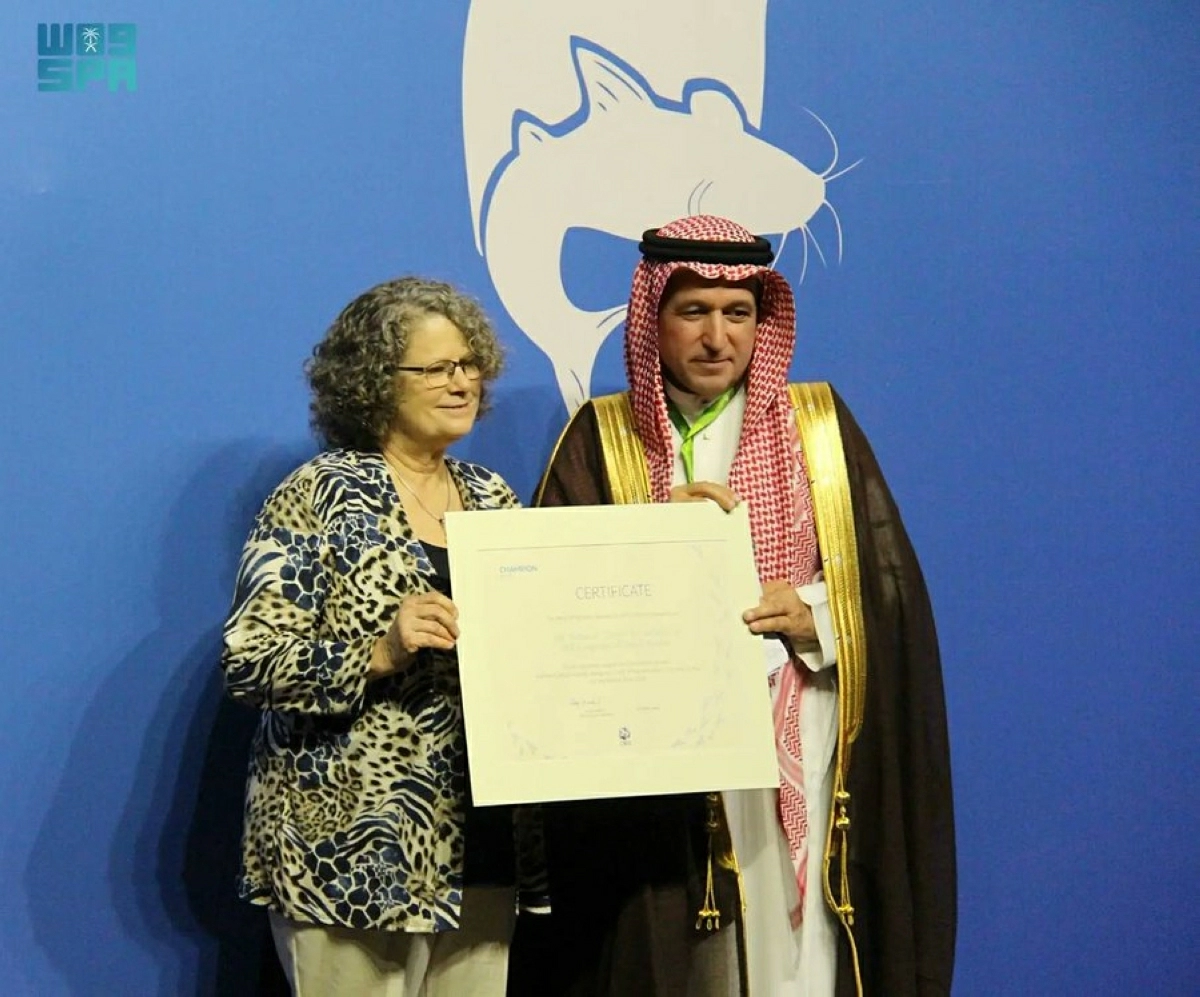
Saudi Arabia, represented by the National Center for Wildlife Development, received the 'Outstanding Leadership for Migratory Species' certificate from the Convention on Migratory Species (CMS) during the events of the 15th Conference of the Parties held in Campo Grande, Brazil from March 23 to 29, 2023.
The Kingdom was honored during the 'Pioneers Evening' event, in recognition of its prominent role in enhancing efforts to combat illegal hunting and trafficking of migratory species in the Southwest Asia region, for the period from 2026 to 2028. This award marks the second time the Kingdom has received such recognition, having previously won a similar award in 2024 during the 14th Conference held in Samarkand, Uzbekistan.
Event Details
Among 132 member countries of the convention, Saudi Arabia was one of only nine countries to receive this honor, alongside the European Union. Dr. Mohammed Ali Qurban, CEO of the National Center for Wildlife Development, expressed pride in this recognition, noting that it reflects the significant efforts made by the Kingdom to protect wildlife and preserve biodiversity.
Dr. Qurban added that the Kingdom's strategic location on migratory routes and its diverse rich environments have contributed to supporting migratory species during their seasonal migrations. The center has enhanced the regulatory framework governing hunting and wildlife use, developed compliance and monitoring mechanisms, and improved technological infrastructure and digital systems for licensing and enforcement.
Background & Context
Saudi Arabia is considered one of the countries playing an important role in protecting migratory species, possessing diverse natural environments that include deserts, mountains, and coastlines, making it a vital stopover for many migratory species. Historically, the Kingdom has faced significant challenges in wildlife protection, but it has taken serious steps to enhance its efforts in this field.
Through the National Center for Wildlife Development, the Kingdom has reintroduced approximately 10,000 species of wildlife through 21 breeding and reintroduction programs, contributing to restoring ecological balance and enhancing the resilience of the ecological habitats that migratory species depend on.
Impact & Consequences
This award demonstrates the Kingdom's deep commitment to environmental protection and emphasizes the importance of international cooperation in addressing environmental challenges. It also reflects the efforts made to raise environmental awareness and community participation in protecting migratory species.
The Kingdom continues to support the working group under the convention to combat illegal hunting and trafficking of migratory species in Southwest Asia, by contributing to coordination, knowledge exchange, and unifying efforts under the convention's umbrella.
Regional Significance
These efforts serve as a model to be emulated in the Arab region, where many countries face similar challenges in wildlife protection. Strengthening cooperation among Arab countries in this field can contribute to improving protection strategies and adapting to environmental changes.
In conclusion, the recognition of Saudi Arabia showcases its strong commitment to environmental protection and reflects ongoing efforts to enhance biodiversity in the region, marking a positive step towards a more sustainable future.