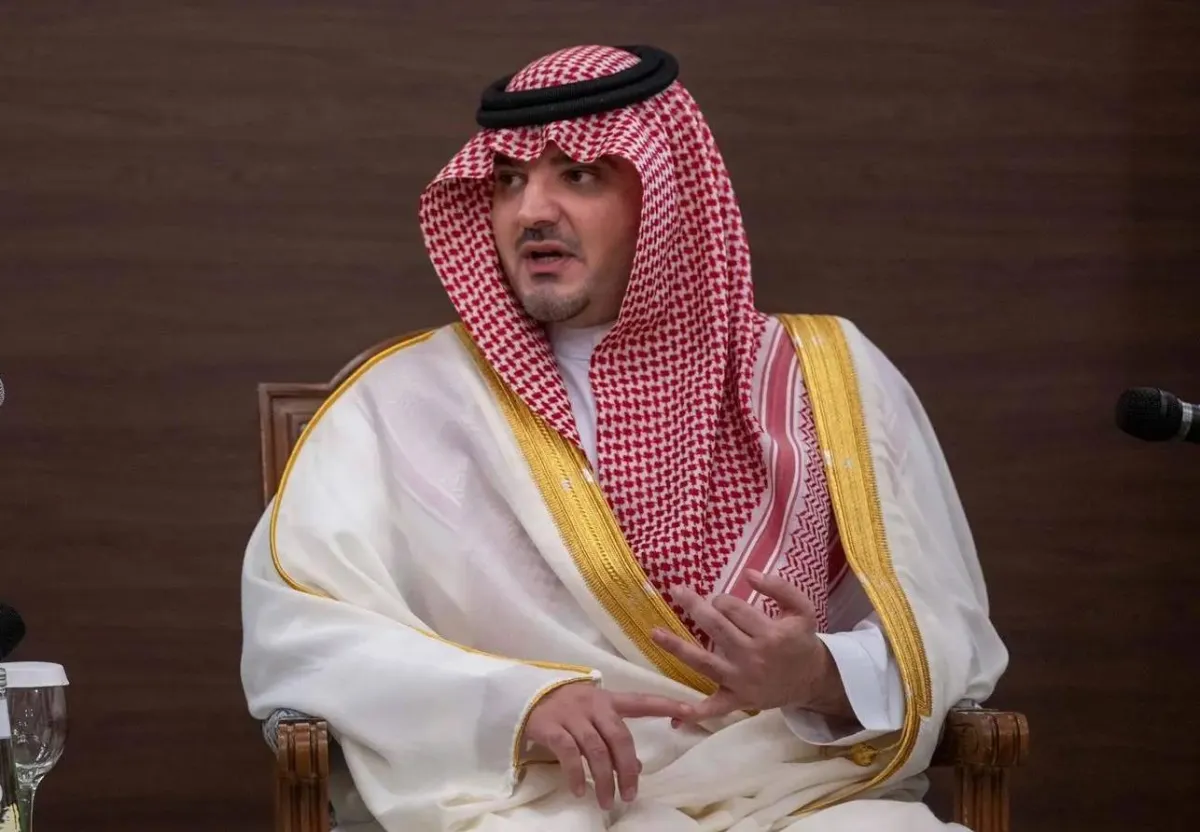
Saudi Interior Minister Prince Abdulaziz bin Saud bin Nayef emphasized the leadership's commitment to utilizing all resources for pilgrims to perform their rituals with ease and safety. This was stated during his meeting with officials from the Guidance and Counseling Department in Mecca, where he reviewed the programs and initiatives for this year's Hajj season.
Prince Abdulaziz bin Saud praised the guiding and awareness efforts that contribute to enhancing Islamic values and improving the readiness of security personnel, which positively reflects on their performance of duties. He also stressed the importance of providing a safe and comfortable environment for pilgrims.
Event Details
Brigadier General Talal Al-Shalhoub, the security spokesperson for the Ministry of Interior, reported that security and traffic plans have been successfully implemented to facilitate the movement of pilgrims towards the Arafat plain, easing their journey to Muzdalifah and their return to Mina. He noted that the management and organization of Hajj represent a national achievement, thanks to the leadership that prioritizes the service of the Two Holy Mosques.
Dr. Ghassan Al-Nuaimi, spokesperson for the Ministry of Hajj and Umrah, explained that the Guidance and Counseling Department's plan focused on highlighting the Kingdom's efforts in serving pilgrims, with approximately 60% of pilgrims heading to Mina for the Day of Tarwiyah, while 40% went directly to Arafat.
Background & Context
The Hajj rituals are among the most significant Islamic rites, with millions of Muslims from around the world converging on Mecca to perform this obligation. The Kingdom of Saudi Arabia works to provide all services and facilities to ensure the safety and comfort of pilgrims, reflecting its commitment to serving Islam and Muslims.
As the Hajj season begins, Saudi authorities implement comprehensive security and health measures, with hospitals and health centers prepared to meet the needs of pilgrims. Transportation services have also been enhanced to ensure smooth movement between the holy sites.
Impact & Consequences
The efforts made by the Ministry of Interior and the Ministry of Hajj and Umrah contribute to enhancing the Kingdom's image as a safe destination for Hajj. The successful organization of Hajj reflects the Kingdom's ability to manage large crowds, thereby strengthening its position in the Islamic world.
Moreover, these efforts demonstrate the Kingdom's commitment to providing the best services for pilgrims, increasing the significance of Hajj as a global event that unites Muslims from diverse cultures and nationalities.
Regional Significance
The Hajj experience in the Kingdom serves as a model for organizing major events, which can positively influence other countries hosting similar occasions. The success of Hajj fosters cooperation among Arab and Islamic nations in the fields of religious tourism and logistical services.
On the first day of Eid al-Adha, pilgrims celebrated the completion of their rituals, as the Mina camps transformed into a venue for Eid festivities, reflecting the spirit of unity and brotherhood among Muslims.