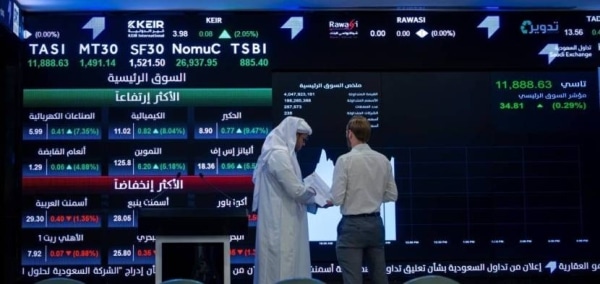
The Saudi stock market closed today with a slight decline, recording a drop of 11,076 points and a trading volume of 3.7 billion riyals. This downturn comes at a time when the market is experiencing significant volatility, reflecting a state of caution among investors.
These figures indicate the challenges facing the market amid global and local economic conditions. Investors are closely monitoring economic and political developments that could impact market performance.
Market Performance Details
The Saudi market index recorded a slight decline today, closing at 11,076 points, down 0.1% compared to the previous trading session. The total trading value reached 3.7 billion riyals, reflecting limited activity in the market.
This decline comes at a time when many analysts expect market volatility to continue due to global economic conditions, including inflationary pressures and oil prices.
Background & Context
The Saudi market has witnessed significant fluctuations in recent months, influenced by various internal and external factors. On one hand, the increase in oil prices has led to an improvement in government revenues, contributing to market support. On the other hand, concerns about global inflation and economic slowdown in major countries remain a source of worry for investors.
The Saudi market is one of the largest financial markets in the region and plays a pivotal role in the national economy. Therefore, any decline in the market could significantly impact the local economy and heighten investor caution.
Impact & Consequences
The slight decline in the market may affect investor confidence, potentially leading to a reduction in new investments. Furthermore, the continuation of these fluctuations may prompt some investors to make quick decisions, increasing the volatility in the market.
It is important for relevant market authorities to monitor these developments and take necessary measures to enhance confidence in the market, especially under the current economic conditions.
Regional Significance
The Saudi market is central to the Arab region, and any decline in it could impact other financial markets. Many Arab countries rely on Saudi investments, and thus any fluctuations could affect financial stability in the region.
Moreover, Saudi investments abroad may also be affected, potentially leading to negative impacts on economic growth in neighboring countries.
In conclusion, the situation in the Saudi market remains under observation, as investors look forward to price stability and improved economic conditions in the near future.