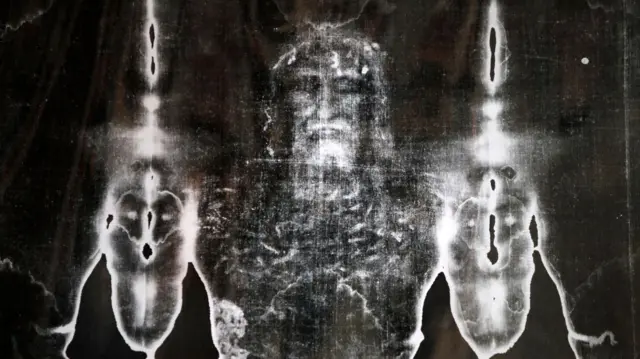
The Shroud of Turin, believed to bear the image of Christ's face, is a subject of debate and discussion among scientists and believers alike. Many view it as a profound religious symbol, while researchers strive to verify its authenticity through advanced scientific studies. These studies aim to determine whether the shroud is a genuine physical testament from the time of Christ or simply a medieval artifact.
In recent years, numerous studies have employed modern techniques such as radiocarbon dating, which has yielded varying results regarding the age of the shroud. While some indicate it dates back to the first century AD, others assert it originates from the medieval period, complicating the issue and drawing widespread interest.
Details of the Event
The Shroud, housed in the Cathedral of Saint John the Baptist in Turin, is considered one of the most significant religious symbols in Christianity. It displays an image of a human body, which many believe to be that of Christ after his crucifixion. The shroud has been exhibited to visitors on limited occasions, adding to the mystery surrounding its authenticity. In 1988, radiocarbon dating was performed on three samples from the shroud, revealing results that suggested it dated between 1260 and 1390 AD, sparking extensive debate among scientists and Christians.
Despite these findings, there are still defenders of the shroud's authenticity, arguing that the analyses may have been influenced by environmental factors or contamination. Additional studies have been conducted in recent years, including the use of advanced imaging techniques, which have helped to better understand the details of the image on the shroud.
Background & Context
The history of the Shroud dates back to the medieval period, having been transported across various countries and locations. It is believed to have existed in France before being moved to Italy. Numerous legends and stories are associated with it, making it a subject of various artistic and literary works. In a religious context, the shroud is seen as a symbol of hope and redemption, attracting pilgrims from around the world.
The intersection of religious and scientific dimensions in the study of the shroud reflects the challenges faced by scientific research when dealing with sensitive religious topics. Scientists seek to provide tangible evidence that supports or refutes its authenticity, navigating the complexities of faith and empirical inquiry.
Impact & Consequences
If it is proven that the Shroud is an artifact from the time of Christ, it would represent a significant shift in the understanding of Christian history. This discovery would enhance the shroud's status as a religious symbol and could lead to an increase in visitors and pilgrims to Turin, having substantial economic and cultural implications for the region.
Conversely, if it is established that the shroud dates to the medieval period, it may disappoint many believers who consider the shroud a part of their faith. This debate could also spark broader discussions about the relationship between science and religion, and how scientific research can influence religious beliefs.
Regional Significance
Although the Shroud is primarily associated with Western Christianity, it has potential implications for the Arab region. Christianity is part of the cultural and religious heritage in many Arab countries, and this discussion about the shroud may generate greater interest in Arab communities. Additionally, it could foster interfaith dialogue by exploring such shared topics.
Ultimately, the Shroud of Turin remains a contentious subject that intertwines faith and science, making it essential to continue monitoring future research and studies for a deeper understanding of this historical mystery.