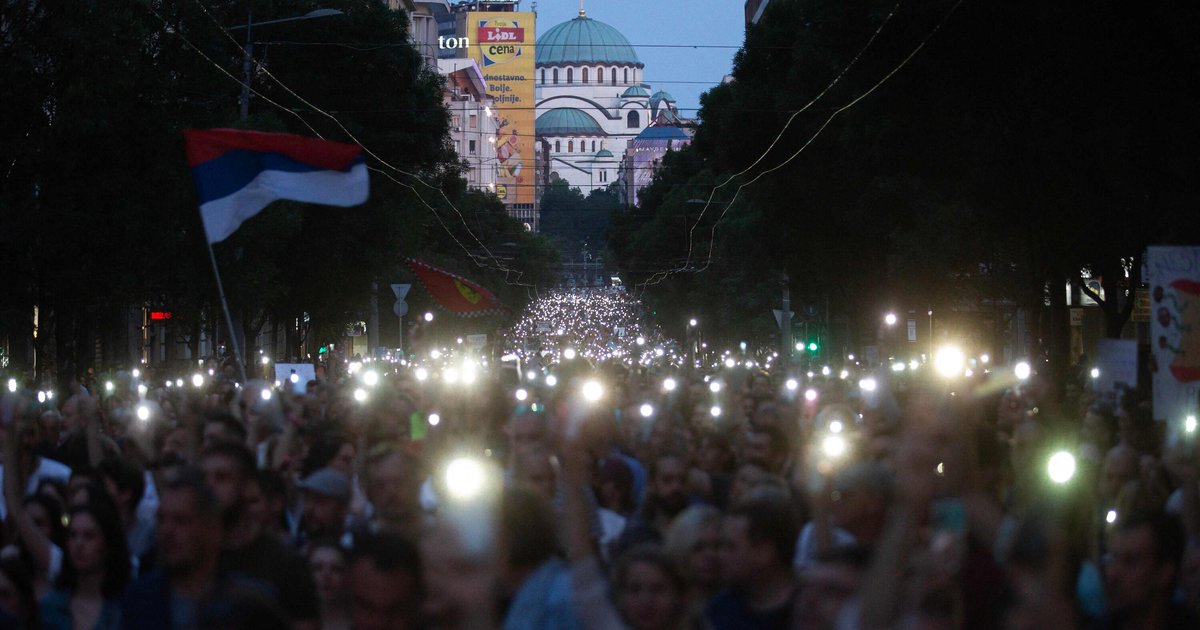
In an effort to calm the tense political situation in Serbia, President Aleksandar Vučić has called for official talks with political parties. This invitation comes as the country continues to experience widespread protests against the government, where demonstrators express their dissatisfaction with government policies.
The protests in Serbia have reignited following a series of events that have angered citizens, including issues of corruption and mismanagement of crises. The capital Belgrade and other cities have witnessed massive demonstrations, with thousands gathering to demand political change and reforms.
Details of the Current Situation
President Vučić emphasized that dialogue with political parties is the only way to resolve the current crisis. He pointed out the importance of listening to citizens' demands and working to fulfill them. This call comes after weeks of protests that have seen widespread participation from various segments of society, including youth and workers.
These events coincide with increasing economic and social pressures on citizens, as many suffer from rising prices and declining living standards. Many protesters have expressed their frustration over the government's failure to respond to their demands, leading to an escalation of protests.
Background & Context
Historically, Serbia has experienced numerous political and social crises, with protests being a part of the political landscape. Since the end of the conflicts in the 1990s, Serbia has attempted to achieve stability, but economic and political challenges remain. President Vučić faces growing criticism for his policies, which some consider ineffective in addressing fundamental issues.
In recent years, the country has seen an increase in popular protests, as citizens express their dissatisfaction with corruption and mismanagement. These protests have led to changes in government, but many citizens feel that the changes are not sufficient.
Impact & Consequences
President Vučić's call for dialogue is seen as a positive step, but it may not be enough to calm the situation. More than just formal talks are required; the government must take tangible steps to address the issues that matter to citizens. If protests continue, the government may face difficulties in maintaining political stability.
The protests in Serbia highlight an urgent need for political and economic reforms. If the government does not respond to citizens' demands, protests may escalate and lead to further unrest.
Regional Significance
The events in Serbia serve as an example of the challenges faced by many countries around the world, including Arab nations. The popular protests in Serbia reflect a general sense of discontent that may exist in other countries. Additionally, the president's call for dialogue could serve as a lesson for countries facing similar protests, as dialogue can help ease tensions.
Ultimately, there is hope that this call will lead to positive outcomes, and that President Vučić can achieve stability in the country through dialogue and cooperation with political parties.