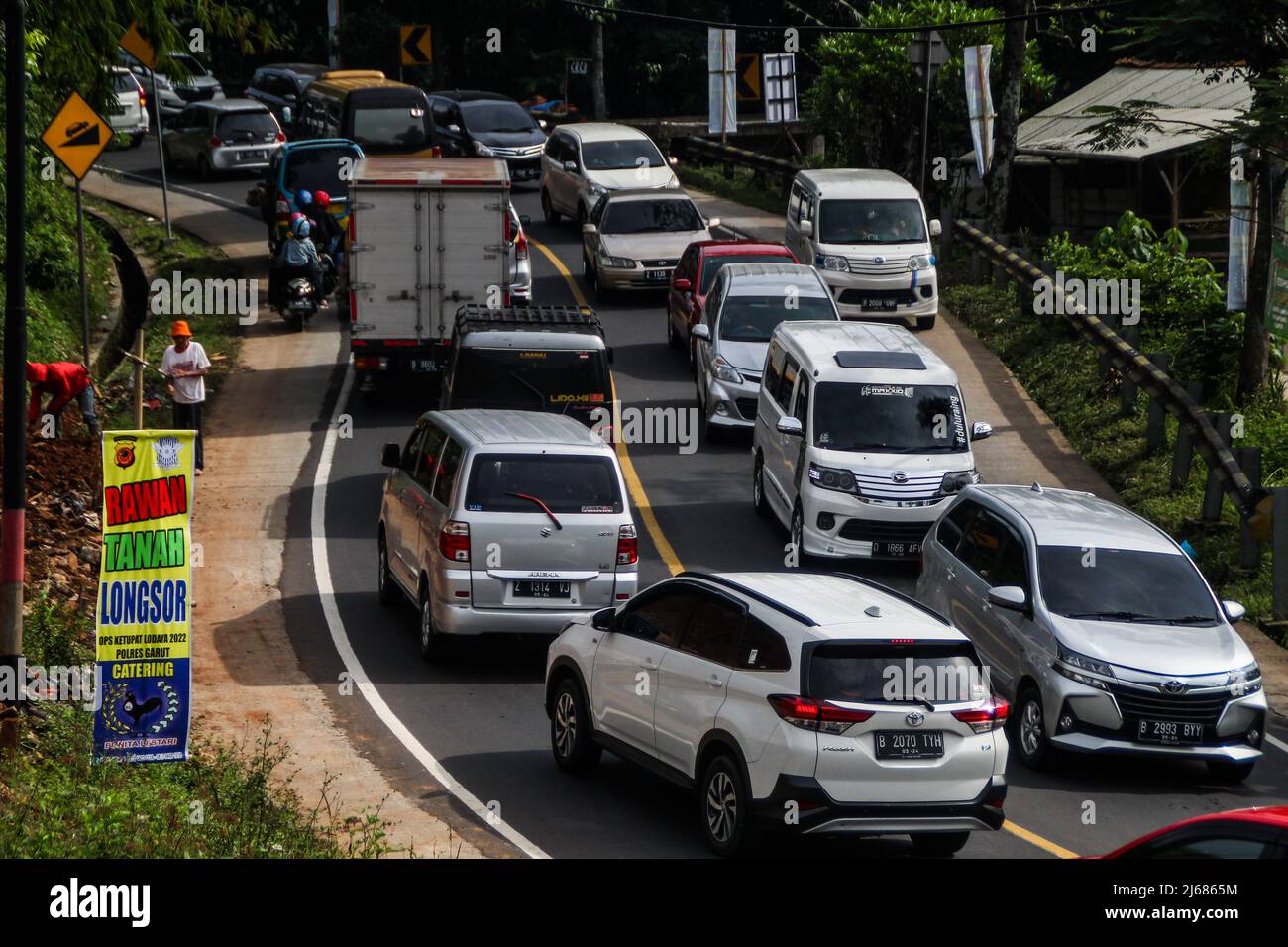
Garut, Indonesia, witnessed severe traffic congestion on Saturday, with over 33,331 vehicles recorded on the Limbanangan road, resulting in significant traffic jams. This congestion is part of the return of travelers to their regions after a long holiday, reflecting the volume of traffic in the country.
This congestion caused considerable delays for travelers, with reports of waiting times extending for hours at certain points. Reports indicated that many vehicles were heading towards the Nagriig area in Bandung province, exacerbating congestion on the main roads.
Details of the Event
According to local sources, the traffic congestion in Garut is part of the second wave of travelers returning, which typically occurs after major holidays. Officials noted that this congestion was anticipated, as preemptive measures were taken to alleviate pressure on the roads, but they proved insufficient.
Police forces were deployed in the most congested areas to direct traffic; however, adverse weather conditions in some regions contributed to worsening the situation. Minor traffic accidents were reported due to the congestion, but they did not result in serious injuries.
Background & Context
Indonesia is one of the largest countries in Southeast Asia in terms of population, making traffic management a constant challenge. In recent years, the country has seen a significant increase in the number of vehicles, exacerbating traffic congestion issues in major cities.
This congestion coincides with holiday periods when millions of citizens travel to their hometowns to celebrate with family. However, the road infrastructure has not developed at the same pace as the increase in the number of vehicles, leading to frequent traffic jams.
Impact & Consequences
Such traffic congestion can impact the local economy, causing delays in the movement of goods and increasing transportation costs. Additionally, congestion negatively affects air quality, as carbon emissions rise due to vehicles idling for extended periods.
Moreover, traffic congestion can lead to an increase in road accidents, putting additional pressure on emergency services. Therefore, addressing this issue requires significant investments in improving transportation infrastructure.
Regional Significance
Although this event occurs in Indonesia, traffic congestion issues are not unfamiliar to Arab countries as well. Many Arab cities face similar problems, with the number of cars continuously increasing without sufficient improvements in infrastructure.
Arab nations could benefit from Indonesia's experience in traffic management by developing effective strategies to mitigate congestion, such as enhancing public transportation and expanding road networks.
In conclusion, the traffic congestion in Garut serves as a reminder of the importance of investing in transportation infrastructure, not only in Indonesia but worldwide. Governments must take this issue seriously to ensure the safety of citizens and improve their quality of life.