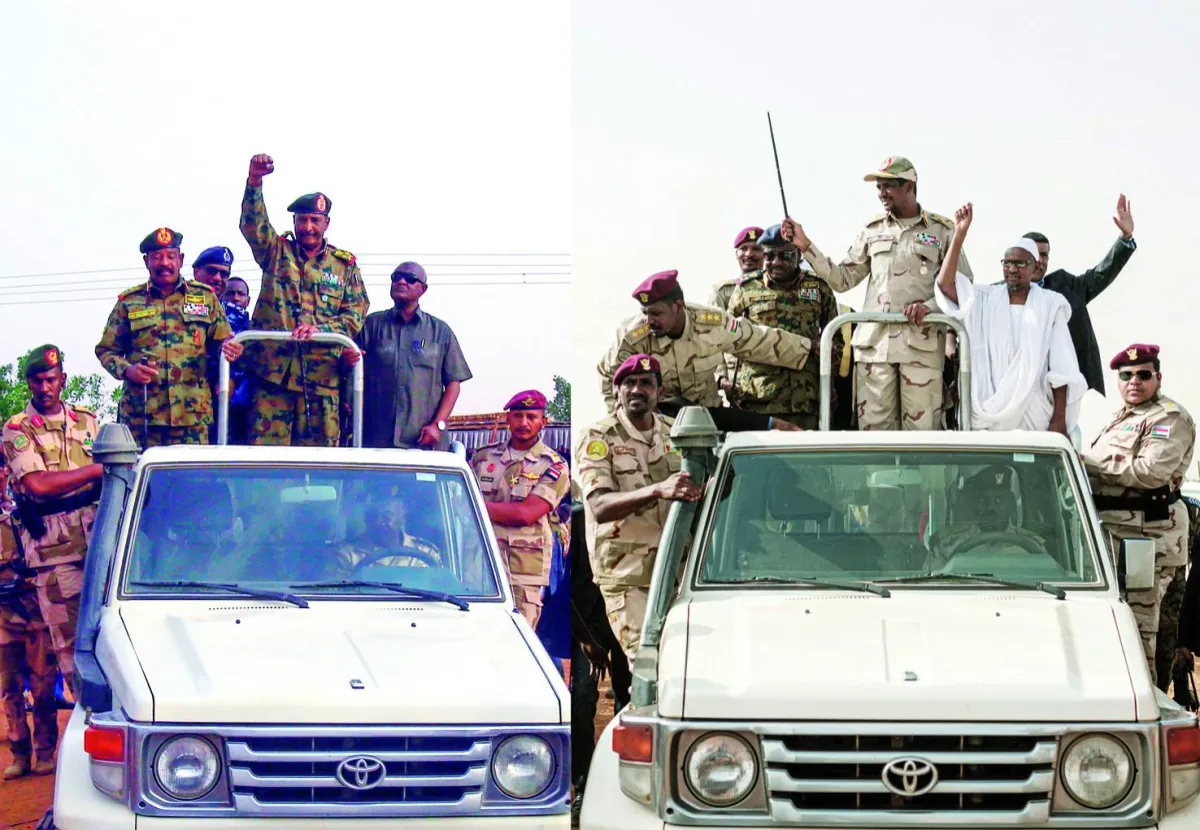
This year's Eid al-Adha greetings from Sudan's military leaders and the Rapid Support Forces showcased a significant change in the political discourse, emphasizing concepts of peace and stability, as well as the return of displaced individuals, for the first time since the conflict erupted in April 2023.
The speeches reflected a relative change in the general rhetoric from both sides of the conflict, following months of military escalation and threats. Official statements focused on security and national unity, as well as addressing the humanitarian consequences of the war, amidst increasing regional and international pressure to push Sudanese parties towards a political settlement to end the ongoing fighting.
Details of the Event
The Eid speeches came just one day after a statement from the Chairman of the Sovereignty Council and Commander of the Sudanese Army, General Abdel Fattah al-Burhan, who reiterated his openness to peace and ending the war. Observers considered this shift a positive step towards addressing the humanitarian crisis caused by the war, which the United Nations has described as one of the worst humanitarian disasters in the world.
During his Eid al-Adha prayer in the city of Al-Matama in the River Nile State, al-Burhan extended his congratulations to the Sudanese people, expressing hope that God would allow the holiday to return to the country in a state of security and stability. Despite his adherence to a war rhetoric, his speech placed greater emphasis on issues of security, stability, and national unity.
In a similar context, General Yasser Al-Atta, a member of the Sovereignty Council and Chief of Army Staff, in a brief speech for Eid, highlighted the aspirations of Sudanese people for more security and stability, expressing hope for the return of refugees to their homeland. He praised the sacrifices made by the armed forces but avoided using escalatory language.
Background & Context
These speeches come at a time when the country is suffering from the repercussions of the ongoing war, which has resulted in the deaths of thousands of civilians and the displacement of millions of Sudanese both internally and externally. The United Nations has repeatedly warned of the risk of famine and the collapse of humanitarian conditions in many areas, increasing the importance of the shift in official discourse.
Moreover, the change in rhetoric also reflects a response to international pressures aimed at ending the conflict and achieving stability in the region. Some observers have noted that these speeches may mark the beginning of a new phase of dialogue and negotiation between the conflicting parties.
Impact & Consequences
This shift in rhetoric is viewed as a positive indicator of the potential for achieving peace in Sudan, as it may help alleviate tensions between the conflicting parties. It could also open the door for international and regional efforts to support the peace process, thereby improving the deteriorating humanitarian conditions.
However, the greatest challenge remains how to translate these speeches into tangible actions on the ground, which requires a genuine commitment from all parties to achieve peace and stability. The ongoing mutual accusations between the army and the Rapid Support Forces regarding violations and war crimes could hinder any progress towards peace.
Regional Significance
The situation in Sudan is part of a broader regional landscape, where crises in Sudan impact stability in neighboring countries. Achieving peace in Sudan could contribute to enhancing security and stability in the region and bolster regional cooperation efforts to address shared challenges.
In conclusion, there is hope that these speeches will mark the beginning of a new phase of peace and stability in Sudan, which could positively reflect on the humanitarian and economic conditions in the country.