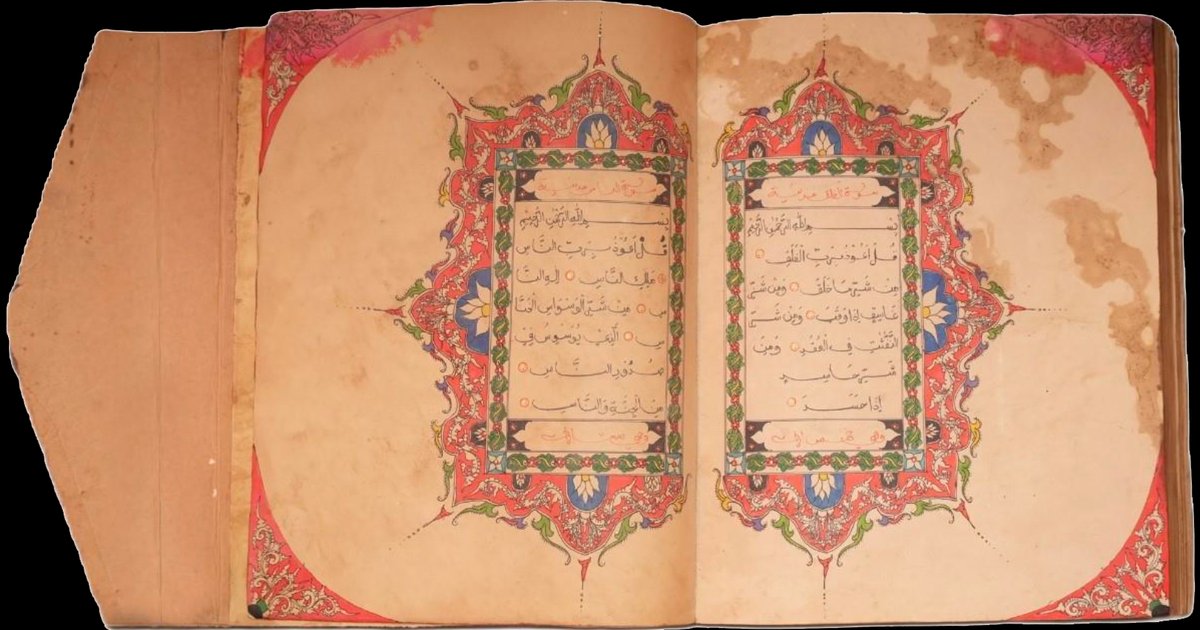
The Quran Museum in Mecca has revealed an ornate manuscript that dates back to the 13th Hijri century (19th century CE), distinguished by its exquisite gilding and intricate botanical illustrations. The manuscript features lines surrounded by golden clouds and decorative circles between verses, showcasing the brilliance of Islamic art from that era.
This manuscript is written in black ink with multiple colors and is fully adorned with diacritics and proper markings. At the end of the manuscript, there is an endowment inscription related to a mosque, although the name of the mosque has been worn away by the passage of time. The manuscript has undergone previous restorations that preserved its artistic components, ensuring the continuity of this cultural heritage.
Event Details
The Quran Museum is part of the broader cultural initiative in the Al-Hiraa district, which aims to promote Islamic heritage and culture. This initiative includes various exhibitions and cultural libraries, making it a hub for visitors interested in Islamic history.
The ornate manuscript is a significant addition to the museum's collection, which aims to educate the public about the rich history of the Quran and its artistic expressions. The museum opens its doors daily, welcoming visitors to explore its treasures and learn more about Islamic art.
Background & Context
The Quran Museum was established to preserve and showcase the cultural and historical significance of the Quran throughout the ages. It serves as a vital resource for scholars, students, and tourists alike, offering insights into the evolution of Quranic manuscripts and their artistic features.
In addition to the ornate manuscript, the museum houses various artifacts that reflect the deep-rooted traditions of Islamic scholarship and artistry. The preservation of such manuscripts is crucial for maintaining a connection to the past and understanding the cultural identity of the Islamic world.
Impact & Consequences
This unveiling of the ornate manuscript highlights the importance of preserving Islamic cultural heritage and reflects the efforts made to enhance cultural tourism in Mecca. By showcasing such artifacts, the museum not only attracts visitors but also fosters a deeper appreciation for Islamic art and history.
The presence of the Quran Museum in the Al-Hiraa district contributes significantly to the local economy by drawing tourists and scholars from around the world. This cultural engagement promotes a better understanding of Islamic traditions and encourages dialogue among diverse communities.
Regional Significance
The Quran Museum plays a pivotal role in Mecca, a city that holds immense religious significance for Muslims worldwide. By presenting historical manuscripts and artifacts, the museum reinforces Mecca's status as a center of Islamic culture and education.
Moreover, the museum's initiatives align with broader efforts to promote cultural heritage in Saudi Arabia, contributing to the nation's vision of enhancing its cultural landscape and attracting global visitors.
In conclusion, the exhibition of the ornate Quran manuscript not only enriches the museum's collection but also serves as a reminder of the rich artistic traditions within the Islamic world. It emphasizes the need for ongoing preservation efforts to safeguard such invaluable cultural treasures for future generations.