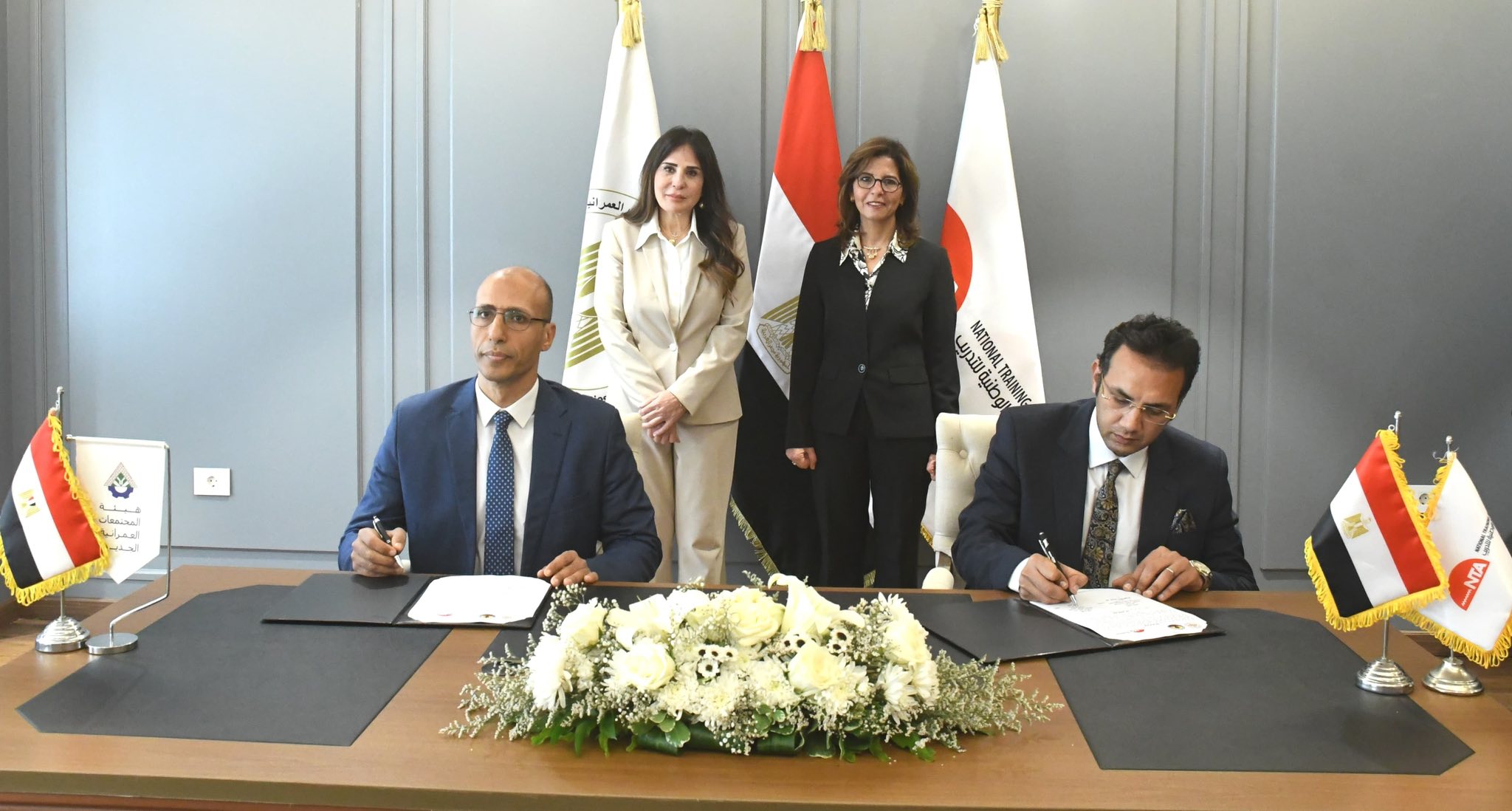
In a move reflecting the Egyptian state's commitment to enhancing the efficiency of the administrative apparatus, Engineer Randa El-Manshawy, Minister of Housing and Urban Communities, and Dr. Slafah Jouili, Executive Director of the National Training Academy, attended the signing ceremony of a cooperation protocol between the Ministry of Housing, represented by the New Urban Communities Authority and the General Authority for Tourism Development, and the National Training Academy.
The signing ceremony was attended by Dr. Walid Abbas, Deputy Minister of Housing for Urban Communities, and Dr. Taher Nasr, Deputy Executive Director of the Academy. The protocol was signed by Engineer Abdel Raouf El-Ghaiti, Supervisor of the Real Estate and Commercial Affairs Sector at the New Urban Communities Authority, on behalf of the ministry, and Dr. Taher Nasr on behalf of the academy.
Details of the Event
The protocol aims to launch an integrated institutional pathway for preparing and qualifying human resources, building a new generation of executive leaders capable of continuing the development journey. This pathway relies on a modern training system based on the latest scientific and administrative standards.
The protocol includes the implementation of a comprehensive training system that encompasses capacity assessment, functional needs analysis, and the design of specialized and advanced leadership programs. It also aims to prepare pathways for discovering outstanding individuals and empowering them in vital positions, following the latest international practices.
Background & Context
This step comes within a strategic vision aimed at maximizing the value of human capital as the most important asset of the state. The Minister of Housing emphasized that investing in human resources is no longer a developmental option but has become a fundamental necessity for achieving sustainability and enhancing competitiveness.
She also clarified that the protocol represents a practical step towards building qualified human capital capable of efficiently leading urban and tourism development. The program targets refining technical and managerial skills and enhancing strategic thinking within institutions.
Impact & Consequences
This collaboration embodies the state's direction towards achieving integration between implementation bodies and capacity-building institutions, contributing to preparing cadres capable of managing urban and tourism assets efficiently. This enhances economic and social returns within a framework of good governance and sustainability.
Following the signing, Dr. Slafah Jouili confirmed that this collaboration represents a strategic step reflecting the state's belief in the importance of investing in human capital. The current situation requires preparing leaders who possess modern management tools and the ability to make decisions efficiently.
Regional Significance
This protocol serves as a model for Arab countries seeking to develop their human capabilities and enhance the efficiency of their administrations. This collaboration highlights the importance of investing in education and training as a means to achieve sustainable development.
In conclusion, the Minister of Housing reaffirmed the ministry's commitment to activating this collaboration and transforming its outputs into tangible results that contribute to developing institutional performance and enhancing human capabilities, supporting the state's objectives towards building a comprehensive development model led by a conscious and qualified individual.