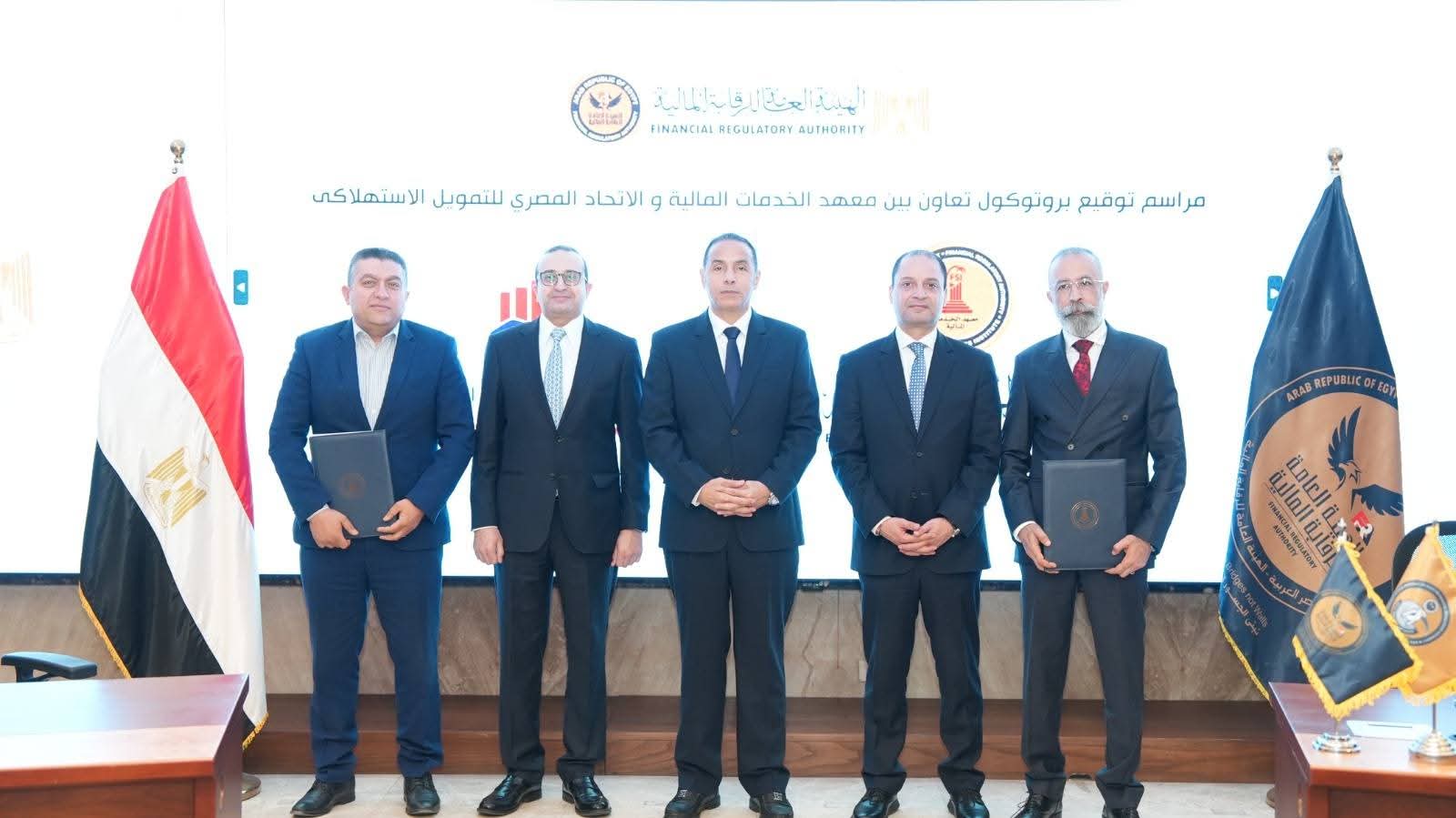
The Financial Regulatory Authority, under the leadership of Dr. Islam Azam, witnessed the signing of several cooperation protocols with the Financial Services Institute, which includes unions for real estate financing, leasing, consumer financing, and factoring. These protocols aim to enhance human competencies in the non-banking financial sector, aligning with the rapid developments in financial markets.
Attending the signing ceremony were Dr. Mohamed Abdel Aziz, Assistant to the Authority's President, Dr. Tarek Saif, Executive Director of the Institute, along with several leaders from the Authority. This step is part of the Authority's strategy to develop and grow the non-banking financial sector, focusing on building qualified human resources capable of keeping pace with rapid transformations.
Event Details
Dr. Islam Azam confirmed that these protocols represent an extension of the Authority's efforts to invest in human capital, which is the main driver of growth in the sector. He explained that building the capabilities of personnel is no longer an option but a necessity imposed by the rapid changes, especially with the swift growth in the field of financial technology.
Azam pointed out that the Authority provides a comprehensive educational and training environment through partnerships with local and international professional and training institutions, aiming to prepare personnel capable of applying the highest standards of efficiency and governance. The Authority also seeks to enhance the confidence of investors and participants in the non-banking financial markets.
Background & Context
This step is part of the state's efforts to achieve financial inclusion and empower various segments of society to access innovative and secure financial services. The Authority has previously signed cooperation protocols with specialized academic and training entities to develop advanced training programs and build the capacities of workers in non-banking financial activities.
The protocols include the preparation of flexible training plans that respond to the needs of unions and companies, providing incentive benefits for members, reflecting the Authority's commitment to developing training content in line with market developments.
Impact & Consequences
These protocols contribute to improving the quality of services provided in the non-banking financial sector and enhance its attractiveness for investments. They aim to achieve sustainable growth rates within a comprehensive vision targeting the enhancement of market efficiency and its role in supporting the national economy.
These initiatives are expected to reduce the gap between academic aspects and practical applications, thereby enhancing the ability of personnel to face the increasing challenges in the market.
Regional Significance
This step serves as a model for the Arab region, where many countries are striving to develop their non-banking financial sectors. Strengthening human resources in this sector is a fundamental step towards achieving sustainable development.
In conclusion, these initiatives reflect the state's commitment to developing the non-banking financial sector, contributing to market stability and protecting the rights of participants.