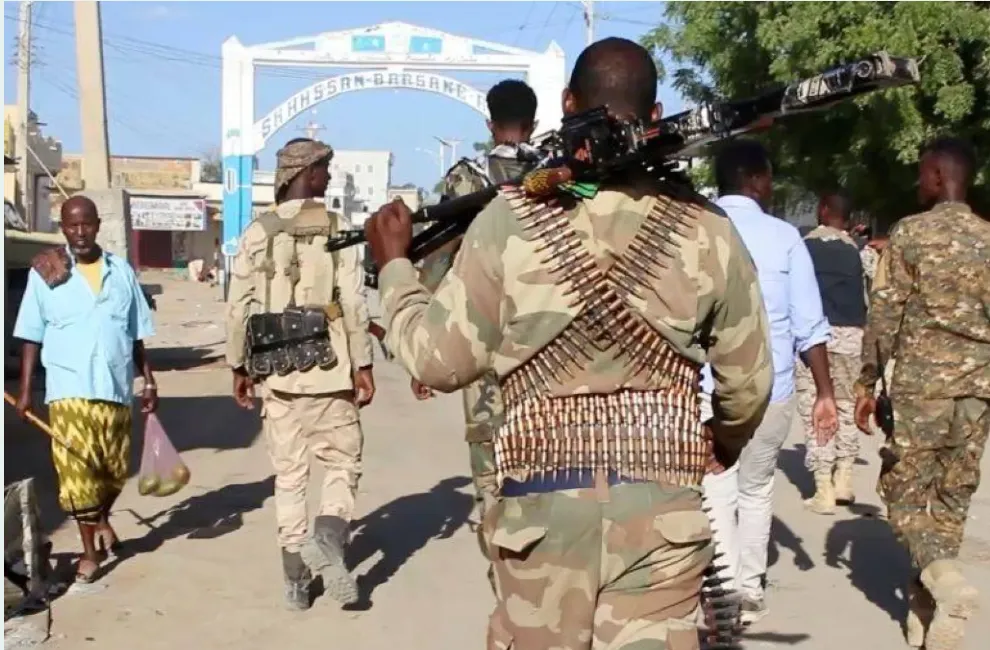
The Somali Armed Forces entered the city of Baidoa on Monday after brief clashes with forces loyal to the President of Southwest State, Abdulaziz Hassan Mohamed Laftagareen, who is accused by the federal government of illegally extending his term.
The confrontations erupted about 6 kilometers from Baidoa, a city home to hundreds of thousands of residents, forcing local forces to abandon their positions. Hassan Mohamed, one of the leaders of the Somali National Army, told AFP that the army entered the city from the livestock market side, noting that there are plans to clear the rest of the city of forces loyal to the ousted regime.
Details of the Event
Hassan Mohamed added that some forces remain in parts of the city, but the Somali army is determined to force them to retreat or surrender. Several residents contacted by AFP confirmed that Somali army soldiers entered the city accompanied by fighters from a militia opposing the local authorities.
In contrast, an official from Southwest State asserted that local forces would defend themselves against military pressure from the federal government. Yogas Hassan, the spokesperson for the state authorities, stated in a press release following the outbreak of fighting: "Those who invaded Southwest State will never succeed. They will be defeated."
Background & Context
These events come at a time of escalating tensions between the federal government and the President of Southwest State, who has been criticized for extending his term that was supposed to end in 2022. The disputes intensified after Laftagareen opposed a reform of the Somali constitution, which was approved last March and extends the presidential term from 4 to 5 years.
This reform aims to conduct direct elections for representatives and senators, which were previously appointed based on clan affiliations. This amendment has sparked widespread controversy in political circles, exacerbating security conditions in the region.
Impact & Consequences
These clashes indicate a rise in conflict in Somalia, as the federal government seeks to regain control over areas held by local forces. Furthermore, these events may impact stability in the region, where the country faces significant security and economic challenges.
Analyses predict that these clashes could worsen the humanitarian situation in Baidoa, where many residents live under difficult conditions. The continuation of the conflict may lead to mass displacement of populations, increasing the burdens on the federal government and humanitarian organizations.
Regional Significance
The situation in Somalia is part of the larger picture of security and stability in the Horn of Africa, where regional and international interests intersect. The escalation of conflicts in Somalia may affect relations between neighboring countries and increase tensions in the region.
In light of these events, the international community must closely monitor the situation and strive to support peace and stability efforts in Somalia, as any further escalation could lead to negative repercussions for regional security.