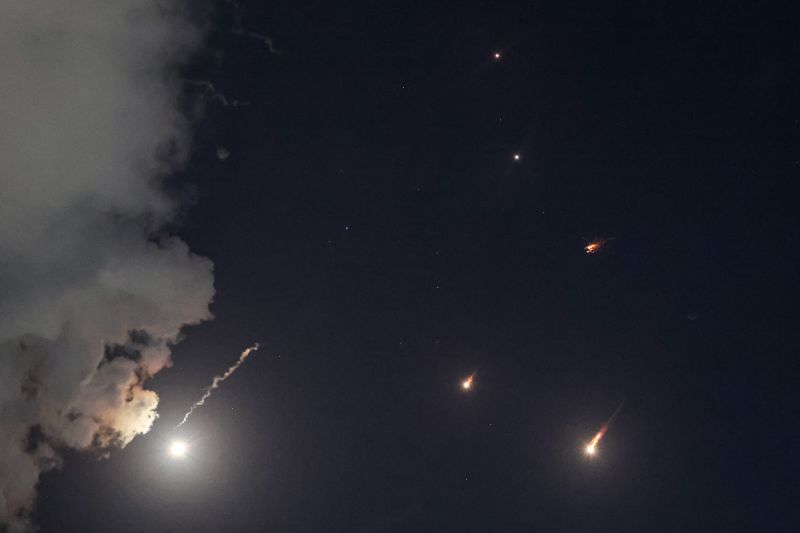
Alarms sounded widely in the areas of Eilat and the Arava Valley in southern Israel on Saturday afternoon due to the launch of missiles from Iran, according to Israeli media reports. Channel 12 confirmed that one missile fell in an open area in the city of Eilat, while another missile was intercepted, with no injuries reported.
This incident comes at a sensitive time as the Middle East experiences increasing tensions, with fears rising over the escalation of conflict between Israel and Iran, particularly with the uptick in Iranian military activities in the region.
Details of the Incident
Reports indicate that the alarms went off in Eilat and the Arava Valley at around 4 PM, causing panic among residents. The Israeli air defense system was activated to intercept the missiles, reflecting the readiness of Israeli forces to confront any potential threats. Although the attack did not result in injuries, it highlights the escalating tensions in the area.
It is noteworthy that Iran has previously launched missiles toward targets in Israel, raising concerns about the potential for conflict escalation. Reports suggest that the recent attack is part of an Iranian strategy aimed at enhancing its influence in the region.
Background & Context
Historically, relations between Iran and Israel have been marked by increasing tensions, with Israel viewing Iran as an existential threat due to its nuclear program and support for armed groups in the region. These tensions have led to a series of military attacks and responses between the two sides, making the region more fragile.
In recent years, Iran has increased its military capabilities, including the development of long-range missiles that can reach Israeli territory. This development raises significant concerns in Tel Aviv, which seeks to bolster its air defense system to counter any threats.
Impact & Consequences
This incident could lead to an escalation of tensions between Israel and Iran, which may negatively impact regional security. Any military response from Israel could lead to greater escalation, threatening the stability of the entire region.
Moreover, this incident may affect relations between Israel and Arab countries, as these nations closely monitor the situation's developments. Such events may prompt some countries to reassess their security and military strategies in the face of increasing Iranian threats.
Regional Significance
This incident serves as a wake-up call for Arab countries, highlighting the need to enhance security cooperation to address common threats. With the rising Iranian influence, Arab nations may find themselves compelled to take bolder steps to protect their national security.
Additionally, these events could lead to increased Arab support for Israel in facing Iranian threats, potentially altering the dynamics of relationships in the region. Ultimately, the region remains on high alert, as any escalation could have far-reaching consequences.