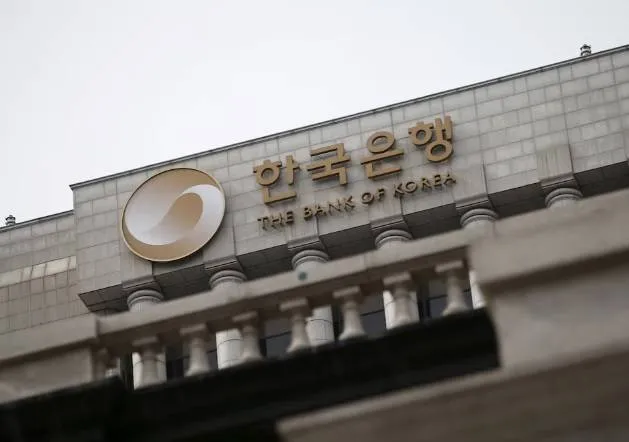
The Monetary Policy Board of South Korea has announced a cautious, wait-and-see approach, indicating that this option is considered the most suitable at the current stage. This comes in light of the increasing uncertainty associated with the war with Iran and the necessity to monitor its repercussions on growth and inflation, according to the minutes of the central bank's last meeting published on Tuesday.
One board member explained that the focus had been on financial stability until the beginning of the year, but emphasized the need to now direct attention towards containing inflationary pressures. The Monetary Policy Board of the Bank of Korea voted on April 10 to keep the benchmark interest rate unchanged at 2.50%, a move that aligned with the expectations of all 31 economists surveyed by Reuters.
Details of the Decision
This decision reflects the predicament faced by the central bank, as the economy is under pressure from slowing growth on one hand and an inflation shock in the energy sector on the other. These conditions complicate any potential shift towards tightening monetary policy, making it difficult to make bold decisions at this time.
According to a survey of 30 analysts, 26 of them expect the interest rate to remain unchanged until the end of the year, while 3 analysts anticipate an increase to 2.75%, and one analyst predicts it could reach 3% by the end of the year.
Background & Context
These developments come at a time when global markets are experiencing tension due to the ongoing war between the United States and Iran, which has significantly impacted oil prices and the global economy. The war has led to rising energy prices, increasing inflationary pressures in many countries.
Historically, South Korea has relied on stable energy prices and sustainable economic growth, but current geopolitical events are placing additional pressures on the Korean economy, necessitating a cautious response from the central bank.
Impact & Consequences
Many financial institutions expect this cautious monetary policy to affect investments and economic growth in South Korea. As inflationary pressures continue, the government may need to take additional steps to support the economy.
Furthermore, the ongoing uncertainty in global markets could lead to further fluctuations in exchange rates and interest rates, impacting both foreign and domestic investments.
Regional Significance
The developments in South Korea are particularly significant for the Arab region, as any changes in oil prices or monetary policies could affect the economies of Arab countries, which heavily rely on oil exports.
Under the current circumstances, Arab nations must closely monitor developments in South Korea, especially amid geopolitical tensions that may influence global energy markets.
In conclusion, adopting a cautious wait-and-see approach in South Korea represents a prudent response to current economic challenges and reflects the need for flexible strategies to address future crises.