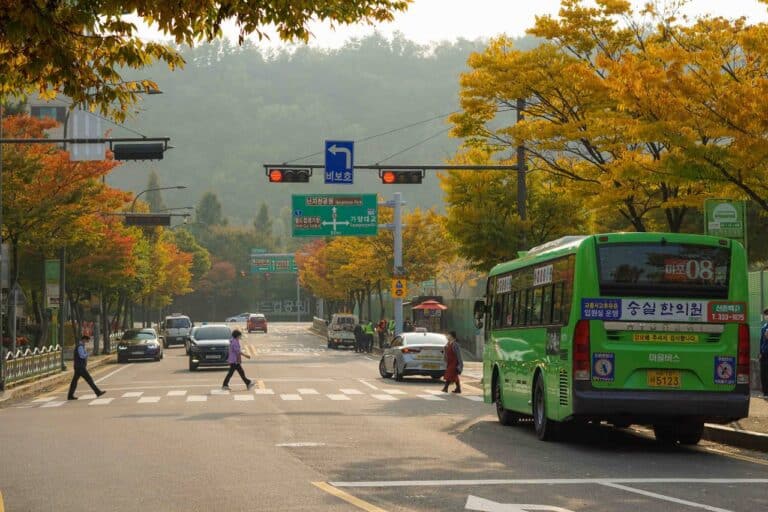
South Korea is considering expanding driving restrictions to include the general public if global oil prices continue to rise. Finance Minister Ko Yun-chul confirmed that the government may impose restrictions on private vehicle use if crude oil prices reach around $120-130 per barrel, compared to the current range of $100-110.
If these restrictions are expanded to include all citizens, it would mark the first time the country has imposed nationwide driving restrictions since the Gulf War in 1991, when the government implemented a ten-day vehicle rotation system to conserve energy.
Details of the Situation
In remarks during a local broadcast, Ko indicated that the situation in the Middle East might necessitate raising the crisis level to a “warning” stage, prompting actions to reduce energy consumption. He also added that the government might consider cutting fuel taxes to alleviate the burden on households.
Last week, the government implemented a mandatory five-day vehicle rotation system for the public sector, restricting vehicle use based on license plate numbers. Energy Minister Kim Sung-wan stated that authorities are reviewing demand management measures more stringently in the event of a heightened warning level, including expanding the scope of driving restrictions.
Background & Context
South Korea relies on importing about 70% of its crude oil from the Middle East, making it vulnerable to sharp price fluctuations and supply disruptions caused by regional tensions. Political crises in the Middle East, including the ongoing conflict between the United States, Israel, and Iran, have heightened concerns about the stability of energy supplies.
Historically, South Korea has faced similar challenges in the past, where oil crises led to driving restrictions and changes in energy policies. These measures reflect an increasing awareness of the importance of resource management in the face of changing global conditions.
Impact & Consequences
These restrictions could have significant economic and social impacts, affecting citizens' lifestyles and their mobility choices. Major companies such as Samsung Electronics and SK Group have already begun encouraging their employees to reduce private vehicle use and adopt fuel-saving measures.
At the same time, politicians are engaging with these initiatives through social media, promoting the use of public transportation and bicycles as a means to conserve energy. These efforts reflect the government's and society's commitment to addressing environmental and economic challenges.
Regional Significance
Arab countries are directly affected by rising oil prices, as the region is a major source of oil supplies. Any price fluctuations could impact the economies of these countries, necessitating similar measures to maintain market stability.
Moreover, tensions in the Middle East, such as the conflict between Iran and the United States, could increase risks to oil supplies, prompting Arab nations to strengthen their energy management strategies.