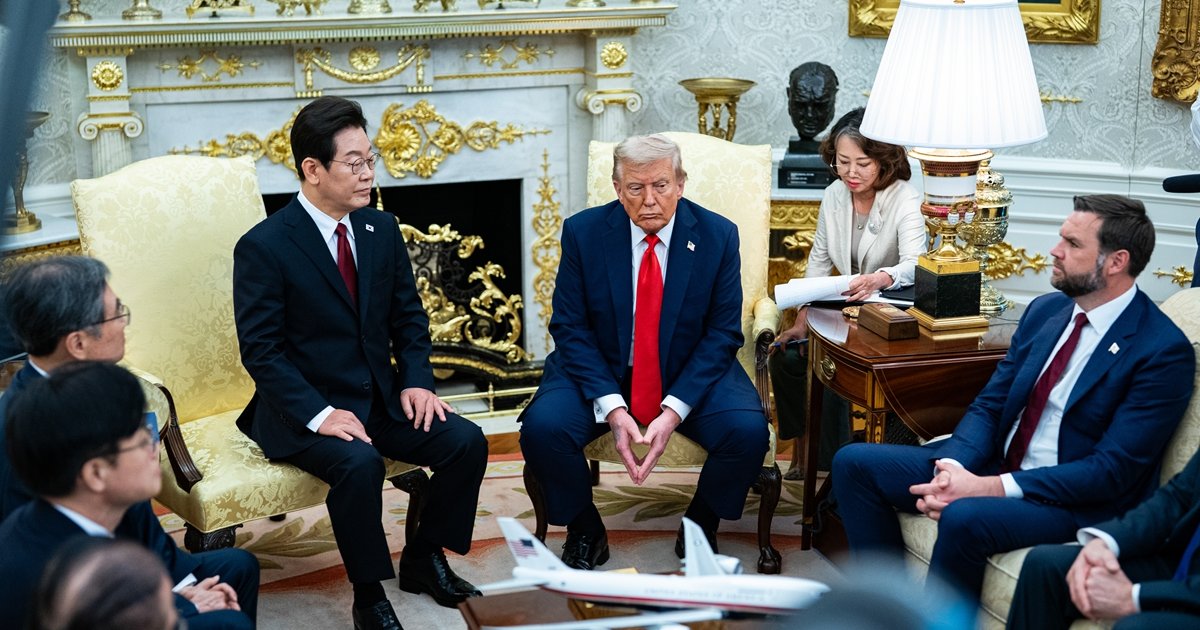
South Korean President Lee Jae-myung urged visiting US lawmakers on Thursday to enhance work visa policies for Korean workers to prevent incidents of detaining Korean citizens in the United States, similar to those that occurred last year at a Hyundai Motor facility in Georgia.
During his discussions with a bipartisan delegation of US senators in Seoul, Lee asserted that stable residency conditions for Korean workers in the United States are essential for implementing a package of South Korean investments there.
Details of the Meeting
Lee also called on the US Congress to support legislation aimed at creating new work visas for South Korean professionals, known as the Korea Partnership Act, amid deepening economic and industrial cooperation between the two countries. The Blue House reported that US lawmakers expressed understanding of Seoul's concerns and pledged to monitor visa issues affecting Korean workers.
In another context, Lee confirmed that South Korea is prepared to take on a larger role in its own defense, including transferring wartime operational control from the United States to South Korea. He noted that his country believes it is appropriate to defend the Korean Peninsula primarily with its own capabilities, thereby reducing the burden on Washington.
Background & Context
The United States currently leads allied forces in the event of war on the Korean Peninsula, but successive South Korean governments have sought to regain wartime operational control. The Lee administration has expressed its desire to complete this process during his term, which extends until 2030, provided that South Korea meets a set of military capability conditions agreed upon with the United States.
Regarding global issues, Lee pointed out that South Korea faces security and economic repercussions due to the conflict in the Middle East and requested the United States' views on managing these impacts. Jane Shahy, a senior member of the Senate Foreign Relations Committee, stated that efforts to transfer operational control are making progress but require support for effective crisis response capabilities.
Impact & Consequences
These discussions between South Korea and the United States are of significant importance, reflecting Seoul's desire to enhance its defensive independence and reduce reliance on the United States. Improving visa policies could also boost the flow of Korean labor to the United States, contributing to stronger economic ties between the two countries.
Additionally, John Curtis, a Republican senator, welcomed Seoul's commitments to increase defense spending and purchase $25 billion worth of American weapons by 2030, along with South Korea's plans for significant investment in the United States, including in shipbuilding and manufacturing.
Regional Significance
The Arab region is indirectly affected by these developments, as enhanced military and economic cooperation between South Korea and the United States may influence the balance of power in Asia, which could reflect on regional policies in the Middle East. Furthermore, economic and security crises in the region may require responses from major powers like the United States and South Korea.
In conclusion, these discussions highlight the importance of bilateral relations between South Korea and the United States and how they can impact regional and international stability. Strengthening cooperation between the two countries could open new avenues for collaboration in various fields, including security and economics.