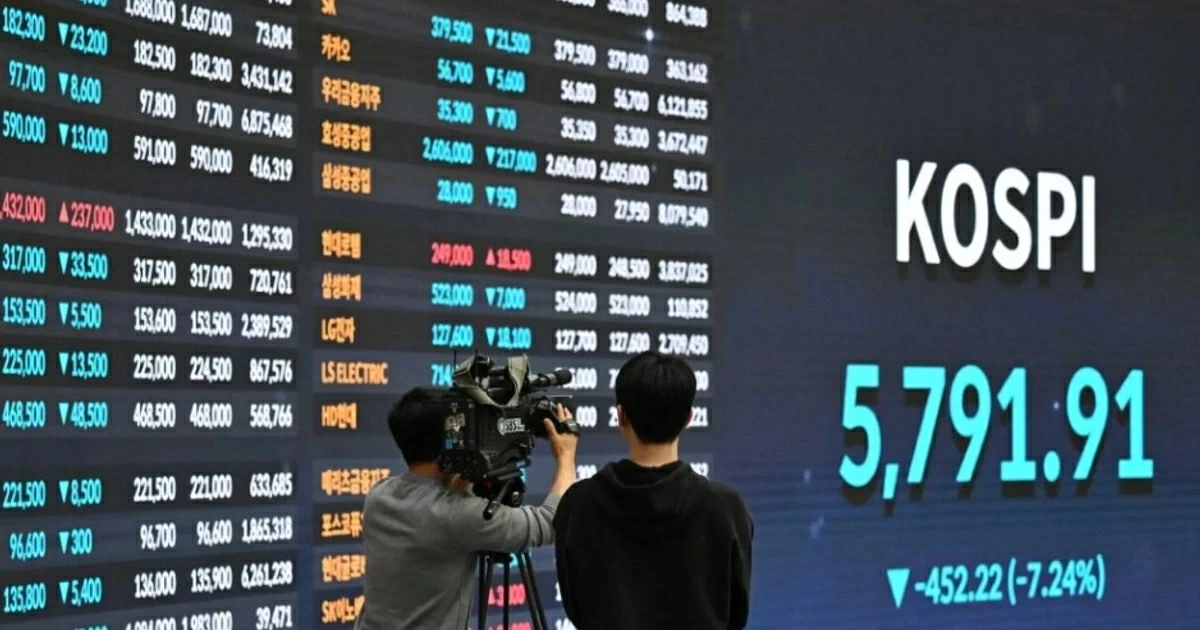
The South Korean stock market temporarily suspended trading after a significant drop of approximately 9% during today's session (Monday), amidst a global sell-off in the technology sector following renewed concerns about monetary tightening in the United States.
The losses of the KOSPI index were reduced after a 20-minute trading halt, marking the first time such measures have been activated in three months. This is the third time this year that such a step has been taken, and the ninth in the history of the stock exchange, according to Western media reports.
Details of the Event
These developments come at a time when investors are increasingly anxious about U.S. monetary policy, with forecasts suggesting a potential interest rate hike. These concerns have significantly impacted global stock markets, leading to a sharp decline in Korean stock prices.
Simultaneously, the local currency, the Korean won, experienced a notable recovery after reaching its lowest level against the dollar since March 2009. Its value increased by 1.35% to trade at 1,538.44 won, following intervention by financial authorities.
Background & Context
Historically, South Korea has experienced significant fluctuations in its financial markets, particularly during global economic crises. There have been several instances in the past where trading was suspended due to sharp price declines, reflecting the market's sensitivity to global economic events.
South Korea is considered one of Asia's largest economies, with its economy heavily reliant on the technology sector. Therefore, any downturn in this sector directly impacts the performance of the financial market.
Impact & Consequences
These developments are expected to affect investor confidence in the Korean market, potentially leading to further price declines if concerns about U.S. monetary policy persist. Additionally, the drop in stocks may impact foreign investments in the country.
The Korean authorities are seeking to take firm measures against market speculation, having convened an emergency meeting with financial officials to emphasize actions aimed at supporting the local currency and enhancing market stability.
Regional Significance
The economic developments in South Korea are particularly significant for the Arab region, as many Arab countries have trade and investment ties with Korea. Any downturn in the Korean economy could affect exports and imports between the two sides.
In light of these circumstances, Arab investors should closely monitor developments in South Korea, as any changes in monetary or economic policy could impact regional markets.
In conclusion, financial markets remain on cautious alert as investors seek to understand the impact of global events on local markets.